Samba Solo4 minutes

Samba Solo Warm Up: instructions for training at home

In short
  • A targeted Samba solo warm-up protects your joints from the extreme strain of fast footwork on the balls of your feet.
  • The activation focuses on mobilizing your ankles, knees, and hips, as well as stretching your calf muscles.
  • The warm-up improves coordination for the fast bounce step and effectively prevents painful strains.

If you want to dance the fast-paced rhythms of the Brazilian carnival solo, you demand peak performance from your body. With this targeted warm-up program, you prepare your joints and muscles perfectly for the high tempo.

What you need for your warm-up

  • Non-slip and level floor area
  • Comfortable sportswear with high freedom of movement
  • Flat dance shoes or barefoot for better floor contact
  • Ten minutes of undisturbed practice time

Why a specific Samba solo warm-up is indispensable

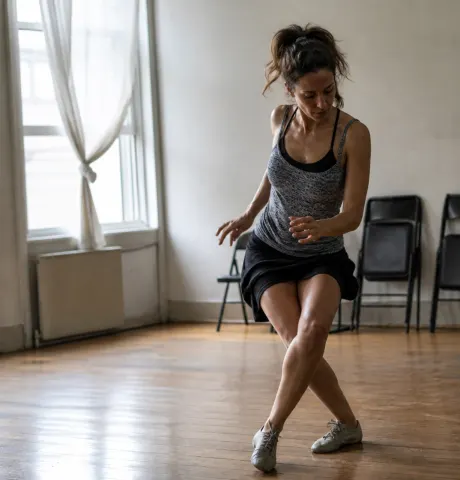
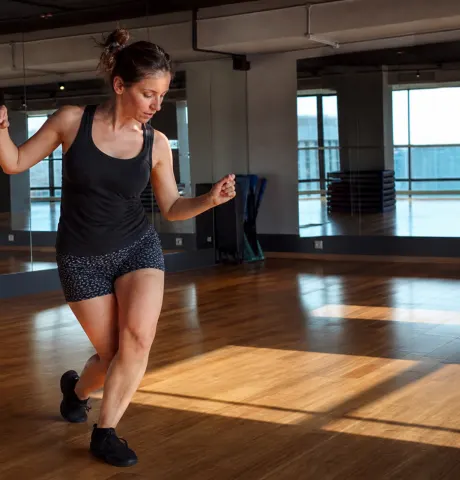
Samba no Pé is a fast-paced dance that challenges the entire body. The extremely high step frequency and the characteristic, bouncy hip movements strain tendons, muscles, and joints far beyond the normal level. Anyone who jumps into training without targeted preparation risks painful thigh strains or overloading the Achilles tendon. General fitness training is not enough here, as the specific rotational movements of the pelvis and the constant work on the balls of the feet require tailored activation. The right warm-up prepares your nervous system for quick changes of direction and ensures that your feet have the necessary elasticity to execute the typical bounce without injury.

For effective training at home, you should find a non-slip surface and establish the warm-up as a fixed, indispensable part of your dance routine. If you want to deepen the basics of footwork, our guide on learning Samba no Pé will help you adopt the correct posture. Preparing the joints lays the foundation for fluid hip movement and protects your knees from the shear forces that occur during fast turns. Take the ten minutes before you turn on the music to minimize your risk of injury and noticeably increase your dance performance.

The right footwork starts in the joint: only a mobilized foot elastically absorbs the quick impacts of the Samba bounce.
udansa tip

Put on some slow Samba music at about 100 BPM for your warm-up. This helps you perform the movements in a controlled manner before you increase the tempo for the actual training.

Step by step: your Samba warm-up program

  1. Mobilizing your ankles

    Stand up straight, lift one foot slightly, and rotate your ankle ten times in each direction. Then switch sides to activate the synovial fluid in your ankles.

  2. Lubricate your knee joints

    Stand with your feet hip-width apart and bend your knees slightly. Gently circle your knees with your hands on your kneecaps to prepare your ligaments for quick changes of direction.

  3. Rotate your hips

    Get your hips moving by drawing large, wide circles in both directions. This loosens up your lower back and prepares your pelvis for typical Samba activity.

  4. Actively engage your calves

    Alternately push up onto your tiptoes and lower your heels back down. This controlled lifting and lowering activates the calf muscles and strengthens your balance.

  5. Dynamically stretch your hip flexors

    Take a wide lunge forward and gently bounce your pelvis downwards. This dynamically stretches your hip flexors and prepares you for expansive steps.

The most important do's and don'ts for warming up

Like this

  • Rotate your feet and ankles thoroughly beforehand
  • Use dynamic movements for stretching
  • Bounce on the balls of your feet to activate your calves

Don't do this

  • Start the basic step cold and without preparation
  • Hold muscles in a long, static stretch before training
  • Land with stiff knees and flat feet

Your checklist for the Samba warm-up

Before the warm-up

Preparation

During the warm-up

Meanwhile

Frequently Asked Questions

  1. An effective Samba solo warm-up takes about 10 to 15 minutes. This time is perfectly sufficient to lubricate the joints, gently raise the pulse, and activate the specific muscles needed for the high step frequency.

Salsa & Latin courses near you

Find the right dance school for your solo training or discover new dance styles.

View all matching courses
udansa community

Don't dance Samba no Pé alone any longer

On udansa you will find like-minded people who share your passion for the Brazilian solo dance, as well as suitable courses in your area. Arrange to meet for joint training and take your footwork to the next level.