
Experience Samba power together
Find motivated like-minded people on udansa who share your passion for Brazilian rhythms, and discover suitable training opportunities in your area.



By Bernhard De LucaUpdated
Find motivated like-minded people on udansa who share your passion for Brazilian rhythms, and discover suitable training opportunities in your area.
The infectious energy of the Brazilian bateria immediately captivates everyone. But if you want to bring lightning-fast solo steps to the dance floor, you need much more than just stamina and willpower.
Sports science foundation
All recommendations are based on sports science findings regarding biomechanics and coordination in dance.
Focus on Solo Samba
These tips are specifically tailored to the requirements of fast Solo Samba no Pé.
Practical feasibility
The presented training methods can be implemented directly in everyday life without expensive equipment.
Independent selection
No payments or advertising deals were accepted from dance schools for the creation of this list.

The foundation for maximum frequency
Reduce your step size to a minimum. The smaller the movement, the less distance your feet have to cover in the same amount of time, which immediately gives you more control at extreme speeds.
The right body tension
Always keep your knees slightly bent and shift your body weight completely onto the balls of your feet. Your heels should only briefly touch the floor to keep your ankles elastic and responsive.
Stress relief through a shift in focus
Don't listen to the fast instruments like the tamborim, but anchor yourself mentally in the deep pulse of the surdo drum. This reduces perceived stress and helps you stay in time.
Efficient power transmission in the pelvis
Use the natural rotation of your pelvis. A loose, well-isolated hip movement takes the load off your thighs and ensures that your footwork looks elegant and effortless, even at high speeds.
Sustainable development of muscle memory
Increase the tempo while practicing only in small steps. Use a metronome and only increase the speed once you can maintain the movement perfectly cleanly and without tension for several minutes.
Anyone hearing the driving drums of a bateria for the first time is often fascinated and intimidated at the same time. The Samba no Pé speed in the Brazilian carnival easily reaches a tempo of 130 to over 150 beats per minute. In this fast-paced rhythmic structure, the right biomechanics determine success or frustration. To move your legs extremely quickly, you must radically reduce the size of your steps. Every centimeter you place your foot too far from your center of gravity costs valuable milliseconds. Keep your feet directly under your hips and shift your weight minimally forward onto the balls of your feet. At high speed, your heels only touch the floor very lightly to ensure the necessary springiness without slowing down the flow of movement.
A common mistake when trying to dance at an extremely fast tempo is the mental block caused by pure sensory overload. If you try to consciously process every single drumbeat in your head and translate it into a step, your muscles will cramp up. The secret of successful passistas lies in rhythm abstraction. Do not listen to the rapid individual beats of the repique or tamborim, but focus on the heavy, supporting base beat of the surdo drum. This marks the counts of one and two. If you learn to mentally orient yourself to these anchor points, you will gain the necessary composure. Your body will reel off the fast intermediate steps almost automatically thanks to muscle memory, while your mind remains relaxed.
Dancing Samba at a fast tempo is best achieved by minimizing your step size. Place your feet extremely close together and keep your weight on the balls of your feet to keep ground contact time as short as possible.
To specifically increase your Samba no Pé speed, you should train with a metronome. Only increase the tempo in increments of 5 BPM once you can maintain the movement absolutely cleanly and without tension at the current speed.
At a fast Samba tempo, the hips are the key to relieving the legs. Through rhythmic weight shifting and pelvic rotation, you take the pressure off your knees and use the natural momentum of your body.
Find the right course and learn the proper technique for fast rhythms right in your area.
BallroomMeißen · Germany
Tanzkreis | PROFESSIONALTuesday · 20:15 · Oct 27, 2026 - Jan 5, 2027
“Ein Haus für Vieles” - Saal Tanzkurse
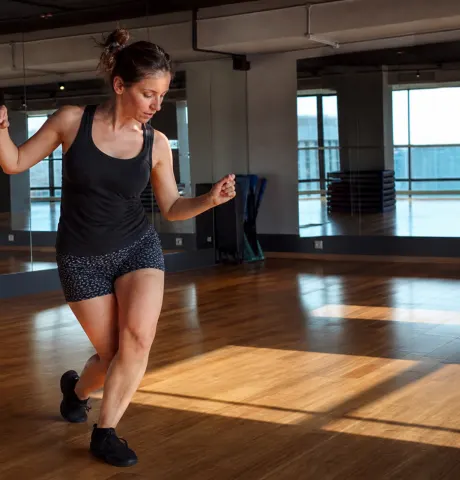 Dancing Samba solo: The guide for Samba no Pé and show danceDancing Samba solo brings the pure joy of life from Brazil directly to you. Learn everything about the technique of Samba no Pé and how to master the carnival dance.
 Samba Carnival Makeup: Guide to the perfect lookWith the right samba carnival makeup, you will shine on stage without anything smudging. Learn here how to make your solo look completely sweat-proof and stage-ready.
 Samba Rainha de Bateria: The role of the solo queenThe Samba Rainha de Bateria is the queen of the drummers and the energetic center of every parade. Our guide explores the fascinating demands of this challenging solo role.
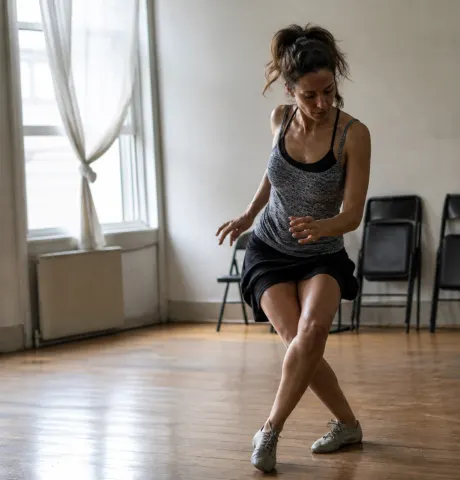 Learn Samba no Pé: Your start in solo danceSamba no Pé is Brazil's most famous solo dance. Learn here how to systematically build the basic step and master the fast tempo.
 Samba Solo Basic Step: Beginner's GuideLearn the carnival-style Samba solo basic step systematically, no prior experience needed. Our simple guide helps you find your Brazilian rhythm step by step.
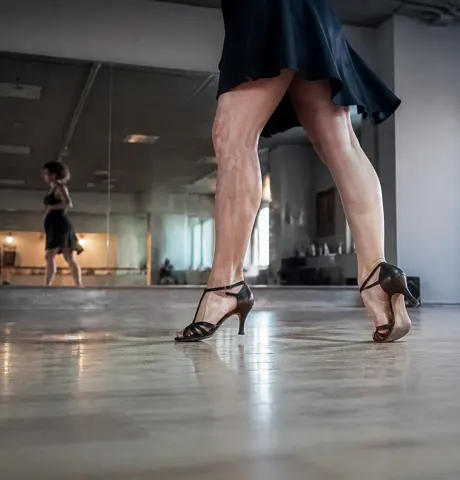 Dancing solo Samba: The 7 biggest mistakes in Samba no PéWhen dancing solo Samba, you often struggle with the extremely fast tempo. Learn here which technical mistakes are blocking you and how to fix them.
 Samba Passista Test: What is your solo level?Ready for the carnival stage? Take the samba passista test and find out how good your Samba no Pé really is.