
Samba connects you with the joy of life
On udansa you will find like-minded people who share your passion for dance. Exchange ideas, discover solo workshops, or find a partner for the next Brazilian cultural festival.



By Mary De LucaUpdated
On udansa you will find like-minded people who share your passion for dance. Exchange ideas, discover solo workshops, or find a partner for the next Brazilian cultural festival.
Samba no Pé is pure energy, expressed through fast footwork and rhythmic hip movements. With this guide, you can get started with Brazil's most famous solo dance without any prior knowledge.
Samba no Pé refers to the traditional Brazilian solo dance, which is characterized by fast, bouncy steps and rhythmic hip movements. It is the heart of the carnival in Rio de Janeiro and is danced without a dance partner.
When you think of Samba, you immediately see the colorful images of the carnival in Rio de Janeiro. The dance that defines these street festivals is called Samba no Pé. Translated, this simply means Samba on the foot. In contrast to the European ballroom dance variations or the Brazilian partner dance Samba, the Samba de Gafieira, this is a pure solo dance. You dance entirely for yourself, free in the space, carried by the driving energy of the drums. On udansa you will learn how this dance is structured.
The appeal of dancing Samba in a solo style lies in the direct connection between rhythm and body control. There is no fixed choreography that you have to coordinate with a partner. Every movement comes from your own center. This makes Samba no Pé a wonderful entry point for anyone who wants to develop an intense sense of body awareness and fully immerse themselves in the music without the coordination of another person.

The most important step on the way to becoming a Samba queen or king is understanding the timing. Samba no Pé is based on a quick triple step, which is danced to two beats of the music. The rhythm is best described as quick, quick, slow. Many beginners tend to make the steps too large. This inevitably leads to falling out of time as soon as the music speeds up.
To build the Samba solo basic step cleanly, it is best to start at a very slow tempo. Place your feet close together and keep your weight on the balls of your feet. Your knees should remain soft and bounce elastically. If you feel unsure during your first attempts, also read our guide on mistakes when learning solo dancing to avoid typical stumbling blocks from the start.
Correct
Wrong
Samba no Pé is not a dance you only dance with your feet: the movement originates in the pelvis and radiates through the entire body.
Samba music is fast, often extremely fast. Anyone who tries to keep up the tempo using pure muscle power in their legs will tire after just a few bars. The secret of experienced dancers lies in relaxation and the use of gravity. Only when your hips and pelvis swing along loosely does the typical, flowing Samba look emerge without you tensing up.
When practicing at home, start by using music styles that have a clear but slower beat. This gives you enough time to execute the weight transfer precisely. As soon as the movement has moved into your muscle memory, you can gradually increase the tempo. Samba no Pé is a constant game of balance that challenges your entire core musculature and is incredibly fun at the same time.
Freedom on the dance floor
You focus entirely on your own axis, improve your coordination, and are completely independent of a partner's steps. Perfect for finding your own rhythm.
A shared dialogue in space
You share the space, tune in through non-verbal signals, and dance in a dialogue. This style requires leading and adapting to your partner.
Samba no Pé is the solo carnival style from Rio de Janeiro, which is characterized by fast footwork. Samba de Gafieira, on the other hand, is an elegant Brazilian partner dance that combines elements of Tango and Salsa.
Start with very slow music or count the rhythm out loud while you perform the steps. Keep the steps extremely small and stay on the balls of your feet to increase your agility.
No, you do not need any prior knowledge to get started. Samba no Pé can be learned wonderfully from scratch, as you can focus entirely on your own body.
Find the perfect course to start your journey into this Brazilian solo dance.
BallroomMeißen · Germany
Tanzkreis | PROFESSIONALTuesday · 20:15 · Oct 27, 2026 - Jan 5, 2027
“Ein Haus für Vieles” - Saal Tanzkurse
BallroomMeißen · Germany
Fortgeschrittenen-Kurs | ADVANCEDTuesday · 18:30 · Nov 10, 2026 - Jan 19, 2027
“Ein Haus für Vieles” - Saal Tanzkurse
BallroomMeißen · Germany
Tanzkreis | PROFESSIONALThursday · 19:20 · Jan 7 - Mar 25, 2027
"Atelier Federleicht" - Saal Tanzkurse
 Dancing Samba: From Samba no Pé to competitive danceDancing Samba is pure joy of life. Learn everything about the fiery rhythm, the first steps, and how to get started successfully in our beginner's guide.
 The 5 most common mistakes when learning solo danceWhen dancing without a partner, mistakes can easily creep in unnoticed. Learn which 5 typical pitfalls slow down beginners and how you can avoid them.
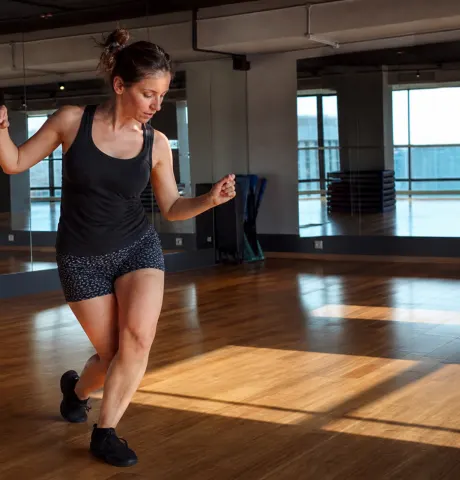 Dancing Samba solo: The guide for Samba no Pé and show danceDancing Samba solo brings the pure joy of life from Brazil directly to you. Learn everything about the technique of Samba no Pé and how to master the carnival dance.
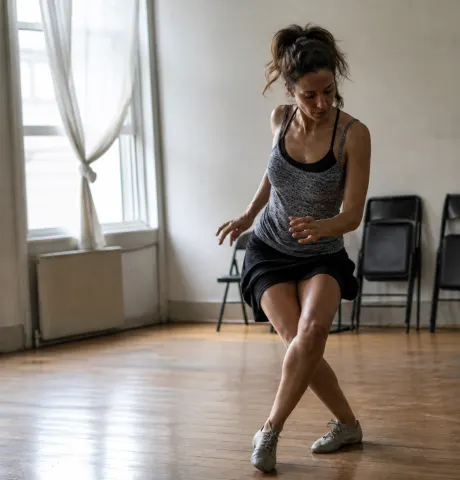 Samba Solo Basic Step: Beginner's GuideLearn the carnival-style Samba solo basic step systematically, no prior experience needed. Our simple guide helps you find your Brazilian rhythm step by step.
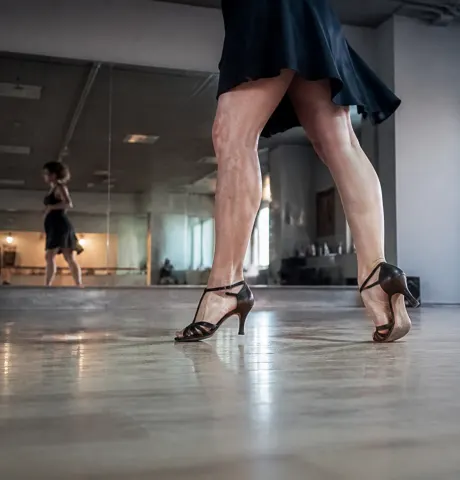 Dancing solo Samba: The 7 biggest mistakes in Samba no PéWhen dancing solo Samba, you often struggle with the extremely fast tempo. Learn here which technical mistakes are blocking you and how to fix them.
 Samba Passista Test: What is your solo level?Ready for the carnival stage? Take the samba passista test and find out how good your Samba no Pé really is.
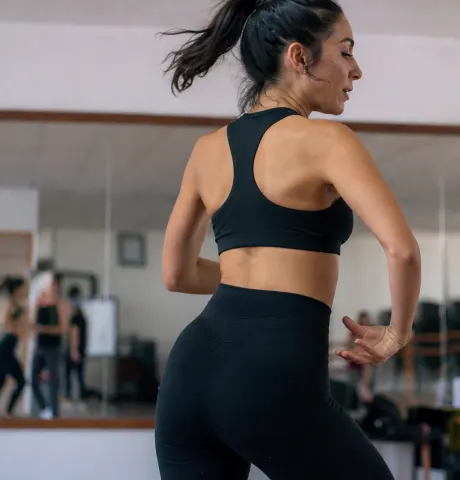 Learn Samba hip movement: Technique for solo dancersDiscover the secrets of Brazilian Samba hip technique. This guide shows you how to move your pelvis independently and master the signature Samba wave with targeted isolation exercises.
 Samba arm movements: Guide to elegant stylingBring elegance to your solo dance. Our guide shows you step by step how to perfectly coordinate your arm movements and dance with style in Samba no Pé.
 Samba Carnival Rio Trends: The Evolution of PassistasThe carnival in Rio de Janeiro is constantly reinventing itself. Learn how modern passistas are revolutionizing the samba runway with innovative costumes and urban dance styles.