
Find your Samba community on udansa
At udansa, you meet other Samba enthusiasts, find suitable workshops for Brazilian dances, and discover dance schools that teach authentic Samba no Pé.



By Mary De LucaUpdated
At udansa, you meet other Samba enthusiasts, find suitable workshops for Brazilian dances, and discover dance schools that teach authentic Samba no Pé.
The dance floor in Rio de Janeiro vibrates to the relentless beat of the drums. If you want to shine here as a solo dancer, you have to master the latest developments of the passistas.
Dance trends behave fundamentally differently than fashion trends on social networks. While a viral video clip on TikTok travels the world in days, a new dance style often takes months or years to establish itself in dance schools and on dance floors. This is because dancing is a physical experience that takes place in real space. A new trend must be adapted by dance instructors, taught in classes, and finally passed on from person to person at socials and parties. Only through this personal transmission and shared experimentation on the dance floor does a movement become anchored in the global community.
In the case of the Carnival in Rio de Janeiro, new currents emerge directly in the halls of the major samba schools (the quadras) and on the streets of Rio. From there, traveling passistas, international workshops, and platforms like udansa carry the new styles into global dance studios. Anyone who wants to learn Samba no Pé today is no longer dancing the same aesthetic as ten years ago. Modern trends reflect an enormous dynamic that makes traditional solo dance more athletic, more expressive, and stylistically more open.
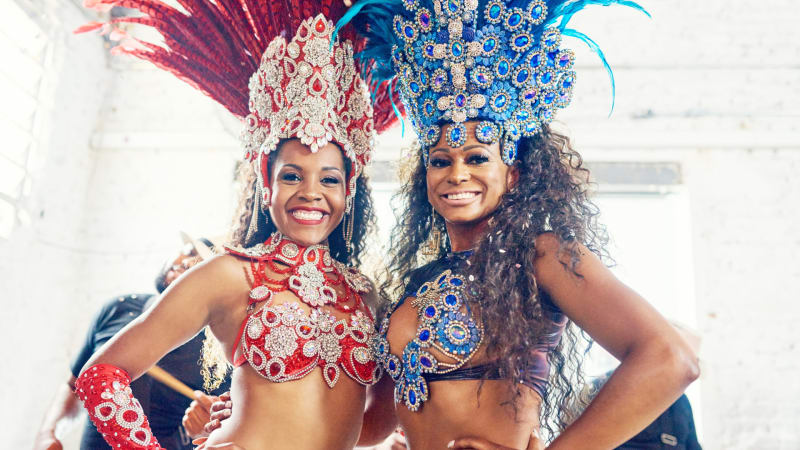
Modern passistas break away from the classic Samba posture and integrate fluid floorwork as well as dramatic jumps from contemporary dance. This fusion gives the traditional Samba no Pé a completely new, emotional depth and artistic three-dimensionality.
The new costume designs say goodbye to heavy wire frames. Elastic bodysuits, laser-cut appliqués, and ultra-light synthetic feathers allow dancers unprecedented agility at extreme Samba speeds.
The performance of the solo queens and passistas is becoming increasingly theatrical. Instead of a permanent, rigid smile, the dancers convey the entire emotional spectrum of Samba through their facial expressions, ranging from pride and melancholy to pure ecstasy.
The modern trends in the Rio Carnival come directly from the creative centers of the Samba schools like Mangueira, Portela, or Salgueiro. Young passistas, who often grow up in the favela communities from childhood, shape the style with their personal touch. These trends are moving away from purely rigid, traditional step patterns toward a fusion with urban influences. For solo dancers worldwide, this means that the dance is becoming more demanding, but also more individual. It is no longer just about keeping up with the extreme tempo of the bateria, but about giving the dance your own artistic flair.
If you want to try out these new trends, you should prepare for intensive training. The modern styles require enormous core stability and clean footwork to master the fast changes of direction and kicks without injury. It is helpful to know typical mistakes in advance, as described in the guide on mistakes in Samba no Pé. The development clearly shows: the modern Samba of the carnival has become a high-performance art form that challenges the entire body.
The modern passista is no longer just an ornament, but a highly trained athlete who combines traditional roots with modern street dance and contemporary expression.
Like this
Not like this
In modern passista styling, lightweight, flexible materials and modular costumes dominate. Instead of heavy frames, dancers wear ergonomically adapted feather crowns and elastic bodysuits that guarantee maximum freedom of movement.
Current Rio carnival dance trends combine classic Samba no Pé with elements from jazz dance, Hip-Hop, and contemporary. This makes the movements more expansive, athletic, and expressive.
Yes, absolutely. Solo dancing in the carnival style is an excellent full-body and cardio workout that intensively strengthens endurance, coordination, and especially the deep core muscles.
Find the right class on udansa to learn the fast steps of Samba no Pé systematically.
BallroomMeißen · Germany
Tanzkreis | PROFESSIONALTuesday · 20:15 · Oct 27, 2026 - Jan 5, 2027
“Ein Haus für Vieles” - Saal Tanzkurse
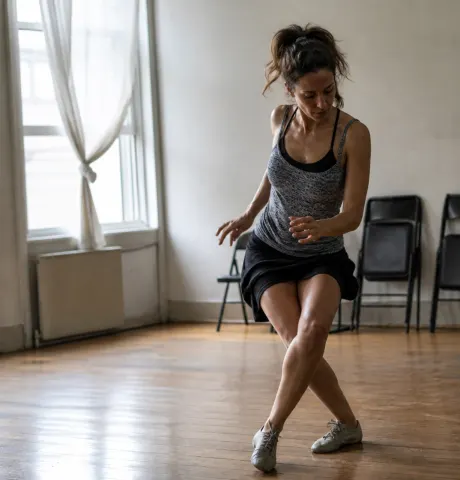 Learn Samba no Pé: Your start in solo danceSamba no Pé is Brazil's most famous solo dance. Learn here how to systematically build the basic step and master the fast tempo.
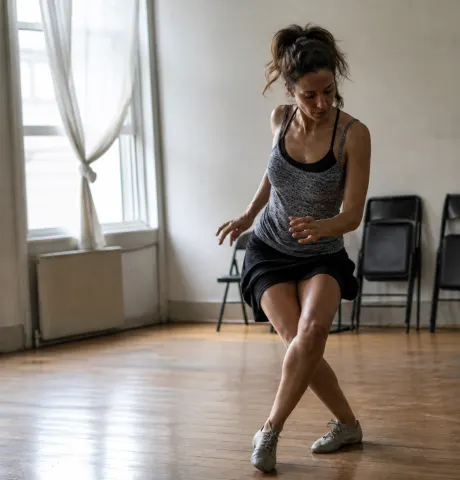 Samba Solo Basic Step: Beginner's GuideLearn the carnival-style Samba solo basic step systematically, no prior experience needed. Our simple guide helps you find your Brazilian rhythm step by step.
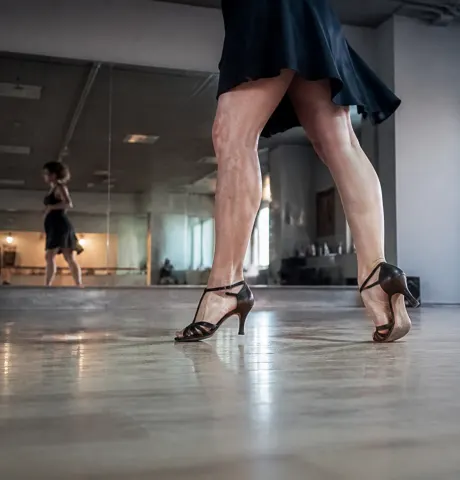 Dancing solo Samba: The 7 biggest mistakes in Samba no PéWhen dancing solo Samba, you often struggle with the extremely fast tempo. Learn here which technical mistakes are blocking you and how to fix them.
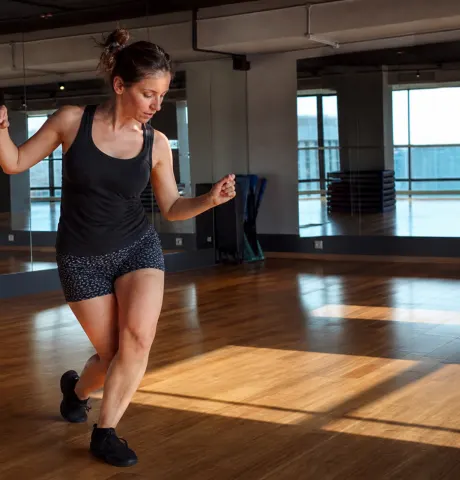 Dancing Samba solo: The guide for Samba no Pé and show danceDancing Samba solo brings the pure joy of life from Brazil directly to you. Learn everything about the technique of Samba no Pé and how to master the carnival dance.
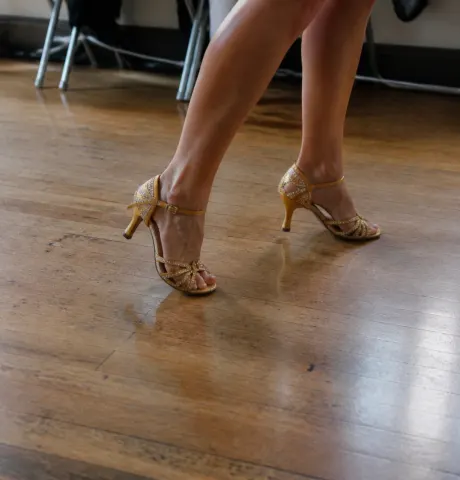 Samba solo dance shoes: The best heels for CarnivalThe right shoe makes the difference between brilliance and pain during Samba no Pé. Learn in our guide how to choose the perfect Samba heels for Carnival.
 Samba Solo Warm-up: Guide for home trainingPrepare your body optimally for the fast pace of this Brazilian solo dance. This structured warm-up guide protects your joints and activates your muscles for training at home.
 Samba Fitness Workout: Solo dance as cardio trainingSamba Fitness combines the joy of Brazilian dance with a sweat-inducing cardio workout. Learn how to train solo and effectively improve your endurance.
 Dancing Samba at high speed: 5 tips for fast temposDancing Samba at high speed requires the perfect blend of precise technique and mental calm. Learn how to master the rapid pace.
 Samba Carnival Makeup: Guide to the perfect lookWith the right samba carnival makeup, you will shine on stage without anything smudging. Learn here how to make your solo look completely sweat-proof and stage-ready.
 Samba Rainha de Bateria: The role of the solo queenThe Samba Rainha de Bateria is the queen of the drummers and the energetic center of every parade. Our guide explores the fascinating demands of this challenging solo role.