
Find your rhythm together
Whether you are still working on your first basic step or are already looking for like-minded people for a joint practice session: on udansa you will meet other dance enthusiasts in your region.



By Mary De LucaUpdated
Whether you are still working on your first basic step or are already looking for like-minded people for a joint practice session: on udansa you will meet other dance enthusiasts in your region.
The Samba Solo basic step often seems unattainable due to its rapid pace. With the right method, you can break the fluid movement down into simple partial steps and bring the Brazilian carnival directly into your living room.
Brazilian Samba no Pé, as known from the world-famous carnival in Rio, is pure energy and joy of life. However, the rapid movements of the professionals can seem intimidating to beginners. The key to success is to completely ignore the extremely high tempo of the music at the beginning. Anyone who wants to learn the Samba solo basic step must isolate the movement and anchor it in the body extremely slowly. Only when the interplay of weight transfer, knee work, and the typical hip swing works fully automatically at a slow pace, should the speed be increased step by step.
For successful training at home, it is recommended to build the foundation in Samba solo dancing without any pressure. You do not need a partner or a professional dance floor for this. A non-slip floor and comfortable clothing are completely sufficient to internalize the typical back-and-forth bounce. Focus exclusively on your feet and legs during the first practice sessions before you add the arms later.

Stand up straight with your feet hip-width apart. Shift your entire body weight onto your left foot and bend both knees slightly to adopt an elastic starting posture.
Place your right foot a little bit behind you and briefly put your weight on the ball of your foot. Push off immediately while your left knee bends slightly.
Place your left foot down on the spot and shift your weight completely onto this leg. This is the stabilizing intermediate step that keeps the rhythm.
Pull your right foot back to the front next to the left one and now put your full weight on it. You have successfully shifted your weight and are ready for the other side.
Now repeat the entire sequence in reverse by starting with your left foot moving backwards. Practice this transition extremely slowly until the sequence flows smoothly.
Correct
Mistakes
Preparation
Meanwhile
Follow-up
The Samba Solo basic step is counted in a fast 2/4 time. The typical way to count the footwork is "one-and-two, three-and-four", where the intermediate step on the "and" is particularly short.
Samba no Pé is traditionally danced on the balls of the feet. The heels almost never touch the floor during the fast basic step to ensure the necessary liveliness and speed.
No, with the Samba Solo basic step you hardly move from the spot. The steps are kept extremely small and are placed directly under your own center of gravity so you do not lose your balance.
Find the right course now and learn the Samba solo basic step under professional guidance.
ZumbaLimbach-Oberfrohna · Germany
ZUMBA® Fitness ClubTuesday · 18:45 · Oct 27
Limbach-Oberfrohna
BallroomMeißen · Germany
Tanzkreis | PROFESSIONALTuesday · 20:15 · Oct 27, 2026 - Jan 5, 2027
“Ein Haus für Vieles” - Saal Tanzkurse
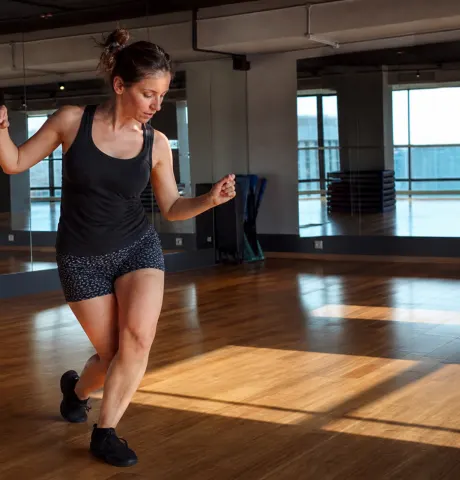 Dancing Samba solo: The guide for Samba no Pé and show danceDancing Samba solo brings the pure joy of life from Brazil directly to you. Learn everything about the technique of Samba no Pé and how to master the carnival dance.
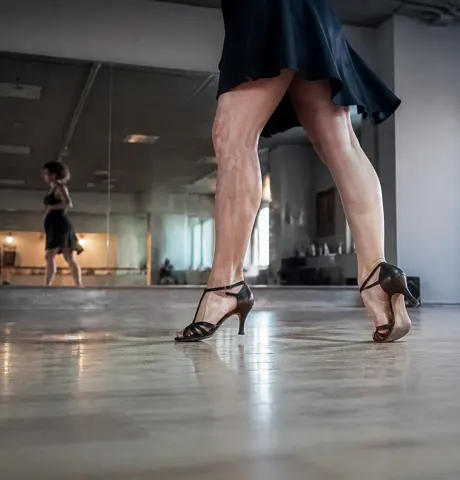 Dancing solo Samba: The 7 biggest mistakes in Samba no PéWhen dancing solo Samba, you often struggle with the extremely fast tempo. Learn here which technical mistakes are blocking you and how to fix them.
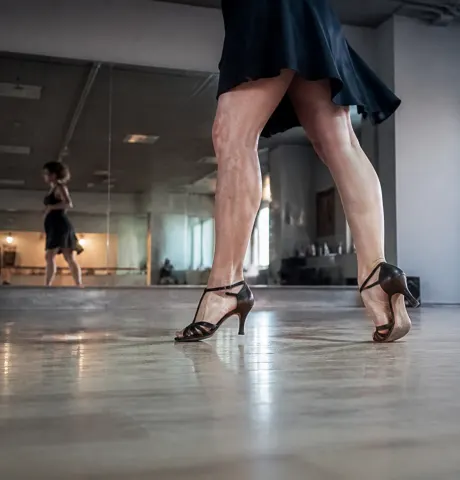 Samba Passista Test: What is your solo level?Ready for the carnival stage? Take the samba passista test and find out how good your Samba no Pé really is.
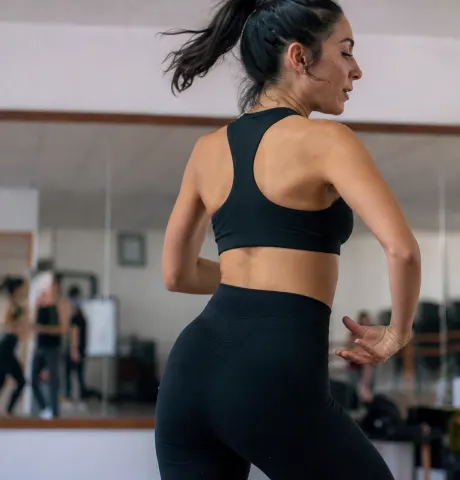 Learn Samba hip movement: Technique for solo dancersDiscover the secrets of Brazilian Samba hip technique. This guide shows you how to move your pelvis independently and master the signature Samba wave with targeted isolation exercises.
 Samba arm movements: Guide to elegant stylingBring elegance to your solo dance. Our guide shows you step by step how to perfectly coordinate your arm movements and dance with style in Samba no Pé.
 Samba Carnival Rio Trends: The Evolution of PassistasThe carnival in Rio de Janeiro is constantly reinventing itself. Learn how modern passistas are revolutionizing the samba runway with innovative costumes and urban dance styles.
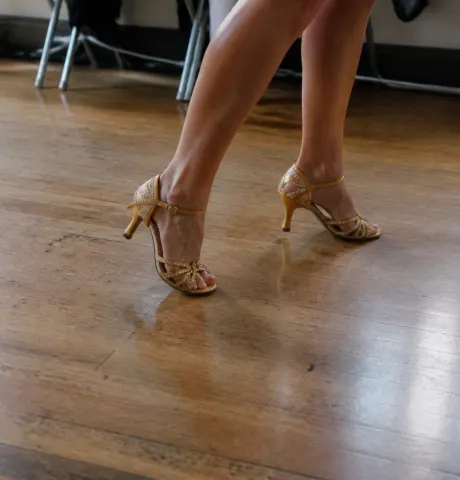 Samba solo dance shoes: The best heels for CarnivalThe right shoe makes the difference between brilliance and pain during Samba no Pé. Learn in our guide how to choose the perfect Samba heels for Carnival.