
Find your Samba community on udansa
On udansa, you meet other dance enthusiasts who share your passion for Brazilian rhythms and discover suitable courses or workshops in your area.



By Bernhard De LucaUpdated
On udansa, you meet other dance enthusiasts who share your passion for Brazilian rhythms and discover suitable courses or workshops in your area.
Samba no Pé is the pure energy of the Brazilian carnival, expressed in a fascinating solo dance. Discover how you can conquer the dance floor on your own with the right technique and a good sense of rhythm.
Samba no Pé refers to the traditional Brazilian solo dance style, which is danced primarily during Carnival to the rhythms of the samba schools. Characteristic features include the rapid alternating steps on the spot and the fluid hip movements.
When people think of Samba, they usually picture the massive parades in Rio de Janeiro. However, the basis of these spectacular shows is a very specific solo dance that is deeply rooted in Brazilian culture: Samba no Pé. Translated, this simply means Samba on the foot. Unlike the standard versions of tournament sports or Brazilian partner dances like Samba de Gafieira, this is danced completely without a partner. It is about the pure connection between your own body and the driving drum rhythms of the Samba schools.
The foundation for learning Samba no Pé is the coordination of footwork and hip movement. Unlike many European dances, the movement here originates from the center of the body. While the feet perform a fast, three-step pattern over two beats, the pelvis reacts with a fluid counter-movement. Once you have internalized this rhythm, you will experience a completely new form of dance freedom. It is an excellent workout and the perfect basis for anyone venturing their first steps in solo dancing. If you are generally looking for tips on how to overcome typical initial hurdles, our guide on the 5 most common mistakes when learning solo dancing will help you.

The basic Samba solo step sequence is based on a fast change step, which must be placed on the rhythm with extreme precision. The biggest challenge with Samba solo dance technique lies in the weight transfer. The basic step is traditionally performed slightly backwards. While the front foot remains flat on the floor, the back foot only touches down on the ball. This constant play with gravity creates the typical bouncing that gives Samba its incomparable dynamics.
A common mistake for beginners is to keep the knees stiff. However, the entire suspension must come elastically from the ankles and knees. Only when this foundation is solid does styling come into play. In Samba show dance and at carnival, the arms play a supporting role. They frame the body, emphasize the hip movements, and provide the necessary balance during fast turns. Coordination is everything here: while the feet work in a high-speed beat, the arms must glide through the air light as a feather and elegantly. This requires patience and continuous training, but in the end, it gives you an incredible presence on every dance floor.
Correct
Wrong
Samba no Pé is not a dance that you only dance with your feet, it is a way of life that captures your entire body from the tips of your toes to your smile.
The Rio Carnival is world-famous for its opulent costumes, glittering headpieces, and the unbridled energy of the passistas, the solo dancers of the Samba schools. If you want to present Carnival Samba steps on a stage, the right styling is an inseparable part of it. The clothing must guarantee maximum freedom of movement while visually enhancing the dynamics of your hip movements. Fringes, sequins, and bright colors are the first choice here, as they emphasize every small movement of the hips in the spotlight.
Besides the outfit, charisma is the decisive factor in show dance. Samba is pure joy of life, and that must be reflected in your face. A genuine, radiant smile and direct eye contact with the audience turn a good performance into an unforgettable experience. If you want to further refine your dance presence, it is worth taking a look at techniques from other expressive solo dances. Feel free to check out our guide, in which we explain how you can train your K-Pop dance facial expressions to specifically improve your charisma on stage. With the right mix of technique, styling, and energy, you are guaranteed to draw all eyes to you.
The roots of carnival
Samba no Pé is the traditional form of solo carnival dance. It focuses on rhythmic footwork, the typical bouncing, and an authentic connection to live samba music.
Made for the big show
Samba show dance combines traditional steps with elements of jazz, ballet, and acrobatics. Here, the focus is on choreographed sequences, expansive formations, and visual stage impact.
Samba no Pé is danced entirely solo, while Samba de Gafieira is a traditional Brazilian partner and social dance. In the solo version, the focus is on your own body control and the speed of your feet.
For beginners, light, sporty clothing and flat footwear like sneakers or jazz shoes are suitable. Later on, for show dancing, you can switch to special dance shoes with heels to emphasize leg extension.
Yes, Samba no Pé is an excellent solo dance that requires no prior experience in partner dancing. With patience and a focus on slow rhythm training, anyone can learn the basic steps.
Find the right course for Samba Solo or Samba no Pé and start your training.
ZumbaLimbach-Oberfrohna · Germany
ZUMBA® Fitness ClubTuesday · 18:45 · Oct 27
Limbach-Oberfrohna
BallroomMeißen · Germany
Tanzkreis | PROFESSIONALTuesday · 20:15 · Oct 27, 2026 - Jan 5, 2027
“Ein Haus für Vieles” - Saal Tanzkurse
BallroomMeißen · Germany
Fortgeschrittenen-Kurs | ADVANCEDTuesday · 18:30 · Nov 10, 2026 - Jan 19, 2027
“Ein Haus für Vieles” - Saal Tanzkurse
 The 5 most common mistakes when learning solo danceWhen dancing without a partner, mistakes can easily creep in unnoticed. Learn which 5 typical pitfalls slow down beginners and how you can avoid them.
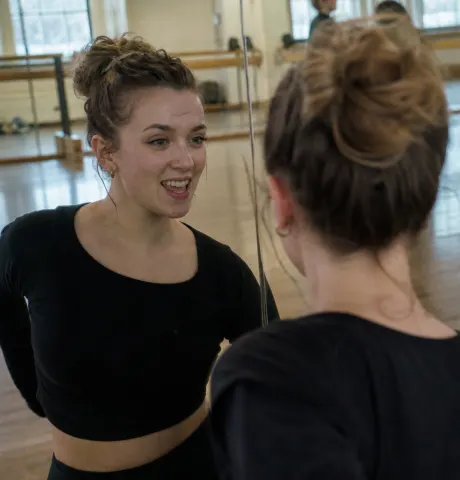 Mastering K-Pop facial expressions: Your guide to stage presenceLearn how to consciously train your facial expressions for K-Pop dancing. With these practical tips and exercises, you will give your cover dances the perfect stage presence.
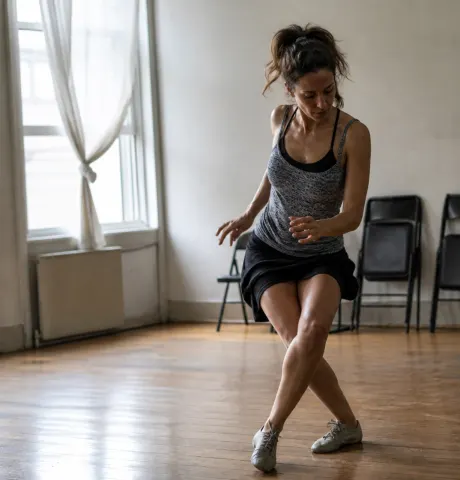 Learn Samba no Pé: Your start in solo danceSamba no Pé is Brazil's most famous solo dance. Learn here how to systematically build the basic step and master the fast tempo.
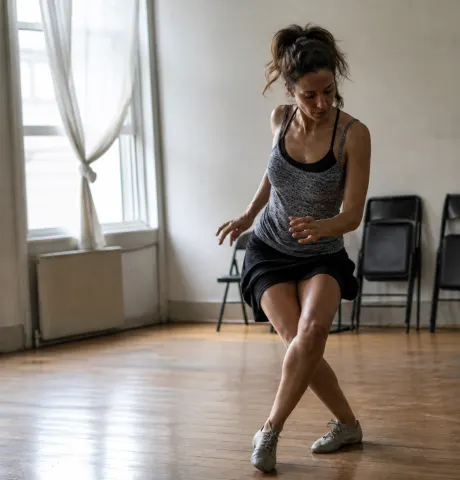 Samba Solo Basic Step: Beginner's GuideLearn the carnival-style Samba solo basic step systematically, no prior experience needed. Our simple guide helps you find your Brazilian rhythm step by step.
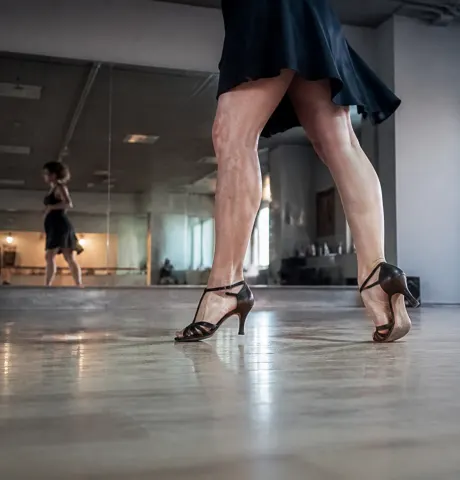 Dancing solo Samba: The 7 biggest mistakes in Samba no PéWhen dancing solo Samba, you often struggle with the extremely fast tempo. Learn here which technical mistakes are blocking you and how to fix them.
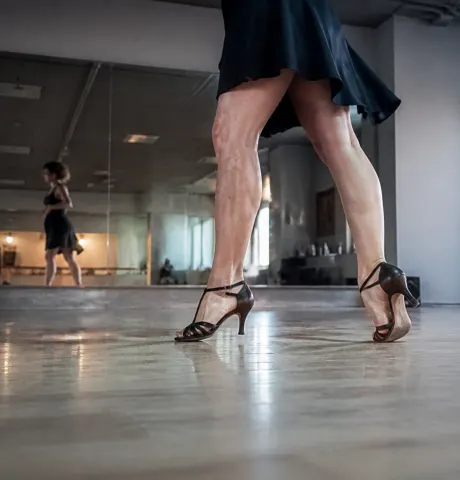 Samba Passista Test: What is your solo level?Ready for the carnival stage? Take the samba passista test and find out how good your Samba no Pé really is.
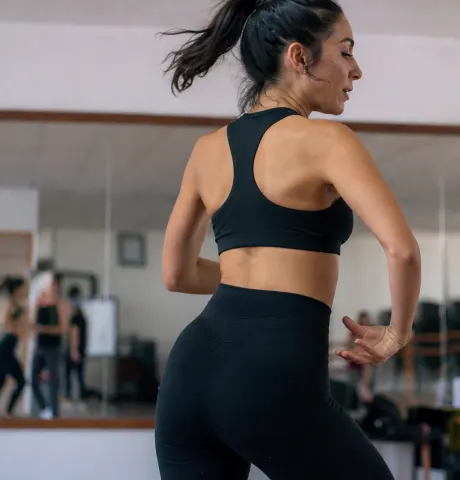 Learn Samba hip movement: Technique for solo dancersDiscover the secrets of Brazilian Samba hip technique. This guide shows you how to move your pelvis independently and master the signature Samba wave with targeted isolation exercises.
 Samba arm movements: Guide to elegant stylingBring elegance to your solo dance. Our guide shows you step by step how to perfectly coordinate your arm movements and dance with style in Samba no Pé.
 Samba Carnival Rio Trends: The Evolution of PassistasThe carnival in Rio de Janeiro is constantly reinventing itself. Learn how modern passistas are revolutionizing the samba runway with innovative costumes and urban dance styles.
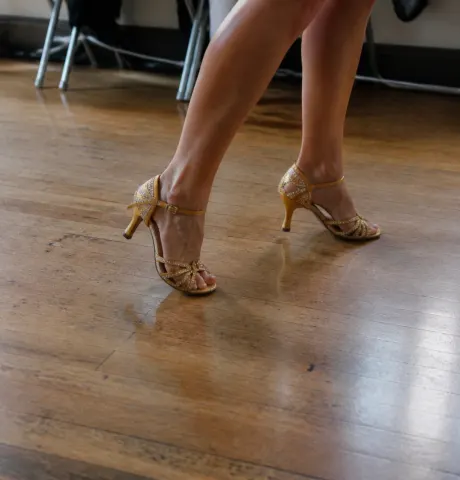 Samba solo dance shoes: The best heels for CarnivalThe right shoe makes the difference between brilliance and pain during Samba no Pé. Learn in our guide how to choose the perfect Samba heels for Carnival.
 Samba Solo Warm-up: Guide for home trainingPrepare your body optimally for the fast pace of this Brazilian solo dance. This structured warm-up guide protects your joints and activates your muscles for training at home.
 Samba Fitness Workout: Solo dance as cardio trainingSamba Fitness combines the joy of Brazilian dance with a sweat-inducing cardio workout. Learn how to train solo and effectively improve your endurance.
 Dancing Samba at high speed: 5 tips for fast temposDancing Samba at high speed requires the perfect blend of precise technique and mental calm. Learn how to master the rapid pace.
 Samba Carnival Makeup: Guide to the perfect lookWith the right samba carnival makeup, you will shine on stage without anything smudging. Learn here how to make your solo look completely sweat-proof and stage-ready.
 Samba Rainha de Bateria: The role of the solo queenThe Samba Rainha de Bateria is the queen of the drummers and the energetic center of every parade. Our guide explores the fascinating demands of this challenging solo role.