Dance course compass5 minutes

Allowing closeness while dancing: What type of comfort are you?

In short
  • Everyone has an individual comfort zone that determines how much physical closeness is perceived as pleasant while dancing.
  • An honest self-test helps young people determine their own comfort type on the dance floor and better assess their own boundaries.
  • Comfort zones range from the distant observer who needs plenty of space to the sociable team player who seeks close connection.
  • Clearly communicating your own boundaries in a dance class ensures a sense of security and prevents misunderstandings with your dance partner.

The first partner dance in your life often stirs up not just your feet, but your emotions too. Find out how much space you need on the dance floor to feel completely comfortable.

Understanding your personal comfort zone on the dance floor

The first step onto the dance floor in a beginner dance class is exciting. Suddenly, you are facing someone you might barely know, and you are expected to hold hands or place a hand on their shoulder. This is completely normal, but it often feels unfamiliar at first. Every person has a different invisible boundary when it comes to physical proximity. In partner dance, however, this close contact is part of the sport and the movement.

To feel truly comfortable in class, it helps to know your own comfort zone when dancing. If you know how much proximity is okay for you, you can much more easily overcome shyness while dancing and focus fully on the music. There is no right or wrong here. Some dancers need a bit of space at the beginning, while others are immediately in their element. What is important is that you know your boundaries and can communicate them kindly, but firmly, on the dance floor.
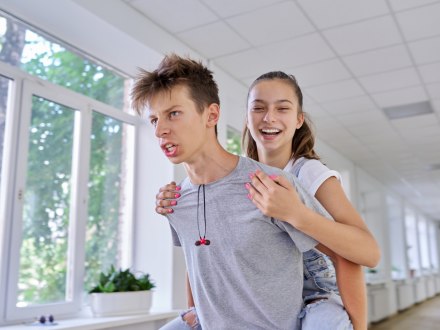
Take the test: Which comfort type are you?

  1. How do you react when your dance partner takes your hands?

    • A: I hesitate for a moment and try to keep my arms as long as possible.
    • B: It is okay for me, as long as the grip is loose and not too tight.
    • C: I find it completely normal and immediately establish a stable connection.
  2. Which dance hold do you prefer in your first lesson?

    • A: A solo dance without a partner, where everyone practices on their own.
    • B: The open hand hold, where we only touch hands.
    • C: The closed standard hold with a hand on the partner's shoulder.
  3. What goes through your mind when someone gets very close to you while dancing?

    • A: I automatically step back a bit to maintain my personal space.
    • B: I wait to see if it is necessary for the move, and then I adjust.
    • C: I focus on the rhythm and simply tune out the closeness.
  4. How do you handle misunderstandings regarding personal space in class?

    • A: I tend to withdraw or hope that my partner notices.
    • B: I kindly say that I need a bit more space for this move.
    • C: I adjust my posture directly and gently guide my partner to a comfortable distance.

Your evaluation

Mostly A: The space seeker

You value your personal space a lot and feel most comfortable when you can keep some distance from your dance partner. That is perfectly fine and often even helpful when learning the first steps to keep an overview. Communicate your desire for space openly so that your partner can adjust to it.

Mostly B: The balanced dancer

You find a good balance between the physical connection and your own comfort zone. You are able to engage in body contact, but you set clear boundaries when it feels too close for you. With this healthy attitude, you are a very pleasant dance partner who can both allow closeness and provide personal space.

Mostly C: The connection seeker

You have no problem with physical contact and are looking for a direct, athletic connection when dancing to feel or give the lead optimally. Make sure to respect the boundaries of your dance partner, as not everyone is as comfortable with closeness as you are. A quick question ensures that both of you feel comfortable.

The comfort types in direct comparison

CriterionThe space seeker (Type A)The balance dancer (Type B)The connection seeker (Type C)
Preferred distanceMaximum arm distanceFlexible depending on the dance styleClose, stable dance frame
Communication in classRather reservedAddresses boundaries directlyActively asks for feedback
Greatest strengthKeeps an overview of the stepsAdapts to the partnerFeels the lead immediately
ChallengeMust learn to allow closenessMust maintain own boundariesMust respect the other person's space

The types are based on the typical behavior of young people in the first few hours of a ballroom dance course.

udansa tip

Use conscious dry runs at the beginning of the course. If you practice the steps with a bit of distance and without a fixed hold first, the later physical contact will be much easier.

How to use your test result in class

As soon as you know your test result, you can act quite differently in dance class. If you notice that a turn or a close hold feels too close for comfort, you are allowed to address it at any time. A short Let's increase the distance a bit during the Waltz, then I can focus better on the steps is perfectly sufficient. Your dance partner will understand, as they are likely also happy if the atmosphere remains relaxed.

This knowledge is especially helpful when preparing for the intermediate ball and final ball in your dance course. You can specifically look for partners who prefer a similar dance style and the same comfort distance as you. This way, the big evening will be a complete success where you feel completely secure in your own skin.

Frequently asked questions

  1. Communicate your boundary kindly and directly. A sentence like: Please let us keep a bit more distance so that I can learn the steps better, helps immediately and comes across as completely professional.

Student dance courses near you

Find the perfect entry into the world of dance and meet nice people in your age group.

View all matching courses
udansa community

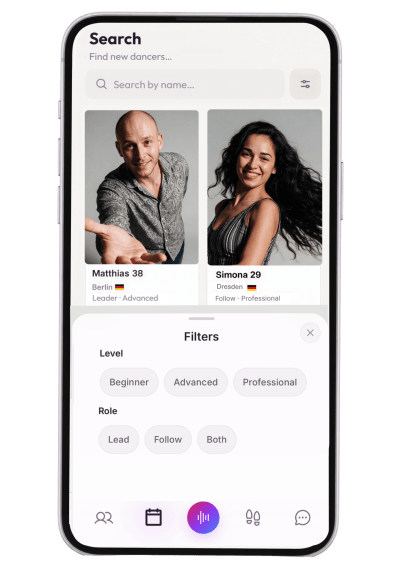
Find your dance community on udansa

Whether you prefer to keep some distance or take the dance floor by storm, you will find like-minded people for your next dance course or big event on udansa.

Find your dance community on udansa