Find your connection through dancing
Whether you are still looking for the right dance school or want to meet like-minded people in your area: on udansa you can easily connect with other young people.

By Bernhard De LucaUpdated
Whether you are still looking for the right dance school or want to meet like-minded people in your area: on udansa you can easily connect with other young people.
Taking the first step into a dance class takes courage, especially without a partner. However, starting solo offers you the best opportunity to make new contacts and learn how to dance from scratch in a flexible way.
Lead and Follow refer to the two roles in partner dance, where one person suggests the direction of movement and the other responds to it sensitively. In modern dance classes, all participants learn the basics of this communication regardless of gender.
You want to sign up for a student dance course, but none of your friends have the time or interest? Don't worry, because the decision to sign up for a student dance course on your own has long been the norm in dance schools. The idea that everyone else walks through the door already in pairs and perfectly in sync is a myth. In fact, the majority of young people start solo.
Dance schools are well prepared for this and match registrations in advance so that the ratio between leaders and followers is balanced. If you are looking for a dance partner in a student dance course, you will quickly realize that almost everyone is in the same boat. The shared excitement connects you and breaks down initial shyness extremely quickly.
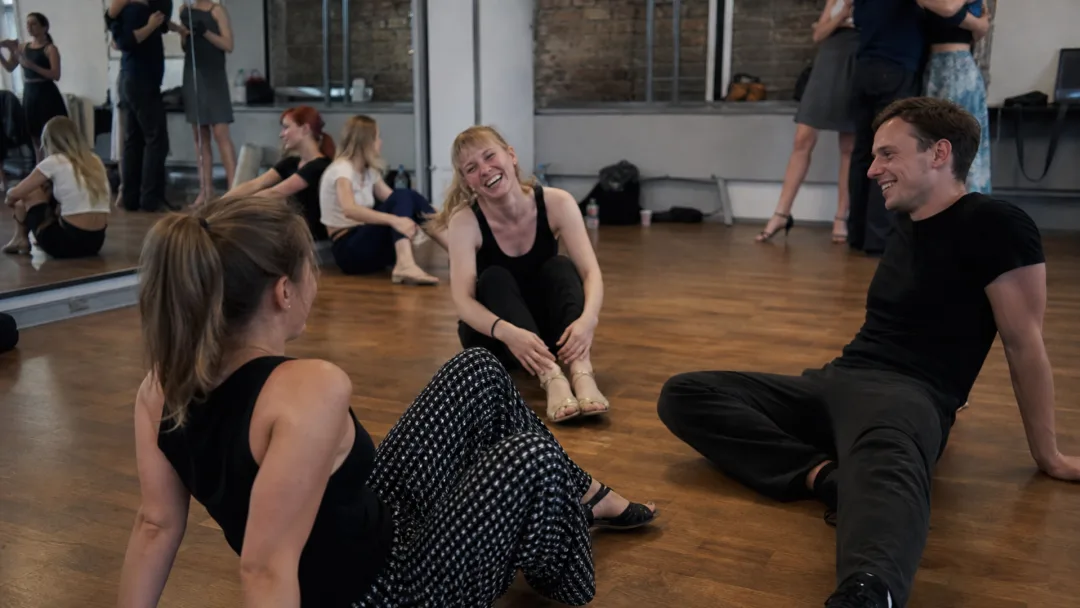
In modern dance classes for teenagers, constant partner rotation is firmly anchored in the concept. No one dances with just one person for weeks anymore. This has tangible benefits for your dance development: you learn from the very first second how to adapt to different people, heights, and movement styles. Anyone who only practices with the same partner quickly gets used to mistakes that become immediately apparent when switching.
At the same time, partner rotation takes the social pressure off your shoulders. You don't have to worry about whether the chemistry is perfect for the entire course or if you are boring someone. After every song, the line moves on, and you collect new impressions by the minute. It is the most relaxed method to playfully make progress while improving body awareness for teenagers.
That's how it works
Don't do this
Find the right start now and meet nice people on the dance floor.
Student DanceBurgstädt · Germany
Aufbaukurs Burgstädt Montag Schuljahr 2026/27Monday · 13:30 · Nov 9, 2026 - Jan 25, 2027
Burgstädt
Student DancePenig · Germany
Aufbaukurs Penig Schuljahr 2026/27Monday · 14:30 · Nov 9, 2026 - Jan 25, 2027
Penig
Student DanceLimbach-Oberfrohna · Germany
Tanzschuljahr L-O MontagMonday · 16:30 · Nov 9
Limbach-Oberfrohna
The teenagers who come to us without a fixed partner are often the most flexible dancers after just a few weeks and make the most new friends in the course.
A dance course without a partner for teenagers is basically a huge opportunity to meet new people outside of your own schoolyard. Since everyone is focused on learning the steps, there is no awkward silence. You laugh together about botched turns, celebrate successful figures, and start talking automatically without having to struggle to come up with small talk topics.
Many lasting friendships and cliques are formed in these very first weeks because you meet in a completely carefree environment. When the preparation for the big event is coming up at the end, you can use the Ready for the prom self-test to check how confident you feel on the dance floor in a relaxed way. By then, you will have long since built up a large circle of familiar faces around you.
Maximum flexibility from the start
You focus entirely on yourself, develop an independent sense of rhythm, and learn to adapt lightning-fast to different dance partners in constant rotation.
Security through familiarity
You start with someone you know, which means you have to overcome less, but you run the risk of adapting too much to the other person's mistakes and making fewer new contacts.
No, absolutely not. Dance schools coordinate registrations to ensure a balanced ratio of dance roles, so no one has to sit on the sidelines for long.
Changing partners is a key part of the lessons. You will dance with many different people during a class, which helps you adapt to different leading styles more quickly.
Just wear comfortable everyday clothes that allow you to move well. Clean sneakers with a sole that is not too grippy are perfect for getting started.
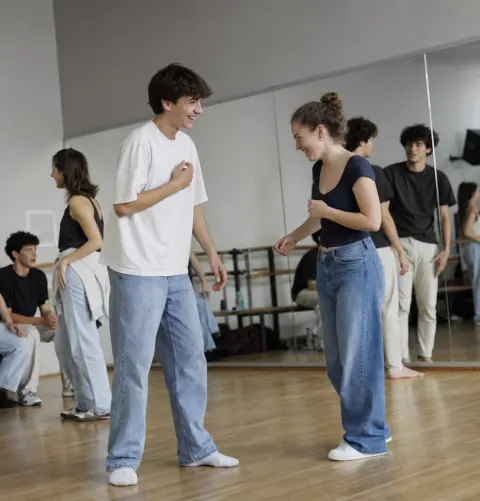 Boost confidence through dance: Overcoming shyness
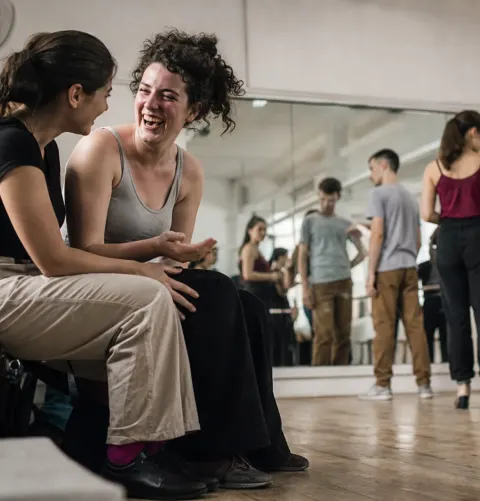 Dance personality test for teens: Which style suits you?
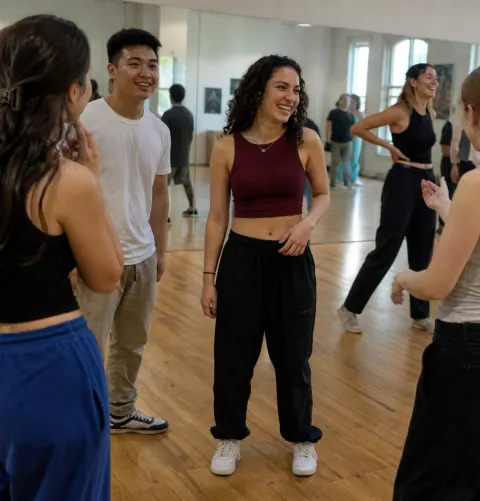 Positive body image through dance: Confidence during puberty
 Dance trends for teens: How social media builds confidence
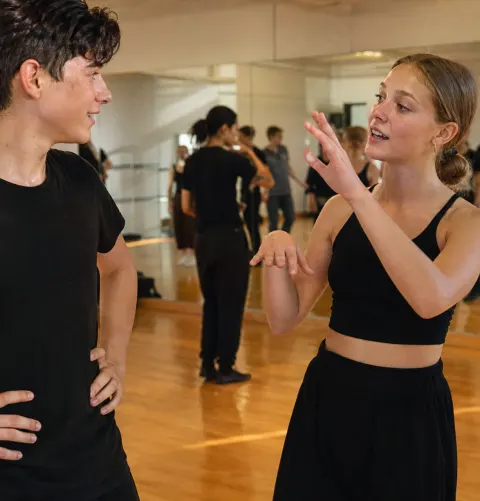 Giving feedback in dance class: Constructive tips for teens
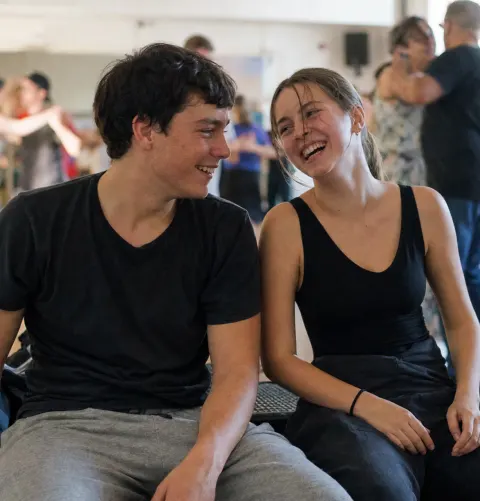 Overcoming comparison pressure in dance class: fun over perfection
 Avoiding awkward moments in your dance class: 5 top tips