Dancing in Berlin5 minutes

Find a dance course in Berlin for beginners: your guide

In a nutshell
  • A dance course for beginners in Berlin teaches the absolute basics of the most popular social dances without any prior knowledge.
  • Most Berlin dance schools offer flexible club memberships or fixed course blocks over several weeks.
  • Thanks to the rotation principle in class, signing up for almost all courses is also possible without your own dance partner.

The decision is made: you finally want to learn to dance in Berlin. But between hip studios and traditional ballrooms, it is easy to lose track of which start really matches your own expectations.

Definition
Rotation principle

The rotation principle refers to the systematic changing of dance partners during a class. As a result, participants learn to adapt to different leading styles more quickly, and the group bonds faster.

The easy way into the Berlin dance world

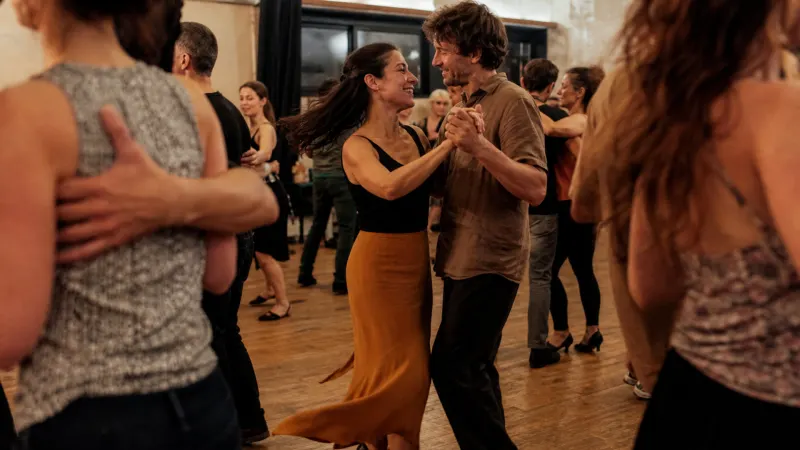
Anyone wanting to start dancing in Berlin faces an almost overwhelming selection of possibilities. From traditional dance schools in sophisticated Charlottenburg to alternative backyard studios in Kreuzberg, the Spree metropolis offers the right start for every taste. A dance course for beginners in Berlin is the classic way to learn the first steps in partner dance. udansa is characterized by a particularly lively and uncomplicated dance scene, where rigid conventions have long since been broken down. Here, it is primarily about having fun moving and making new contacts.

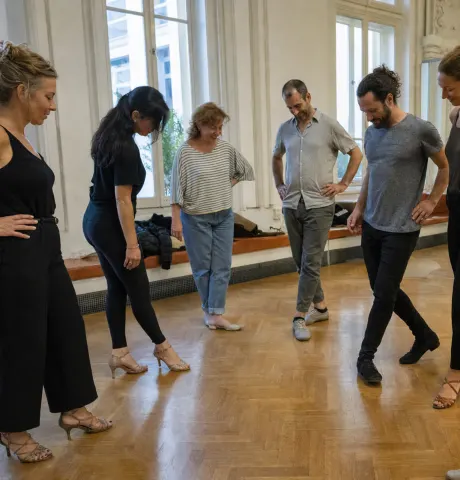
When you enter a dance school for the first time, you will quickly realize that the level is tailored to absolute newcomers. No one expects you to be able to count beats or perform complicated figures already. The focus is entirely on learning the basics, music theory, and the feeling for your partner. An important aspect for a smooth start is also your behavior in the course. You can find helpful tips on this in the dance course etiquette for beginners, which explains the most important unwritten rules of the dance floor.

Comparing contract models and the World Dance Program

A central point when comparing the offers in Berlin is the billing model. Many classic schools rely on fixed course durations of usually four to eight weeks, which are paid in advance. This gives you structure and a fixed group with which you start from scratch together. In contrast, there are modern flat-rate systems and monthly club memberships. These subscriptions allow you to flexibly attend different courses and appointments per week. Anyone who wants to remain flexible should filter the dance courses in Berlin precisely according to these contract details.

For absolute beginners, the World Dance Program (WTP) is the ideal guide. This standardized system ensures that you learn the most important social dances, such as Waltz, Cha-Cha-Cha, and Discofox, in such a way that you can use them on any dance floor worldwide. The prices for a beginner course in Berlin usually range between 80 and 140 euros for a multi-week block, while monthly memberships are often available from 40 euros. When making your selection, pay attention to whether trial lessons are offered so that you can test the atmosphere in advance without any obligation.

A successful start at the dance school

Correct

  • Use trial classes to test the atmosphere and instructors in advance
  • Make sure to wear flat shoes with clean and smooth soles
  • Be open to the rotation principle and new dance partners

Wrong

  • Joining advanced clubs directly without any prior knowledge
  • Buying expensive special shoes for your very first trial lesson
  • Resisting changing partners out of shyness
udansa tip

Before committing to a registration, take advantage of the introductory parties or trial classes often offered by Berlin dance schools. This way, you can immediately feel whether the music selection and the crowd are a good fit for you.

In Berlin, learning to dance is not about stiff perfection, it is about the joy of meeting others and finding a shared rhythm from the very first second.

Dance teacher, Berlin-Friedrichshain

Learn to dance without a partner thanks to rotation

One of the most common concerns for beginners is the question of finding a companion. The good news first: you do not need a fixed partner for a modern dance course in Berlin. Most dance schools in Berlin use the proven rotation principle in their beginner courses. This means that partners are changed regularly during the class. This not only has a high social factor, but also boosts learning success enormously. Those who constantly adapt to new dance partners learn to lead more precisely or follow more sensitively, faster.

If you are still specifically looking for a fixed companion for a complete course block, it is worth taking a look at specialized communities on the internet. On udansa, you can specifically search for like-minded people in your area who share the same level and the same interests. This way, you can start the dance course adventure together as a fixed team and also arrange to practice at the numerous social dance parties in Berlin outside of class hours.

Two ways to your first dance step

Course block

The structured block course

Fixed dates and a fixed group

You sign up for a fixed period, learn in a consistent group, and complete a clearly structured program from the first to the last class.

Flat rate

The flexible club membership

Maximum flexibility in your subscription

You pay a monthly fee and can flexibly attend different sessions and dance styles per week, perfect for irregular working hours.

Frequently Asked Questions

  1. Yes, that is common in almost all dance schools in Berlin. Due to the rotation principle in class, partners change constantly, so everyone gets to dance.

Dance courses for beginners in Berlin

Find the right introductory course in your Berlin area now.

View all matching courses
udansa community

Find your dance partner in Berlin

On udansa, you will find like-minded people in Berlin who, just like you, are looking for the perfect dance course for beginners or are already taking over the capital's dance floors.