Dance course4 minutes

Dance course in Berlin for singles: How it works without a partner

By Mary De LucaUpdated

In a nutshell
  • In a Berlin dance course for singles, individuals sign up without a partner and rotate continuously during the lesson.
  • The fixed rotation principle improves dance technique much faster because you do not rely on the habits of a fixed dance partner.
  • A singles dance course is a sporty learning environment and not a flirting party: the focus is on steps, rhythm, and posture.
  • If you want to dance demanding choreographies after the beginner courses, you can look for a fixed dance partner on udansa at the same time.

Going to a partner dance class alone feels like a risk to many at first. However, Berlin dance courses with a rotation principle make coming alone the best way to truly grasp leading and following.

DefinitionRotation principle

The rotation principle is a teaching method in partner dance where dancers systematically change partners after short intervals. This way, all participants learn clear leading and sensitive following, regardless of having a fixed partner.

How individual lessons in a group are structured

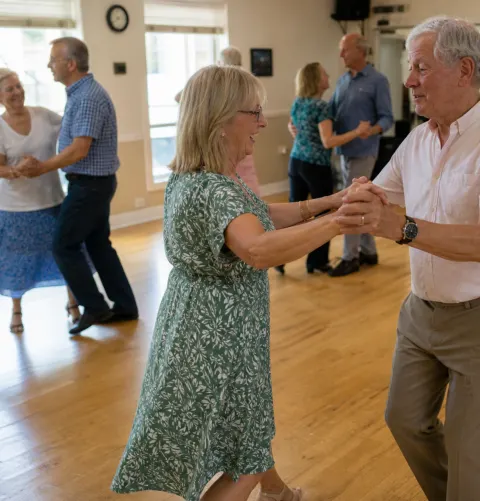
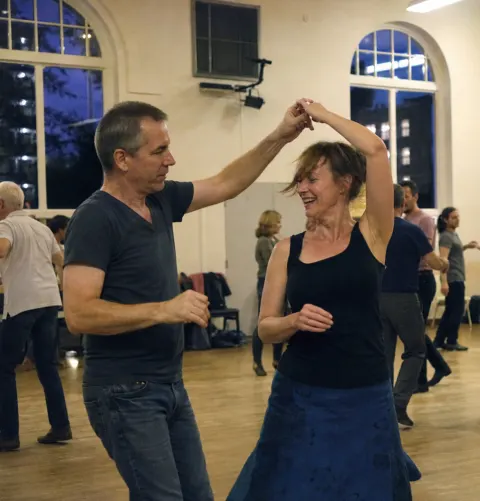
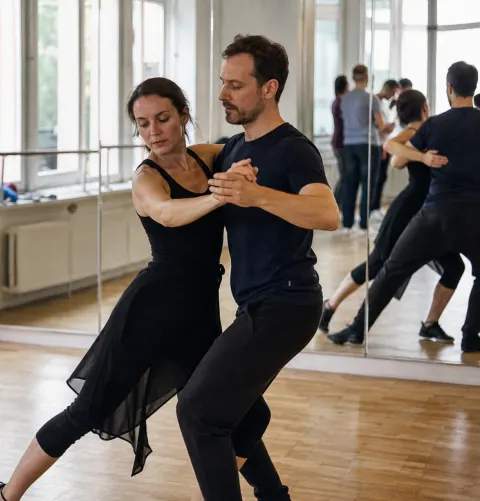
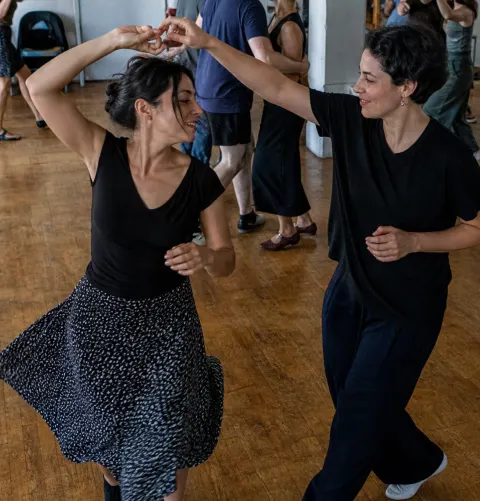
If you want to learn Ballroom, Latin, or Salsa in Berlin, you do not have to wait until someone in your circle of friends agrees to join you. In a typical dance class in Berlin for singles, dance enthusiasts sign up specifically as individuals. The dance schools organize the lessons so that no one has to stand against the wall: through a fixed rotation principle, the couples switch around after a few bars of music or after every short practice sequence.

For beginners, this mode offers an enormous didactic advantage. Anyone who always dances with the same person gets used to their individual compensatory movements without noticing. Only through the constant change with different dance partners do you feel the difference between your own body tension and true leading or following. What often creeps in over months in closed couple courses becomes immediately noticeable and correctable when dancing without a fixed partner.
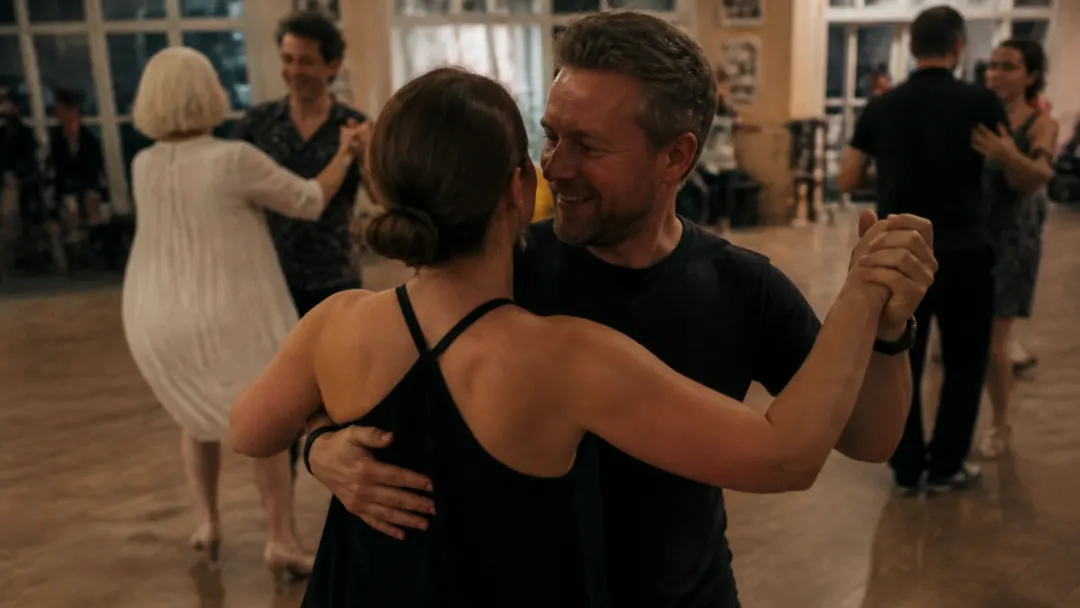
In rotating dance classes, direct adaptation to every new handhold counts for more than rigid routine.

The dynamic between dance sports and meeting new people

A common misunderstanding concerns expectations: a dance course in Berlin without a partner is not a secret speed-dating event. While casual acquaintances are made while learning together, the focus is clearly on rhythm, footwork, and body control. Anyone who enters with the expectation of finding the love of their life will quickly tense up on the dance floor.

Furthermore, registration numbers for each role fluctuate from one session to the next. Reputable dance schools manage this imbalance through waiting lists, dance hosts, or organized guest dancers from higher course levels. Nevertheless, it can happen that one person sits out for a moment while the group rotates. These breaks are not a disadvantage: from the sidelines, you can often analyze the group's footwork more precisely than when you are in the middle of the action. If you want to try out your first steps later, traditional dance venues like the Ballhaus Berlin or summery dance floors like the beach bar in Monbijoupark offer ideal opportunities.

Etiquette in single dance classes

That's how it works

  • Be open and friendly with every new dance partner in the group
  • Take mistakes with humor and focus on your own footwork
  • Pack a fresh change of shirt and deodorant for the dance class
  • Listen carefully to the shared leading and following cues

Don't do this

  • Misunderstand attending a course primarily as a dating platform
  • Lecture your previous dance partner about botched turns
  • Show up in thick winter clothing or stiff street shoes
  • Hold on desperately instead of giving space to the natural flow of movement

Those who learn with changing partners develop a much finer sense for leading and rhythm than someone who dances only with the same partner for years.

Dance instructor for partner dance

When a fixed dance partnership is worth it

The decision to choose a single dance course depends heavily on your personal goals. If you want to build up the basics in Salsa, Discofox, or Waltz flexibly, learning with changing dance partners is unbeatable. You gain confidence in your movement and learn to adapt to different heights and leading styles in a flash.

If, on the other hand, you want to specifically study figure sequences for balls or deepen more demanding choreographies, the rotation principle reaches its limits. For this endeavor, it is worth searching specifically on udansa for a fixed dance partnership to book fixed appointments together. Both paths complement each other: the routine from the solo courses makes you flexible on the dance floor, while a fixed dance couple gives you long-term stability.

Rotation course or fixed appointment

Rotation

The singles dance class

Dance flexibly without commitment

In the open class, you learn maximum adaptability through constant partner changes. You remain completely flexible in terms of time and are not dependent on another person's cancellation.

Commitment

The fixed dance couple

Working together towards a clear goal

With a fixed appointment, you work specifically on subtleties, complex figures, and shared posture details. You grow together as a well-coordinated team and share fixed dates.

Frequently asked questions

  1. No, in a singles dance class, nobody dances alone for the whole evening. Through continuous partner rotation, everyone dances in turns with all present people of the respective other dance role.

Dance courses for singles in Berlin

Find suitable courses and studios in Berlin where you can join immediately, even without a partner.

Dancing is rarely alone

On udansa you can find dance enthusiasts for permanent dance partnerships as well as suitable dance courses for every level.

Dancing is rarely alone