A useful brief describes your performance
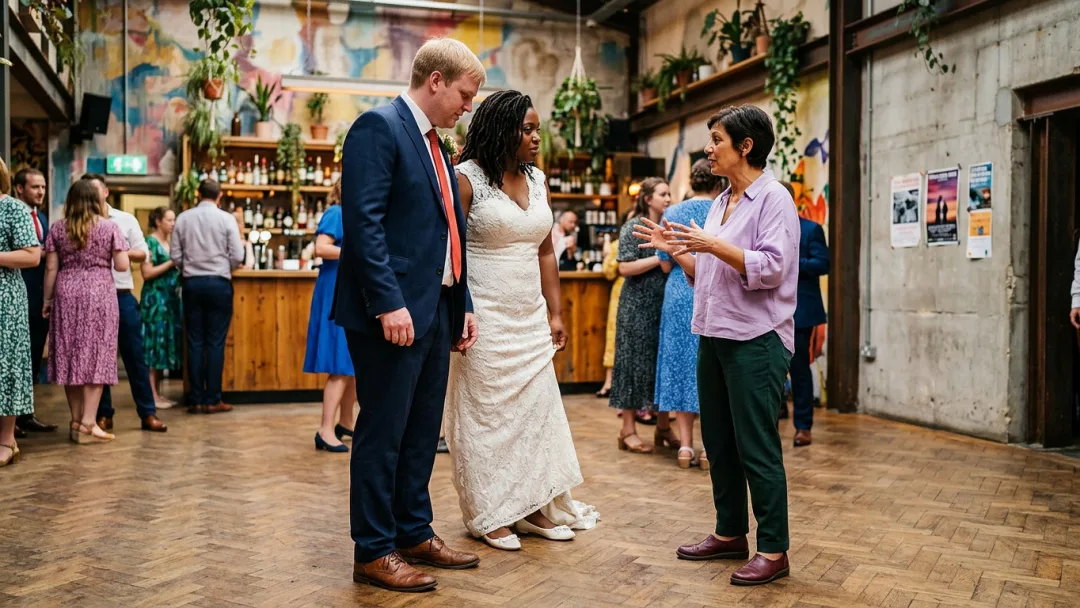
If you’re looking for lessons for your wedding dance in Düsseldorf, your planned performance is the starting point. A song title and the word “beginner” leave a lot open: perhaps one person dances regularly while the other has never learned a basic step. Perhaps the dance is meant to create just a brief moment for the two of you before the guests join in. Differences like these change what needs to be prepared in lessons.
So describe the result you want and the actual circumstances, not a finished sequence of figures. This includes how the dance begins, a clear ending, and whether other people will come onto the floor afterward. The musical classification comes later in lessons: a ballad is not automatically a waltz. The tempo for Foxtrot can’t be determined from the mood of a song alone either.
Your brief should also cover the time between lessons. Times when you’re both available to practise say more than the intention to “practise often.” For ideas on building a reliable routine, see practising together regularly in Düsseldorf. You don’t need a choreography yet, just realistic time slots when you’re both actually available.