Take your first dance together
On udansa connect, you can find dance partners in London and arrange a first dance together. A quick try helps you get a personal impression beyond what you can learn from their profiles.

By Mary De LucaUpdated
On udansa connect, you can find dance partners in London and arrange a first dance together. A quick try helps you get a personal impression beyond what you can learn from their profiles.
A pleasant exchange before meeting says little about what it feels like to turn together. Things get interesting when something goes wrong: Is there room to breathe, laugh, and give honest feedback?
When you dance together for the first time in London, you initially lack the familiar cues from the other person. Even familiar figures can feel different: a preparation comes earlier, a step is smaller, the hand connection feels unfamiliar. You cannot yet draw any conclusions about how well you match. Nervousness takes up attention, and different teaching experiences can lead to different ways of performing the same figure.
Your reactions are more telling. After a missed movement, do you calmly start again? Does the other person actually adjust the pressure when you want less? Can you say that you did not understand the lead without having to justify yourself? A stated boundary must also be respected on the next attempt. A friendly response alone is not enough.
Technical skill and a pleasant interaction are separate observations. You can lose the beat with someone and still feel safe. Conversely, the figures may work even though you feel pressured. Assess both separately. The basic match between your dance roles is only the starting point, not a verdict on the meeting. The overview of finding suitable dance partners in London shows you which criteria can already help when searching.
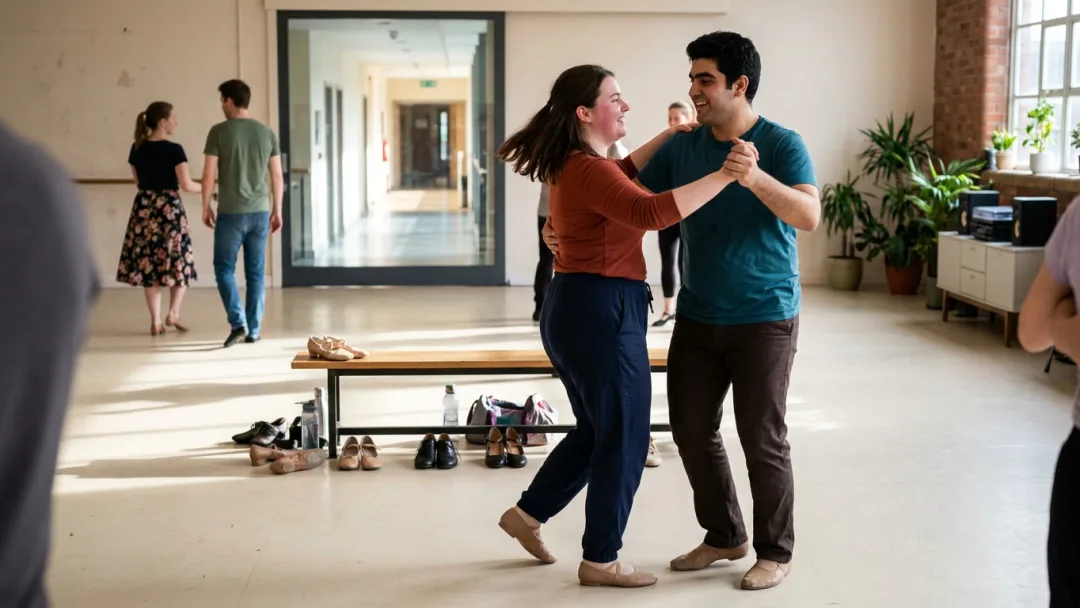
Agree on a meeting point, a start time and an approximate end time. Be clear that the purpose is to get to know each other on the dance floor, without promising to meet again, so you know you can end things on a friendly note even if you don't continue.
Before your first hand connection, say what distance feels comfortable for you and which movements you’d like to leave out. Agree on a simple “stop”: when either of you says it, pause, safely release the connection, and only then discuss the reason.
Listen briefly to the musical pulse and begin with small, familiar steps. Leave out turns and extra arm movements at first; you'll recognize a workable shared starting point when you can coordinate weight changes without pulling or pushing.
Add a simple move that you both already know, then return to the basic step. If the signal is unclear, stop the move and start again; surprise moves, deep dips and lifts are not part of this exercise.
After the piece, pause and each share one specific observation, for example about hand pressure or step size. On the next short try, change only that one point; this way you can tell whether your communication leads to a noticeable adjustment.
Finish dancing as agreed, and separate out three observations: Were you able to make yourself understood, were your boundaries respected, did you find a shared rhythm at times? Mentally note a specific situation for each area instead of making a blanket judgment.
At the end, be clear about whether you’d like to dance together again or are still unsure. “Thanks for the dance, it’s not right for me” is enough if you’re declining; you don’t need to list technical shortcomings or promise to meet again.
If you'd like to work on your own technique after meeting someone, you'll find suitable classes in London on udansa.
Yes, like that
Don't do this
Preparation
Awareness
Debrief
A short trial with a set time limit and a few songs is enough to get a first impression. Plan a break to talk too, so you’re not just going through the motions. You don’t need a whole evening to try out a specific piece of feedback; if you’re exhausted, it becomes harder to tell nervousness apart from actual discomfort.
Briefly say that you’re nervous, and simplify the movement to a basic step you know. Small steps and a clearly audible beat leave you with more attention for the other person. Taking a break is also fine. Don’t judge yourself by the first try, but by whether you feel a little calmer as things go on.
No, you don’t need to have the same level of skill for a pleasant first dance. What matters at first is whether the movements you choose together are clear and safe for both of you. The more experienced person shouldn’t simply assume the other knows unfamiliar moves. If you have to explain things constantly, that points to a difficulty during the trial, but it’s not a final verdict.
Yes, you can end the meet-up at any time, even without giving a detailed explanation. If you’re in pain, experience repeated unwanted contact, or are pressured to continue after saying stop, you shouldn’t keep trying. Safely release the dance hold and leave the situation. You can say goodbye politely, but your safety comes before ending things on a harmonious note.
No, an agreed trial dance is first and foremost a meet-up to dance together, not a romantic commitment. Physical contact within a dance hold doesn’t mean consent to additional closeness. Stick to the stated purpose and bring up other wishes explicitly, rather than inferring them from eye contact, friendly laughter, or a successful figure.