Find connections for your role
On udansa, you can find dance connections in London and clearly describe your preferred role and whether you'd like to switch roles.

By Mary De LucaUpdated
On udansa, you can find dance connections in London and clearly describe your preferred role and whether you'd like to switch roles.
Agreeing to dance together can come with two very different expectations: You expect to spend the evening as a follower, while the other person wants to switch roles. You can bring up this small uncertainty without turning it into a major discussion.
A complementary dance role is the other role in a pair: a leading role is paired with a following role, and vice versa.
When you look for dance partners in London, the role you choose describes a specific match: if you want to lead, you need someone who wants to follow in that dance. If you want to follow, the reverse applies. The terms Lead and Follow are also used for this. They describe roles in partner dancing, not personality traits.
In principle, leading means initiating movement suggestions; following means noticing them and responding through dance. Both people contribute to dancing together. You can't tell from someone's role who makes decisions off the dance floor or who has more experience.
The role you want and your ability are two different things. You may have learned both roles and still only want to follow that evening. Or you may want to try leading, even though you've mainly followed until now. So when looking for a partner, it isn't just a matter of “What can I do?”, but also “What do I want to dance with this person?”
In the general search for dance partners in London, role is one of the details that helps align your expectations. Height, clothing or gender are no substitute for this information.
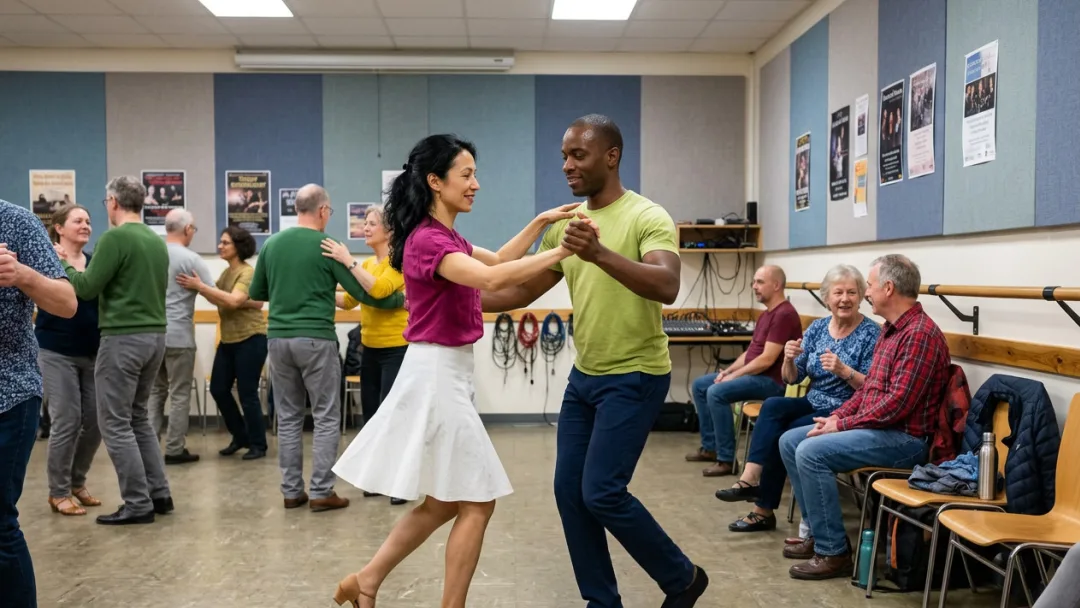
“I dance both roles” sounds clear-cut, but leaves several possibilities open. Maybe you lead in one dance style and follow in another. Maybe you decide depending on who you're dancing with. Maybe you actually want to switch roles with the same person. These options call for different dance partners.
“Without fixed roles” also doesn't mean that roles aren't recognizable while dancing. It can mean that the roles aren't permanently assigned to one person. For a single dance, you can still choose a clear assignment. Switching between songs lets you start anew; switching during a song is an additional agreement, not an automatic consequence of being open to roles.
Differences in experience are normal: someone who has led for a long time may still have little practice following. The catch-all label “advanced” obscures this difference. More accurate, for example: “I'm confident leading, but still learning to follow.” This makes it clear why the same person may prefer more challenging dances in one role and easier ones in the other.
Role flexibility is an option, not an obligation. A partner who knows both roles can still choose a specific role for a dance. Conversely, wanting a fixed role assignment doesn't mean you're against switching roles in general.
This is okay
Not like this
Use the course filter to find current classes and dates in London for dancing together.
A role description explains what you’d like to try with a dance partner, and doesn’t define who you are.
On udansa and in personal conversations, a concise description of your role is enough if it distinguishes between your preference and your flexibility. You don't have to describe your entire learning journey or make a lasting decision. Phrasing that describes what you're looking for from this contact is especially helpful:
In a direct conversation, the same clarity can sound shorter: “I’d like to lead this song and follow the next one, does that work for you?” That’s a specific suggestion. A “Not today, thanks” only turns down that suggestion and doesn’t have to mean a general rejection.
Agreeing on roles doesn’t determine which class is right for you. Finding out which dance classes in London suit your learning goal is a separate matter. For your contact, a shared understanding is enough to start with: complementary roles, switching occasionally, or intentionally sharing both perspectives.
The role split stays clear in your dancing
You can focus on the role you want to deepen or enjoy right now. Your partner looks for the complementary role. This role split can work well, even if you both also know the other role.
How you divide the roles is part of your agreement
You'd like to experience different roles with the same person. Your partner shares this interest, without needing to be equally experienced in both roles. How often you switch depends on what you both want, not on an obligation to split things equally.
Lead refers to the leading role, and Follow to the following role in partner dancing. The English terms describe roles during dancing, not genders. You can use them in your search and add your preference with “mostly lead” or “mostly follow”.
No, you don't need to be equally good at both roles to agree to switch roles. What's important is that your partner knows about your different levels of experience. If you're confident leading and just starting out following, you can set simpler expectations for the following role together.
No, switching roles can also mean waiting until between two songs to switch. Switching during a song is a separate agreement and requires you to communicate with each other. Saying “both roles” alone doesn't yet say which option you'd like.
Yes, you can know both roles and still specifically look for a Follow. Your skills don't oblige you to Lead every time you connect with someone. A clear statement like “I know both roles, but I'm looking for someone to Lead here” separates your experience from what you're currently looking for.