Develop movement together
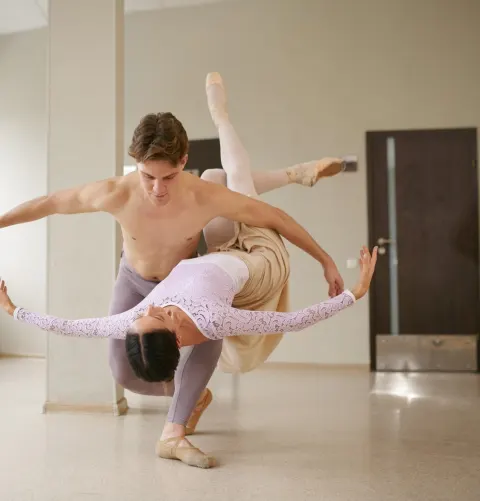
On udansa, you can find dance partners in London to try out your own movement sequences with. Describe whether you'd like to improvise or work on a duet.

By Bernhard De LucaUpdated
On udansa, you can find dance partners in London to try out your own movement sequences with. Describe whether you'd like to improvise or work on a duet.
Anyone who wants to understand dance history in London encounters more than purpose-built theaters. Sometimes an artistic development begins when an existing space is given a different purpose and bodies are allowed to move differently within it.
Choreography refers to the arrangement of movement in space and time for a performance or a set dance sequence. This also includes pauses, spacing and the relationships between the dancers.
The story of The Place in London begins with a building that was not built for dance performances. The former drill hall on Duke's Road, near Euston in Camden, was built in 1888 and 1889. The Contemporary Ballet Trust took it over in 1969. It developed into a centre for contemporary dance and performance, where the London Contemporary Dance Theatre was formed, among other things.
The change in use can be understood through the way bodies are organised. Drilling is about set routines and coordinating a group. Choreography can also be precisely organised, but it can play with that order: one person starts later, another leaves the line, a shared step breaks off in different directions. These are possible artistic choices, not a description of a specific historical production.
The change of use also meant a shift in what movement was used for in the space. You can read the history of the building as an example of how dance found new places to work, rather than seeking a home exclusively within existing theatre traditions. For a broader perspective, the overview of dance venues and dance history in London offers more individual stories about venues.
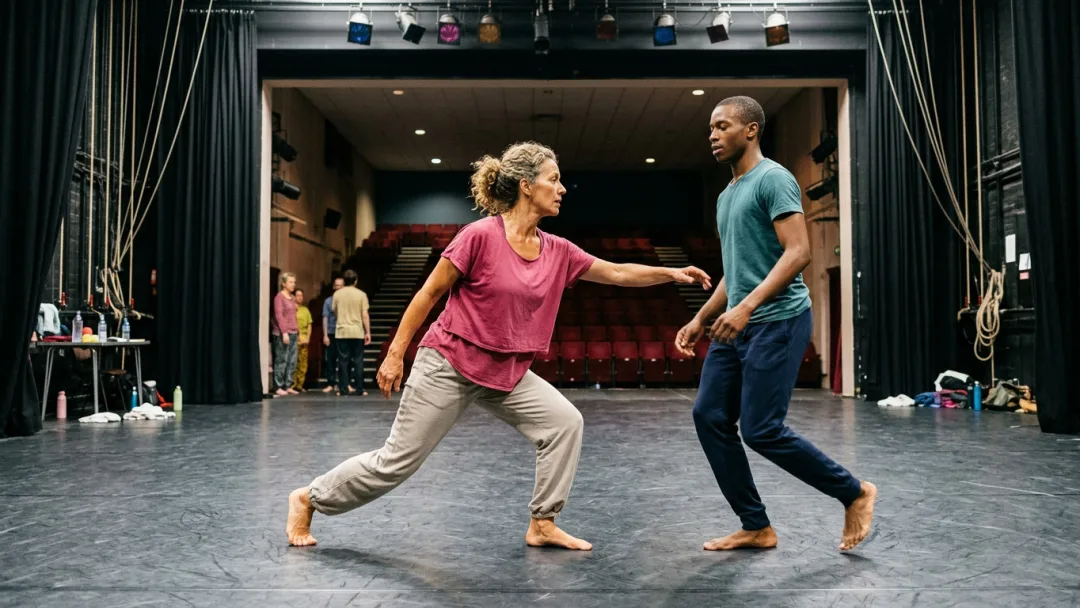
What is developed at a centre for contemporary dance cannot be reduced to specific steps. A movement sequence can emerge from walking, turning, falling, rising or an encounter. What matters is how these elements are shaped. The same step can feel cautious, abrupt or resistant, depending on tempo, weight and the relationship to other bodies.
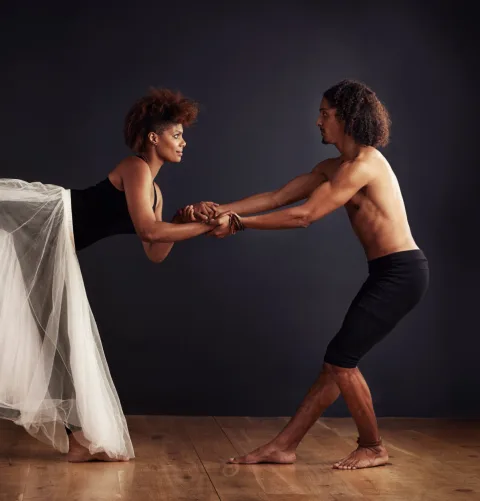
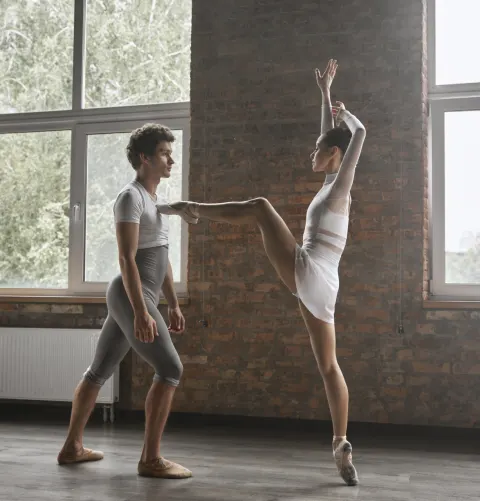
Imagine a duet: One person walks forward, the other steps back. At first, it seems that the first person is determining their shared path. If the second person stands still, the relationship changes, even though no new spectacular figure is added. Distance and delay become choreographic material. In dance improvisation, you can explore such possibilities; for a performance, selected sequences can then be precisely set.
An everyday movement is not automatically arbitrary on stage. Its placement can be worked out just as carefully as a big jump. If you want to follow the movement yourself, it helps to look beyond the visible final position. The guide to mistakes when observing and copying dance movements explains this difference in more detail. For understanding The Place, what matters here is that a dance centre supports the development of movement, not just its repetition.
Yes, like this
Not like this
If you're interested in developing your own movement, you'll find suitable courses in London on udansa.
A movement can be described more precisely if you also keep its beginning, pause, and repetition in mind.
The Robin Howard Dance Theatre was run as part of The Place. Its role within the centre can be understood through the purpose of a dance stage: movement is presented so that an audience can perceive how it is shaped. This adds another perspective to the physical work of creating choreography, the view from the outside.
This has concrete artistic consequences. During a rehearsal, two dancers may clearly feel a connection, while that connection remains barely visible from the audience’s perspective. A turn can obscure a hand; a space between dancers can make an encounter easier to read. Lighting directs attention, and a shared starting point makes a relationship visible. These choices are part of the presentation, but they do not reveal the technical equipment or stage design of this particular theatre.
The connection between workspaces and theatre is therefore essential to the history of the centre. Around 1999, six new dance studios were added during a renovation. This expansion concerned the spaces where movement could be developed. The theatre’s role complemented this work by making it visible to the public. When you place the venue in its historical context, two processes stand side by side: the creation of choreography and its impact on an audience.
Weight, breath and connection provide guidance
When dancing, you notice whether a step supports you or throws you off balance. A small shift can make all the difference physically, even if it is barely noticeable from the outside. This experience is part of developing a choreography.
Distance, repetition, and perspective matter
When you watch, you see connections that a single dancer cannot fully take in. Two similar movements have a different effect when they happen at the same time or one after the other. Your perspective adds the overall composition to the physical experience.
No, contemporary dance can be fully choreographed. Improvisation can help develop material without remaining part of the performance. So if a movement seems spontaneous, that does not necessarily tell you how precisely its sequence was planned.
No, a dance performance does not need to tell a story. It can shape relationships, tensions or changes through movement. For example, you can observe how closeness develops or a shared rhythm falls apart, without assigning a character to each person or a fixed meaning to every gesture.
During the redevelopment around 1999, six new dance studios were added. This expanded the space available for working on movement. Additional studios did not automatically mean additional stages, but rather more room for different working processes within the dance centre.