Sign up on your own, learn together
On udansa, you can find dance classes in Rome and browse them by the type of lessons you're looking for. With udansa connect, you can also meet people who are looking to start taking a class too.

By Bernhard De LucaUpdated
On udansa, you can find dance classes in Rome and browse them by the type of lessons you're looking for. With udansa connect, you can also meet people who are looking to start taking a class too.
Maybe you're already excited to take your first steps, but don't have anyone to sign up with you. That doesn't have to stop you from getting started: What matters is what kind of partner involvement the class actually requires.
Individual registration means booking a place in a course for yourself, without also registering another person as your committed practice partner. The term describes the booking, not how the group is divided later.
If you're looking for a dance course in Rome without a partner, two separate questions come into play: Are you booking alone, and will you perform the movements alone? In solo classes, the group does roughly the same sequence of steps, while each person manages their own weight, direction, and timing. You don't need a regular partner for this. Still, moving together around the room or doing short group activities may be part of the class.
Partner classes work differently. Two people coordinate their movements, for example through hand contact, body alignment, and shared counts. Even if you initially practise the basic step alone, coordination remains a learning goal. That's why a class with solo exercises isn't automatically a solo class.
Private lessons mean something else too: they involve individual instruction, not the number of practice partners you have. For a broader overview of the different formats, you'll find more guidance at dance courses in Rome. Signing up on your own doesn't tell you whether you'll practise alone, with the same person, or with different people. This distinction helps you understand a course based on how it's actually structured.
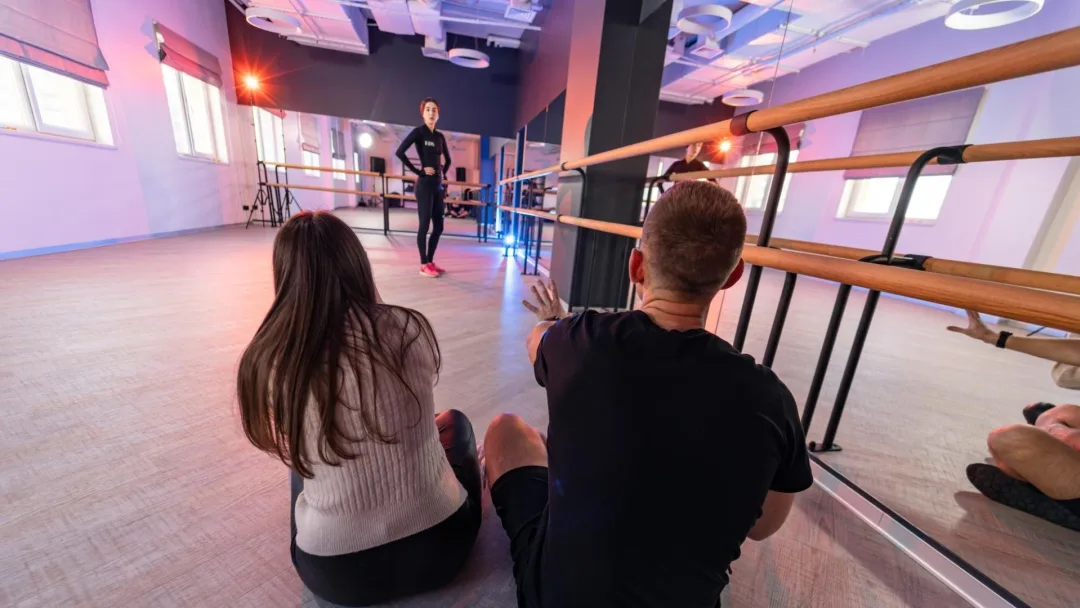
In an organized rotation, the instructor breaks up the existing practice pairs at an agreed time and forms new ones. This can happen after one exercise or several repetitions. The group needs a clear rotation system so no one has to find a partner on their own every round.
The educational difference lies in the feedback: with the same person, you develop a shared routine. You soon learn each other's timing and can work on a difficult part repeatedly. With different people, on the other hand, you find out whether your movement cues are clear even without that familiarity. This is helpful, but can take extra concentration at first.
Rotation does not guarantee that all roles are evenly distributed. If the distribution does not work out, short breaks may occur, or some participants may practice alone for a while. Changing roles is also different from changing partners: you can get a new partner and still stay in the same role.
So, for your registration, all you need is a specific organizational clarification from the provider: “Can I register without a partner, and how are the practice pairs formed?” If you come with a friend, registering as two individuals explains why booking together does not automatically mean you will be a fixed practice pair.
That's right
Myth
On udansa, you'll find classes and dates in Rome to get started with partner dance lessons.
Booking a place on a course on your own does not mean you're signing up for a particular way of working with others in class.
A class organizes cooperation for one lesson. It does not mean you are expected to practice together outside class or enter into a lasting dance partnership. This distinction takes the pressure off signing up: you can want to learn without also looking for a long-term connection.
In partner classes, you still need clear communication in the moment. Leading and following roles describe different tasks in coordinating movement, not prescribed genders. So a friendly way to start could be: “I’m currently practicing the following role.” If you’re both learning the same role, the specific exercise needs a different arrangement or a different partner pairing.
Touch is also a mutual decision. If you feel pain or uncomfortable pressure, stop the movement rather than pushing through it. Changing partners is not permission for unwanted closeness, and no one has to exchange personal contact details.
If you later want to practice regularly outside class, finding a practice partner with a similar level of experience is a separate matter. To get started in class, what matters first is that the class format supports your participation without a regular partner. You don’t have to be especially outgoing or already know how to dance with confidence.
Learn together, perform independently
You follow the music and demonstration without coordinating your steps with a partner. This gives you room to develop rhythm and coordination on your own. You connect by practicing together, not necessarily through touch.
Partnering with different people
You notice how another person responds to your movement, and adjust your timing or distance. Different practice partners can give you different kinds of feedback. This helps you become more comfortable with dancing, without needing to form a regular partnership.
You can’t reliably tell from the term single dance class what relationship status is required. For class organization, it may mean a class for individual registrations. A class explicitly designed as a way to meet people, on the other hand, has an additional social purpose beyond practicing dance moves.
Yes, as long as the class allows individual spots, you can both register independently. However, this doesn’t mean you’re entitled to dance all the exercises together. If partners rotate, you’ll be part of the same rotation as everyone else; in a solo class, you’ll perform the movements on your own anyway.
Yes, solo classes let you dance without a partner throughout and without needing to hold a dance position. Partner dancing, on the other hand, uses hand contact or a shared hold depending on the dance and the exercise. Your boundaries still apply there too, but an exercise without contact doesn’t provide the same feedback as a guided movement.
The class can continue with short rotating breaks, solo exercises or a different group arrangement. The solution used depends on the class format. The instructor isn’t automatically planned as a permanent substitute partner, because they also need to demonstrate, observe and give feedback to the whole group.