Learn together at the right pace
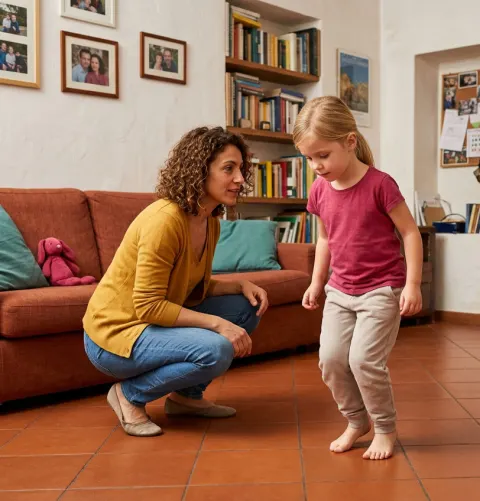
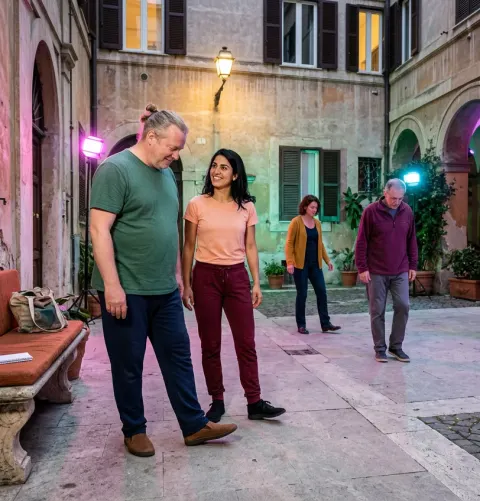
On udansa connect, you can find people in Rome to practice dance steps with at your own pace. Describe which moves you'd like to learn and how much repetition helps you.

By Mary De LucaUpdated
On udansa connect, you can find people in Rome to practice dance steps with at your own pace. Describe which moves you'd like to learn and how much repetition helps you.
A class can feel welcoming and still expect you to learn too many new moves at once. What matters is whether you get time to try things out after an explanation, and whether you still feel part of the group even when you make a smaller movement.
Movement adaptation refers to a modified way of performing a dance movement while keeping the learning goal intact. For example, you can practice the rhythm of a sequence while replacing a turn with steps that do not change direction.
When looking for a dance class for older adults in Rome, it helps to make one clear distinction: the tempo of the music is not the pace of learning. Even a slow song can make a lesson overwhelming if you have to remember a foot sequence, a turn, and new arm movements all at once. Conversely, livelier music can be used in a clear, manageable way with a few familiar steps.
Easy-to-follow instruction breaks each movement into several clear tasks. First, you learn which foot is carrying your weight. Then you add the step sequence and, if needed, the direction. Only once these parts come together do you add the arm movements. This separation is especially helpful when watching and copying dance movements.
Repetition does not mean that the group dances the same thing over and over without explanation. Each repeat can focus on one specific point: putting your full weight on your foot, closing your feet in time, or recognizing the start on the beat. For a broader overview of the different types of classes, see dance classes in Rome. The term senior dance describes a target group, but it does not define a single learning method.
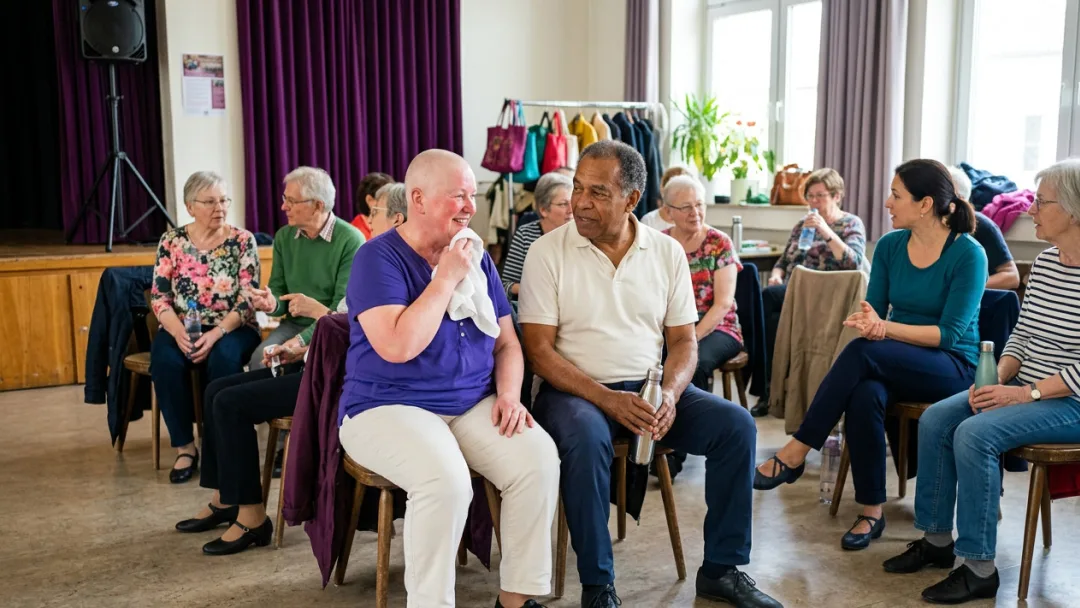
Whether a dance class is physically suitable depends not only on age or the song’s tempo. Large steps, deep knee bends, prolonged standing, and repeated changes of direction place different demands on your body. You may remember a sequence well and still need to recover sooner. Someone else may have more physical stamina but need more time to learn the order.
That is why breaks are a distinct part of class planning. A pause while the instructor explains can ease mental effort, but it is not automatically physical recovery: you may still be standing. Sitting down or skipping a repetition reduces active time more clearly. It is easier to rejoin when the group dances a familiar passage once more.
Smaller steps can change the level of exertion without changing the counts. Place your foot closer rather than reaching far out. Keep your stance stable: small does not mean shuffling. Pain, dizziness, or unusual shortness of breath are not challenges you have to overcome. Stop moving and seek medical advice about any symptoms if needed. Classes are not a substitute for treatment and do not promise any particular health benefits.
That's it
Not like this
In the course filter on udansa, you’ll find the listed classes and dates to help you find lessons in Rome.
A smaller movement can express the same rhythm, so not everyone in the class needs to travel as far or make their movements as large.
A movement adaptation is especially helpful when it remains clearly connected to the original task. For example, if the group is practicing a change of direction, you can first do the footwork without turning. This way, you keep working on the rhythm and weight changes. However, the variation is a different task from completing the full turn and should be explained accordingly.
In partner dancing, this adaptation needs a solution you can both use. Your partner should not pull you by the arm in a direction you are currently leaving out. Instead, you can both dance a familiar basic sequence and then join back in. If you’re looking for someone to practice with, you can mention smaller steps or practicing without fast turns in the dance partner profile for Rome.
For a specific lesson inquiry, one clear question is enough: “How do you structure repetitions, seated breaks, and variations without turns when someone needs more time or less physical exertion?” A helpful answer describes a plan, such as explaining new parts separately and providing a planned way to rejoin. Simply stating an age range does not answer the question. This way, you can assess lessons based on how they are structured, without assuming that older adults all have the same abilities or preferences.
Paying closer attention to execution
A familiar step sequence gives you room to notice weight changes and posture more closely. If you prefer repetition, small adjustments within the same sequence can already be challenging.
More Attention to Spatial Awareness
A different order challenges your memory and spatial awareness. If you prefer variety, familiar steps linked in a new way can be stimulating, without every movement needing to be bigger or faster.
At 70, you are not too old to learn to dance just because of your age. What matters are your individual needs and how the class is taught. You can start with simple weight shifts and short sequences, without having to do fast turns.
You don't have to do every turn in the same way as the group. An explained variation can keep the rhythm while you stay facing the same direction. In partner dancing, your partner also needs to understand this change so that no one pulls on your arm.
Slow music is not automatically less strenuous. Holding positions for a long time or shifting your weight in a controlled way can also be demanding at a slow tempo. The level of exertion also depends on step length, range of motion, how long you repeat a movement, and whether you can take a proper break in between.
You don't need dance experience to join a senior dance class designed for beginners. However, the age label alone doesn't indicate the class level. A class that doesn't assume prior knowledge will first explain stance, weight shifts, and rhythm before introducing longer sequences or additional arm movements.
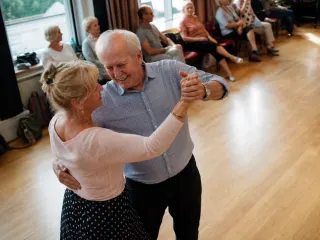 Dance for Seniors: Stay active and gentle on your joints
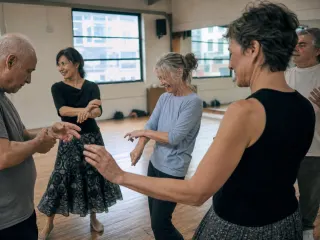 Hit the dance floor safely: The best warm-up routine for dancers over 50
 Stay flexible: Senior dance mobility & stretching exercises
 Dancing gently on your joints: Tips for healthy knees and hips
 Boost heart health: How dancing strengthens your circulation after 50