Discover ballet history together
On udansa connect, you can find people in Rome to share your thoughts on ballet and dance stars with.

By Mary De LucaUpdated
On udansa connect, you can find people in Rome to share your thoughts on ballet and dance stars with.
If you live in Rome, a historic theater name can suddenly mean very concrete movements: a jump, a shared pause, a role told in a different way. Behind famous names are different ways of bringing dance to the stage.
A guest performance is a limited-time appearance by artists or an ensemble at another venue. An entire production or individual performers may be invited.
On November 27, 1880, the Teatro Costanzi opened in Rome, named after its builder, Domenico Costanzi. In 1926, the city bought the building. These dates tell the story of its origins and change of ownership. Its significance for ballet history, however, also comes into focus through the people who performed there: a stage can bring different artistic experiences together in one place.
Under the direction of Emma Carelli, the Ballets Russes performed at the Teatro Costanzi. Their encounter with the theater is therefore part of the history of ballet in Rome. Such a visit means something concrete to begin with: a visiting company presents its work to a different audience. The dancers bring with them rehearsed sequences of movement, musical choices, and a shared way of responding on stage.
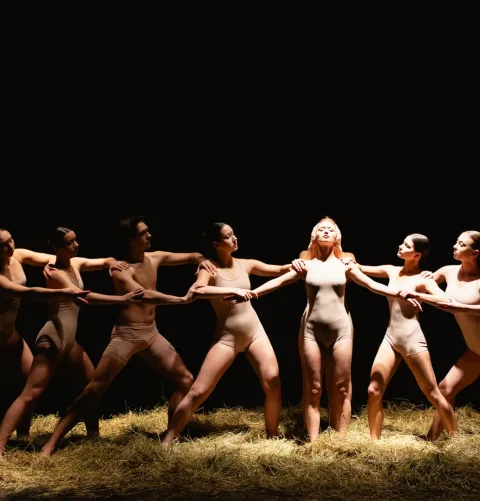
When an ensemble performs as a guest, it is not just a series of solos that travels, but a connection between the performers. Imagine a group scene: its impact comes from spacing, lines of sight, and coordinated entrances. This is precisely what makes a company recognizable as a group. If you want to put dance performances in Rome into context, this perspective helps: a historic theater is also a place where different ideas about stage work became visible.
Since the immediate postwar period, the American Ballet Theatre and the Royal Ballet have also performed in Rome. Together with the earlier guest performances by the Ballets Russes, they are part of the international encounters in this stage history. This does not create a straightforward sequence in which one ensemble replaces another. Different guests can stand side by side as examples of different experiences.
To understand this effect, you don't need to assign a fixed national style to a company. The interplay in a specific performance is more revealing. How cohesively does the group move? How clearly does it distinguish a musical accent from a flowing transition? How much space does a principal character get before the others respond to them again? Decisions like these shape how you experience a piece.
A simple stage situation makes this tangible: Several dancers open their arms at the same time. The same shape can appear precisely in unison or slightly staggered. This changes the impression of order, tension or movement, even though the basic shape remains similar. This is an example of differences in execution, not an attribution to any of the ensembles mentioned.
Guest performances therefore expand the history of a venue with changing artistic signatures. They tell you what an audience could experience there, without automatically describing the permanent working methods of the resident ensemble.
Yes, this way
Not like this
If you want to learn the movements behind the stories on stage for yourself, you'll find ballet classes in Rome on udansa.
A famous name alone doesn’t explain a performance: its impact becomes clear only through the interplay of role, movement, and ensemble.
Rudolf Nureyev, Natalia Makarova, Vladimir Vasiliev and Ekaterina Maximova danced at the house. Their names add another perspective to the history of guest companies: the impact of individual performers. A famous person can draw attention to a role, but the role still takes shape within a shared performance.
When you think of a dance star, high jumps or lots of turns might come to mind first. What happens between these striking moments is just as important to the performance. A glance can open up an encounter; a delayed shift of weight can show hesitation; a decisive step can bring a musical phrase to a climax. These choices make a character legible without them having to speak.
Technical difficulty and compelling interpretation are different achievements. A movement performed flawlessly does not yet tell you why a character is making it at that moment. Conversely, a small gesture can have a powerful effect within a scene. That is why a dance star’s contribution cannot be reduced to one spectacular skill.
For you as a spectator in Rome, this historical list of names becomes an invitation to look more closely: Who shapes the musical timing, and how do the others respond? If you’d also like to experience the movements physically, the guide to dance classes in Rome offers a way to connect with this stage experience.
A guest performance by an entire company
A guest ensemble shows how a group coordinates its movements. You can recognize its approach not only in solos, but also in formations, transitions, and the relationship between lead roles and the group.
The performance of a solo dance star
A solo guest brings their interpretation to a performance. You can follow how they shape a role through their weight, gaze and musical accents while working with the other performers.
The Teatro Costanzi was named after its builder, Domenico Costanzi. It opened on November 27, 1880. The name therefore initially refers to the origins of the building, not to a dancer or a particular ballet tradition.
Yes, Teatro Costanzi refers to the home of the Teatro dell'Opera di Roma. That is why the original theater name also appears in historical accounts in connection with the Rome Opera. In 1926, the city of Rome bought the building.
No, a guest star can also perform in a production on their own. A cast list names a person for a specific role, while a guest performance by an ensemble involves an entire company. The two forms tell different stories about artistic exchange.
No, you can also watch historical performances without any ballet experience of your own. First, pay attention to how the movements fit the music and how the characters respond to one another. Technical terms can help you describe things later, but they are not a prerequisite for noticing differences in the performance.