Festival culture5 minutes

How ImPulsTanz Vienna brings stage and exchange together

By Bernhard De LucaUpdated

In short
  • ImPulsTanz brings together the presentation of contemporary dance in Vienna with hands-on encounters and artistic exchange.
  • Its history began in 1984 with the International Dance Weeks, founded by Karl Regensburger and Ismael Ivo.
  • The documented festival format included international performances, workshops for professionals and beginners, as well as free outdoor classes.
  • The stage and shared movement practice offer different ways to engage with the same artistic questions.

If you know dance only as a finished stage piece, its creation often remains invisible. A festival can also make the work of developing movement accessible to the public without turning every encounter into a performance.

DefinitionArtistic Exchange

Artistic exchange refers to the mutual sharing and further development of ideas, ways of working, and experiences among artists. In dance, this can happen through conversations, moving together, and trying out different physical solutions.

The dance weeks brought learning and public engagement together

The history of ImPulsTanz in Vienna began in 1984: Karl Regensburger and Ismael Ivo founded the International Dance Weeks. Since 1988, the festival has been known as ImPulsTanz. This origin helps explain its connection between performances and dance practice. The term dance weeks draws attention not only to individual evenings on stage, but also to a shared period devoted to dance.

The documented festival format included a period of up to five weeks in July and August. It was described as featuring around 160 workshops for professionals and beginners, as well as international productions, world premieres and Austrian premieres. These details characterize the format as documented, not the confirmed program of a future edition.

The terms distinguish between different forms of public presentation: a world premiere is the first public performance of a work anywhere. An Austrian premiere presents a work to an audience in Austria for the first time, after it has already been shown elsewhere. Workshops, in turn, make physical approaches to working accessible. The festival format places presentation and working together side by side, without equating them. A performance does not have to be the result of a workshop; a workshop does not have to prepare for a later production.
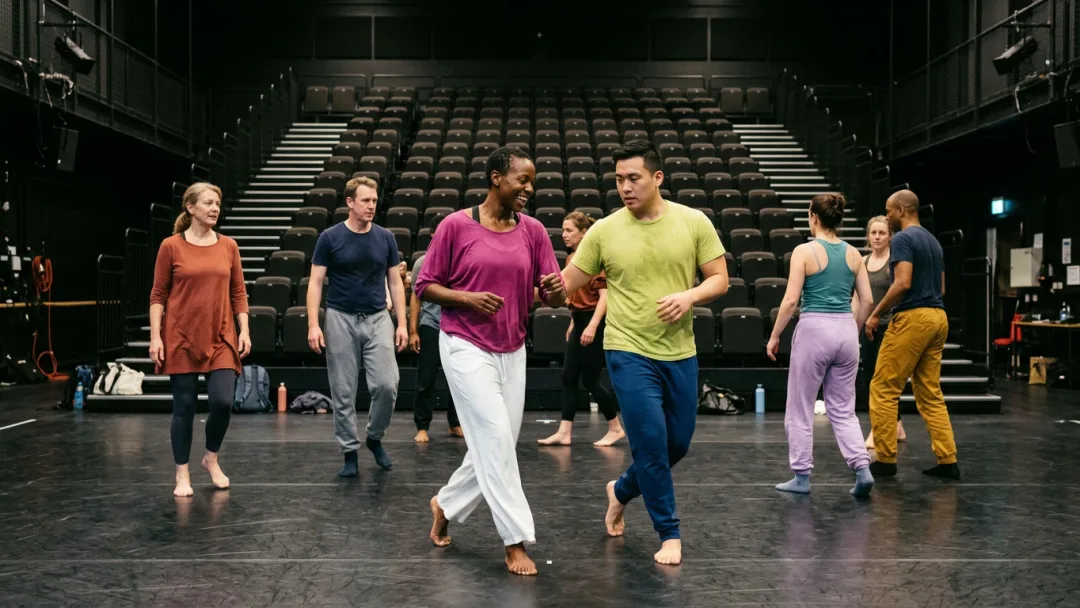
A freely accessible movement program lowers the barrier to entry without reducing dance to simple exercises.

Exchange Is Not a Unified Festival Style

An international dance festival does not automatically lead to a shared movement language. Contemporary dance is not a fixed repertoire that everyone involved must master in the same way. Artistic works can differ in how they develop movement, engage with music or organise collaboration. International exchange offers the chance to get to know these differences in practice, rather than reading them only as statements of origin in the programme.

A general situation makes this tangible: one person develops a movement from the weight of the arm, another begins with a step, a third with a pause. When working together, they can show and change their starting points. This does not require a final agreement on which solution is right. What matters is that others can understand the way of working.

On stage, by contrast, an artistic decision takes on a specific public form. The explanation of the tablao as a small Flamenco stage, in the context of a different dance and format, also shows how strongly a performance setting influences the encounter with dance. This distinction matters for understanding ImPulsTanz: presentation creates focused attention, while exchange opens up possibilities for change. The two can complement each other without serving the same purpose.

How to recognize the festival idea

That's right

  • Understand performances as independent artistic works
  • Also see workshops as spaces for exchange
  • Recognize internationalism in different ways of working
  • See free classes as an additional way in

Myth

  • Performances are merely showcases of workshop results
  • Workshops are only for catching up on steps
  • Internationality means a uniform dance style
  • Free classes replace the entire festival offering

A festival not only showcases finished works, but can also create space for the questions from which dance emerges.

udansa editorial team

Openness doesn’t mean everyone does the same thing

Public Moves, a series of free outdoor classes, was part of ImPulsTanz’s documented program. Alongside performances and workshops, it created another way to take part. A movement program outside enclosed spaces can also reach people who might not first choose an evening at the theater or a longer learning experience. This describes the format’s role, not a promise of future offerings.

Professionals and beginners bring different physical experiences with them. That doesn’t have to prevent them from meeting: A simple movement exercise can give someone with little experience a sense of direction, and prompt someone more experienced to change a habit. Accessibility therefore doesn’t mean that artistic questions disappear. It means that getting started doesn’t depend solely on specialized language or existing technique.

If you’re in Vienna, you can think of the festival’s idea this way: You can experience dance as an audience member, explore it physically yourself, or talk about ways of working. These are different relationships to dance, not a ranking. Dance classes in Vienna without a regular partner also show, in a different context, that learning together isn’t tied to an existing couple. At the festival, this openness expands the circle of people who can engage with artistic movement.

Two Ways to Meet

Stage

A work is presented to the public

Artistic decisions take shape

At a performance, you encounter a carefully shaped work with its own duration and structure. You don't have to perform it yourself to engage with it. Distance allows you to pay attention to decisions that can be harder to perceive when you're moving yourself.

Exchange

An idea remains open to change

Experiences come into conversation with one another

In an exchange, an idea for movement can remain open. Other bodies, experiences, and objections can change its direction. Being close to its creation lets you understand why different people develop different solutions from the same task.

Frequently Asked Questions

  1. Yes, Vienna International Dance Festival is the international name for ImPulsTanz. It reflects the festival's character and international focus. The name does not refer to a dance style of its own or to a separate class program alongside the festival.

Start a Conversation through dance

On udansa, you can find people in Vienna to attend a dance event with and share your impressions afterwards. That way, a performance is more than just an evening you reflect on by yourself.

Start a Conversation through dance