Choosing a course5 minutes

Which dance course is right for me in Dortmund? Take the quiz

By Bernhard De LucaUpdated

In short
  • In Dortmund, the best choice depends on whether you prefer coordinating with a partner or developing movements on your own.
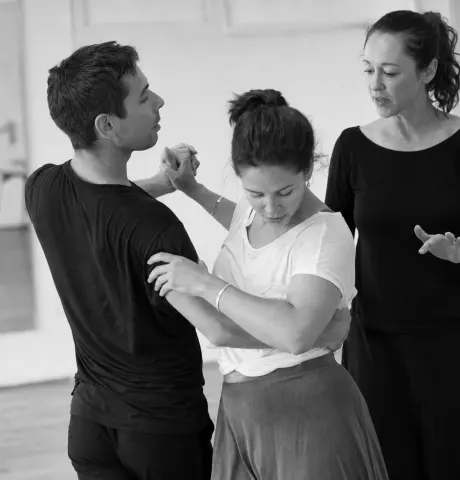
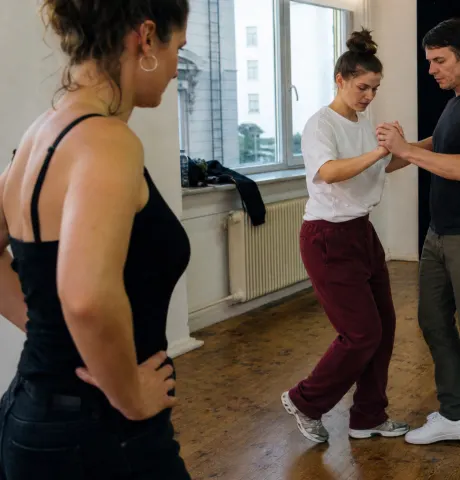
  • Partner dancing is a good fit if you enjoy shared rhythm, switching roles and direct contact.
  • Solo dance classes are a good fit if you want to try out movements on your own and don’t want to adapt to a fixed partner.
  • Mixed formats make sense if you want to try both before making a decision.

Choosing a course often depends on how comfortable you feel in a group: Do you like waiting for a signal, taking the lead, or switching between the two? Your result should help you choose a trial class, not define you.

Pay attention to how you prefer to learn when practicing

When deciding between partner dancing and solo dancing, it helps to think of a specific practice situation. Do you enjoy responding to someone else, picking up a cue, and keeping time together? Then partner dancing could suit your preferred way of learning. If you would rather explore movements on your own first and adapt them to the music, classes that offer room for individual movement may be a good fit.

This does not mean that one format offers only one way to learn. Partner dance classes also include exercises without a set sequence of figures, and classes with independent movement can include group activities. So read class descriptions to find out what the lessons actually focus on. In addition to classes, Dortmund offers opportunities to experience dances from around the world: At TanzFolk in the Dietrich-Keuning-Haus, associations showcase traditional dances from different regions. This can give you ideas about which music and ways of moving make you curious, but it does not replace checking how a class is structured.

If your test result clearly points toward partner dancing, also find out whether the class requires you to have a regular dance partner. For this specific starting point, see the guide to partner dance classes without a partner in Dortmund.

Take the quiz and count your answers

  1. What do you enjoy most about a new movement?

    • A: Finding the rhythm together with another person
    • B: Trying out a movement yourself and changing it
    • C: First observing, then switching between the two
  2. How do you prefer to orient yourself during a class?

    • A: By my partner’s cues and reactions
    • B: By the music, my own body awareness, and the instruction
    • C: Depending on the exercise, sometimes by others, sometimes by myself
  3. What would matter most to you in a great class?

    • A: A shared flow of movement with my partner
    • B: An individual movement idea that feels right
    • C: Different tasks that combine collaboration and freedom
  4. How do you prefer to handle little uncertainties while practicing?

    • A: I discuss them directly with my dance partner
    • B: I try out different options on my own and find my way
    • C: I watch for a moment and then join in when it fits the exercise
  5. What would you like to practice again after the class?

    • A: A sequence together with clear coordination
    • B: A movement I can make my own
    • C: An exercise that works first on your own and then together

Your evaluation

Mostly A: In Sync Together

You enjoy taking your cues from another person and like immediate responses. Look for a partner dance class that mentions leading and following together or switching roles in its description, and during a trial class, see whether the coordination feels right for you.

Mostly B: Moving independently

You’d like to explore music and movement in your own way first. Compare solo dance classes such as Modern Dance or Dance Improvisation, and check whether the course description leaves room for you to experiment on your own.

Mostly C: Open to switching

You don't want to be tied to just one way of working and like to decide after each exercise. Look for classes that include group activities and individual movement, or try two different formats.

Comparing the Results

CriterionMostly A: Partner DanceMostly B: Solo DanceMostly C: A Mix
FocusCoordination with a dance partnerMusic, instruction, and body awarenessVaries depending on the exercise
Typical focusShared rhythm and responseDeveloping your own movement ideasIndividual and shared activities
A good fit ifYou enjoy interacting directly while practicingYou like experimenting on your ownYou don’t want to commit to one format
Possible challengeYou have to adapt to a partnerPartner interaction is less centralThe class has to combine both approaches
A good next stepAttend a partner dance trial classTry a class that encourages self-expressionCompare class descriptions carefully

The table describes typical areas of focus, but individual classes may differ.

Use your result as a filter, not a label

A test result describes your preference at the moment. It does not decide which dance style you have to stick with long term. When searching in Dortmund, you can start by sorting the course descriptions according to three questions: Do you mostly practice with a partner or on your own? Is the instruction more structured, or does it leave room for your own suggestions? What music and movement qualities are mentioned? These answers will help you quickly see whether a class suits your result.

If two formats appeal to you, do not compare them by name alone. A trial class or a specific question will tell you more than guessing what a style might feel like. For example, ask what a typical exercise involves and whether participants switch between solo and partner exercises during the class. This is especially helpful if you mostly scored C.

Compare suitable classes in the course overview for Dortmund. Check whether the description answers what matters most to you, such as partner contact, trying things out for yourself, or variety. If it does not, ask the provider before booking. That way, you choose not based on a supposedly fixed dance personality, but on the type of class you really want to try right now.

Frequently Asked Questions

  1. It depends on the class, so you should ask before signing up. Some classes are designed for established couples, while others let you join on your own or organize partner rotations during class. If you want to get started on your own, the guide to dance classes without a partner in Dortmund can help with your next question.

Compare dance courses in Dortmund

Use your test results as a guide and compare suitable course offerings in Dortmund.

Your next step begins with Movement

On udansa, you can compare dance classes in Dortmund that suit you and match your test results with specific course descriptions. This helps you find out which format you’d like to try first.

Your next step begins with Movement