Contemporary Dance5 minutes

Contemporary Dance in Dortmund: Movement without a fixed form

By Bernhard De LucaUpdated

In brief
  • In Dortmund, Contemporary Dance refers to an open dance practice rather than a fixed step vocabulary.
  • Floor work, improvisation, weight shifts and contact work are common, but not essential elements.
  • The style can draw on movements from different dance traditions and changes with the music, space and artistic vision.
  • For classes, what matters is which methods are actually taught, not just the name of the offering.

Contemporary pieces can challenge familiar ideas of what counts as beautiful or correct dancing. That is precisely where their appeal lies: movement becomes material for questioning the body, space, and relationships.

DefinitionContact Improvisation

Contact Improvisation is a form of dance in which two or more people spontaneously develop movement through touch, shifts in weight and shared momentum. It is one possible practice in contemporary dance, but not a prerequisite for every piece or class.

Contemporary Dance works with movement ideas rather than fixed figures

In Dortmund, Contemporary Dance is an umbrella term for contemporary stage and teaching practices, not a unified technique with a set sequence of steps. A choreography can incorporate movements from ballet, Modern Dance, improvisation or other physical practices without being fully associated with any one of them.

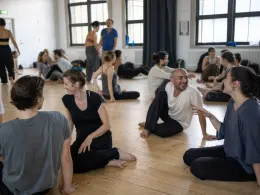
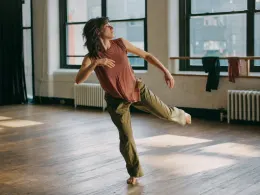
Recurring approaches include floor work, shifts in weight, changing tension and improvisation. Floor work does not simply mean lying down or rolling: dancers use the floor for support, to push off and to redirect their movement. In improvisation, movements emerge from a task or an impulse. It can look free while still following clear rules.

Some pieces and classes also include contact work. Bodies then respond to touch, pressure or shifts in weight shared with another person. This differs from a fixed partner figure: the movement is continually adjusted. Which of these methods takes center stage depends on the choreography and the class. For an overview of other forms, see the guide to dance styles in Dortmund.

A contemporary ballet dance pair performing a graceful choreography
When one body gives its weight, a movement becomes a negotiation of trust and balance.

Its openness makes the style versatile, but not arbitrary

Because Contemporary Dance does not prescribe a single set of formal rules, the label can sometimes seem vague. In practice, the specific artistic or teaching approach determines what a piece or course means by it. Some works rely on precise, repeated sequences; others let movement visibly emerge through exploration and improvisation.

For Dortmund, a helpful point of reference is the variety of dance venues and stages: Theater im Depot hosts festivals for the performing arts, including Beyond Gravity and Black Attitude. That alone does not tell you what form an individual work takes. But it does show why it is worth looking at the description, movement material and artistic idea, rather than relying on a style label alone.

“Expressive” does not automatically mean that a movement is spontaneous or unplanned, either. An apparently simple gesture can be precisely placed in the choreography. Conversely, a set sequence can allow for different qualities. So if you look more closely, pay attention to dynamics, pathways through space and the use of weight. For more stage and dance contexts in the city, the overview Dance in Dortmund offers guidance.

Recognize Movement Principles

Yes, like this

  • Consciously release your weight into the floor
  • Pick up an impulse and visibly carry it forward
  • Find your balance together again through contact
  • Vary your movements according to the task

Not like this

  • Keep every movement upright throughout
  • Carry out impulses only as a fixed counting pattern
  • Treat connection as rigid holding
  • Present a single execution as the only correct one

When we truly feel the weight, even a small step becomes a clear decision.

Contemporary dance educator

When choosing a class, the method behind the name matters

If you want to get started, first check whether the class is intended for beginners and how physically demanding it is. A class might focus on improvisation, teach movement fundamentals, or work on choreographed sequences. These differences tell you more about the class than a general title does.

Before signing up, ask whether the class includes floor work, how partner exercises are organized, and what alternatives are offered for certain movements. Practical details also help: What clothes are comfortable, do you dance barefoot, and can you watch first or attend a trial class? The answers will show whether the approach matches your expectations.

If you're looking for a more structured technical foundation, compare the course description with the exercises and learning goals it lists. If you mainly want to explore freedom of movement, make sure improvisation is actually part of the class. In Dortmund, you can compare current options in the overview of dance classes. The term alone doesn't promise a particular experience, the description should make it concrete.

Two ways to develop movement

Prompt

A prompt gives rise to movement

Improvisation opens up material in the moment.

An instruction might specify a direction, a body part, or a quality of movement. The dancers find their own solutions, which are then selected, repeated, or changed.

Form

A sequence takes shape from material

Choreography consciously organizes movement.

Movements are defined, arranged in space and connected with music or silence. Even a precise choreography can feel open when tempo, tension and dynamics change deliberately.

Frequently Asked Questions

  1. The terms overlap, but they are not used in the same way everywhere. Modern Dance also refers to a historically developed dance style, while Contemporary Dance is often used more broadly for current stage and movement practices. When comparing courses, the description of the content is therefore more helpful than the label.

Modern Dance and Improvisation in Dortmund

Compare current courses in Dortmund and see whether classes include improvisation, floorwork or partner contact.

Your movement has room to explore

On udansa, you can compare contemporary and improvisation courses in Dortmund. That way, you can find an option whose approach and starting level are right for you.

Your movement has room to explore