Children's Dance5 minutes

Children's Dance in Frankfurt: What Shapes Children's Classes

By Bernhard De LucaUpdated

In brief
  • Children’s dance classes in Frankfurt combine music, movement activities and age-appropriate practice.
  • Younger children often explore rhythm and space through play, while teenagers focus more on technique, style and their own choreography.
  • The exact format depends on the course concept; clear activities, well-matched groups and supportive instructors are important.
  • Use the course filter to find current classes and dates in Frankfurt.

For children, what often matters first is whether they feel safe in the space and want to come back. For teenagers, it also becomes important whether the music, level of challenge, and say in things match their own idea of dancing.

DefinitionMovement Prompt

A movement prompt is a clear invitation to try something with your body, such as changing direction, pace, or rhythm. It leaves room for your own solutions rather than prescribing a fixed sequence of steps.

Children’s classes combine movement with clear ground rules

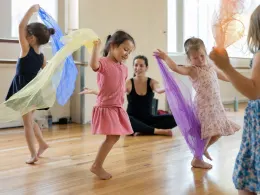
In Frankfurt, children’s classes vary by age, music and teaching approach. A typical session might begin with a welcome and a group warm-up. Short movement activities follow: steps to the beat, changing direction or a short sequence that the group repeats together. Guided activities and free exploration often alternate. This keeps the class varied without requiring children to constantly learn new routines.

For younger children, images and simple prompts can help, such as asking them to make a movement big or small. In classes for teenagers, technique, style and developing their own combinations may play a bigger role. These aren’t fixed rules: the class description should show which age group it’s for and whether the focus is on creative movement, Modern Dance or another approach.

Alongside studio classes, there are also dance programs at schools in Frankfurt. If you’d first like to get an overview of different types of classes, see the guide to dance classes in Frankfurt.
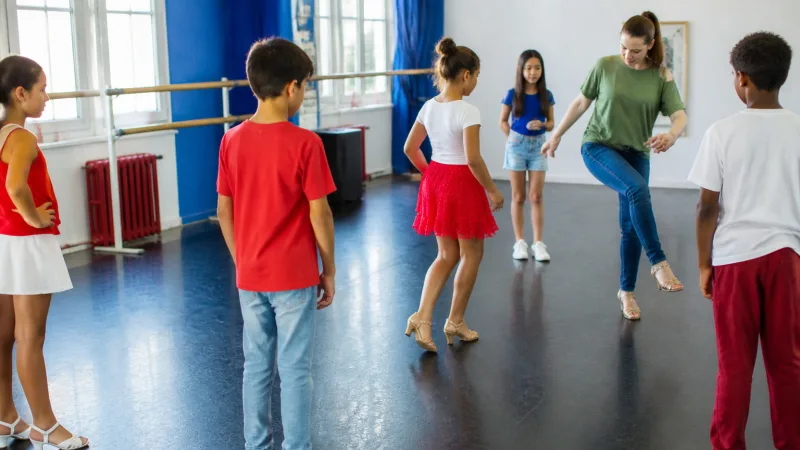
When children are free to vary movements, imitation becomes their own way of exploring rhythm and expression.

The Course Concept Matters More Than a Flashy Performance

A possible stage performance can motivate children, but it should not be the only goal of a course. What matters is what they practise regularly: Do participants listen to different rhythms? Do they learn to perform movements with confidence? Can they contribute their own ideas? The answers show whether the focus is more on fundamentals, expression, choreography, or a combination.

You can recognize whether a course is right for your child by looking for concrete signs. Can they describe what happened in class? Do they know which movement they want to repeat? Do they feel encouraged to join in, even if they don’t get a step right at first? For teenagers, it also matters whether they connect with the music and the level of challenge. A course can be demanding, but it should make clear what the group is working on.

If you’d also like to assess how classes are organized when choosing a course, you’ll find a separate guide to choosing a dance school. For an overview of the content and direction, take a look at dance styles in Frankfurt.

How to spot a course concept that's right for you

Yes, this way

  • Tasks are demonstrated and broken down into small steps
  • Children can work out a movement in their own way
  • Teenagers are given space to ask questions and share their own ideas

Not like this

  • A long sequence of steps is expected without explanation
  • Everyone has to perform movements exactly the same way
  • Questions and suggestions from young people are unwelcome

When a task is clear yet still allows for individual solutions, children usually stay curious about what to try next.

Dance educator specializing in dance for children and young people

A good learning environment makes room for different paces

In a children’s or youth group, not everyone learns at the same speed. Some jump straight into a movement, while others watch first and try it later. A good instructor makes room for both approaches: they explain the task again, adjust the pace when needed, and make it clear that an attempt doesn’t have to be perfect. This is especially important when children practice a sequence together or develop a short choreography.

As a parent, you can look for more than a flawless performance after class. Does your child seem focused or consistently overwhelmed? Can they ask questions? Are they corrected during practice without being embarrassed in front of the group? For teenagers, it’s also helpful if they can understand why a movement is being practiced and which decisions they’re allowed to make themselves.

After a few classes, talk about specific situations: What was easy, what felt unfamiliar, and where would your child have liked more support? These observations help align expectations with the course goals. You can then compare current classes and dates for Frankfurt in the course filter.

Children’s dance and youth courses take a different approach

Children's dance

Move, explore, repeat

Playful activities provide guidance.

Children often explore rhythm, space and movement quality through images or short activities. Repetition helps build familiarity, without making every movement feel like a test.

Dance for teens

Combine technique and your own ideas

There’s room for more creativity.

Teens often want to understand how a movement works and contribute their own ideas. Depending on the class, the focus may be more on technique, style, or developing a choreography together.

Frequently Asked Questions

  1. No, many children's courses are designed for beginners. Check the course description to see whether prior experience is required and whether the instructor explains and demonstrates movements rather than assuming certain skills.

Dance classes for children and teens in Frankfurt

Compare current classes and dates in Frankfurt, and check which age group and teaching focus are right for your child.

The right class starts with curiosity

On udansa, you can compare dance classes for children and teens in Frankfurt. Check the age group and focus, and talk with your child about what they'd like to do.

The right class starts with curiosity

Read more