Stage Dance5 minutes

Jazz Dance Frankfurt: Rhythm and Technique

By Mary De LucaUpdated

In brief
  • In Frankfurt, Jazz Dance combines precise technique with rhythmic movement and expressive performance.
  • A typical class begins with a warm-up, followed by isolations, turns, jumps, and short combinations.
  • Musical Theatre Dance uses similar foundations, with gestures and movement more focused on a stage character.
  • Modern Jazz and Lyrical Jazz place different emphasis on dynamics, lines, and musical interpretation.

In jazz training, powerful accents and fluid transitions can sit side by side. Recognizing the course style makes it easier to assess whether technique training, stage work, or a storytelling movement vocabulary aligns with your interests.

DefinitionIsolation

Isolation describes a movement in which one part of the body is deliberately moved while other areas remain as still as possible. In jazz dance, it makes rhythmic accents visible.

A jazz class builds from warm-up to combination

In Frankfurt, when comparing classes, you can pay attention to how much time a class allows for technique and choreography. The warm-up prepares your joints and muscles for quick changes of direction, and often includes posture, footwork and simple rhythmic patterns.

Next come exercises that isolate individual parts of the body. These isolations build control over your rib cage, shoulders or hips. Turns begin with a stable preparation: your supporting leg bears your weight, your torso stays aligned and your eyes find a fixed point. For jumps, takeoff and landing matter just as much as height.

At the end, the elements are often put together in a short combination. This shows how technique, music and memory work together. If you're looking for a starting point, check whether the class description states an appropriate level. You can more easily choose a dance school in Frankfurt if you first clarify whether you want to practise the basics or more challenging choreography.
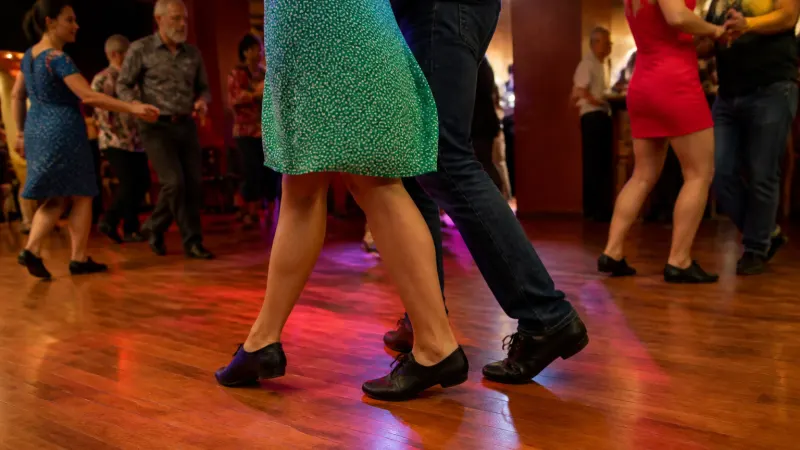
A stable preparation makes turns controllable, even when the music calls for quick changes of direction.

Jazz Dance and Musical Theatre Dance emphasize different things

Jazz Dance is a broad framework for rhythm-driven movement, clear physical actions, and choreographic work. The style can be angular and powerful or use soft, flowing lines. Modern Jazz often refers to a contemporary approach to jazz training, though its specific meaning depends on how a class is structured.

Musical Theatre Dance is more focused on portraying a character or situation. Gestures and posture support the stage action, while jazz technique drives the movement. This doesn’t mean every class includes singing or acting. What matters is whether the choreography is conceived as a stage scene or primarily trains technique and musicality.

Lyrical Jazz often uses longer movement phrases and an expressive approach to music. The names alone don’t always tell you how intensive a class is. Ask about the amount of time spent on warm-up, technique, and choreography, and whether turns and jumps are expected or built up step by step. In the overview of dance styles in Frankfurt, you can also distinguish Jazz from other types of classes.

Technology that makes movements clear and safe

Yes, like this

  • Prepare turns with a supporting leg and a focal point
  • Add jumps only once you can land safely
  • Set accents in time with the rhythm
  • Coordinate your arms and upper body consciously

Not like this

  • Forcing turns with momentum alone
  • Choosing jumps higher than the landing allows
  • Adding accents independently of the beat
  • Letting your arms and upper body move without control

A powerful stage movement often starts with a clear stance, not with as much momentum as possible.

Jazz dance instructor

The right course depends on your learning goal

If your main goal is to feel more confident with turns, look for a description that explicitly mentions balance, spotting and technique exercises. For jumps, it’s important that landings aren’t treated as an afterthought. A course with a stage focus, on the other hand, may set aside more time for gestures, moving through space and connecting movement with a role.

Use a trial class to assess more than just the choreography. Pay attention to whether the teacher breaks down movements clearly, offers variations for different experience levels and explains corrections in a way you can understand. You can also ask which shoes are suitable and whether you can start by making certain movements smaller.

If you’re deciding between several courses, make a note after each visit of what you actually practiced: technique, expression, endurance or remembering longer sequences. A compact weekend dance course in Frankfurt can be a way to try a style before committing to a longer course. You can find current courses and dates in Frankfurt in the course filter on the page.

Two ways to translate music into movement

Technique

Make accents visible

Clear, precise, and physically structured

Technical jazz training focuses on isolations, footwork, turns, and jumps. The music becomes legible through clear changes of direction and precise accents.

Expression

Let movement tell a story

Shaped with fluidity, emotion and musicality

Lyrical Jazz and Musical Theatre Dance often give movement a stronger narrative connection. Lines, gestures and dynamics create a mood or make a stage character recognizable.

Frequently Asked Questions

  1. Comfortable clothes that let you move your arms and legs freely are a good choice when you’re starting out. Choose shoes that suit the floor and the class rules, and ask in advance whether you’ll be dancing barefoot, in jazz shoes or in dance sneakers.

Jazz Courses in Frankfurt

Compare Jazz courses in Frankfurt and see whether the focus is on technique, Musical Theatre, or expression.

Your next step begins with Rhythm

On udansa, you can compare Jazz classes in Frankfurt and see whether technique, Musical Theatre or Lyrical Jazz fits your learning goal.

Your next step begins with Rhythm