Hamburg Dance Scene5 minutes

Contemporary Dance in Hamburg: Scene and Training

By Bernhard De LucaUpdated

In brief
  • Contemporary dance in Hamburg is visibly rooted around Kampnagel and K3, which is based there.
  • Kampnagel is an international production house; K3 is its center for choreography and contemporary dance.
  • This describes an important hub in the scene, but does not automatically mean there is a specific open training session or course place available.
  • To find training, compare current offerings using the Hamburg course filter and check the level, approach and course goal.

Stage work and personal training are closely related, but they are not the same. Knowing the difference can help you better understand Hamburg’s dance options and look more specifically for a suitable place to start.

DefinitionContemporary Dance

Contemporary dance is an open-ended dance practice that brings together movement, space, body awareness and choreographic ideas in different ways. Depending on the training, the focus may be on technique, improvisation or developing your own movement sequences.

Kampnagel and K3 give the scene a point of reference

If you're looking for contemporary dance in Hamburg, you'll come across two closely connected names: Kampnagel and K3. Kampnagel is an international production house; K3, Centre for Choreography | Tanzplan Hamburg for contemporary dance, is based there. This brings together two complementary but distinct roles: a production house is a place for artistic productions, while a centre for choreography focuses on choreographic work.

This connection makes Kampnagel a good point of reference for understanding the independent scene. However, it doesn't tell you which classes are currently open, whether an offering takes place regularly or what level is expected. A performance in the programme is no substitute for a class, either. If you'd first like to get an overview of the different areas of dance in Hamburg, the overview of dance styles in Hamburg can help you find your way.

The practical distinction is important: use the institutional connection as a guide to the scene, not as a promise of a particular class. When looking for a spot, the current class description is what matters.
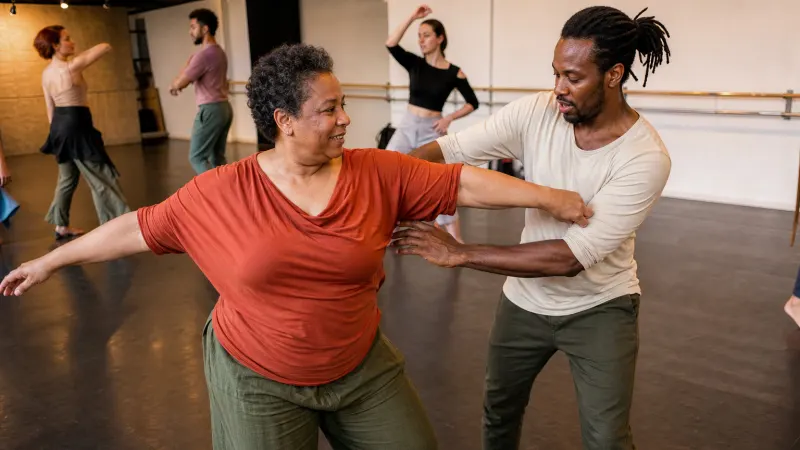
A choreographic space makes the scene visible, but regular training calls for choosing the right course.

You can recognize a suitable class by its approach

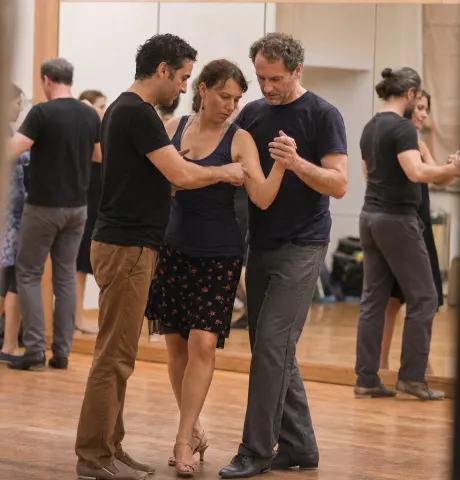
The label “contemporary” alone doesn’t tell you what happens in a class. A class might start with movement fundamentals, use improvisation exercises, or focus on developing choreographic sequences. So don’t just read the style title, look for the specific learning goal in the description. If it’s not clear, ask whether beginners are welcome, whether you need prior experience, and how physically intense the class is.

Also check whether you can try a single session or would prefer to work on a topic over several classes. This isn’t a judgment of quality: an open format gives you room to experiment, while an ongoing class can offer a clearer learning path. It’s also helpful to know whether you’ll dance barefoot, in socks, or in dance shoes, and whether you should bring anything. Details like these make your first visit easier to plan.

Use the Hamburg class filter to compare options. What matters isn’t whether the title sounds especially modern, but whether the level, approach, and your own goal are a good fit.

Putting the scene and training into perspective

That's right

  • Distinguish between Kampnagel as a production house and K3 as a center for choreography
  • Ask about the level and specific approach when choosing a course
  • Before signing up, clarify whether you'll be practicing improvisation or technique

Not like this

  • Assume you know what a specific course is like based on the name Kampnagel
  • Choose an offering just because it uses the term “contemporary”
  • Equate a stage program with regular training

A helpful course description makes it clear how you move and what you work on in training.

Contemporary dance educator

Training and stage programs serve different purposes

If you are interested in contemporary dance, you can find a way in through performances, choreography and moving yourself. The first Dance Triennale in Hamburg brings international companies, the local scene, a forum and a City Parade together in 2026. This shows that dance can be present not only on stage, but also through exchange and in public spaces. This provides context for your search for training, but it is not a list of ongoing classes.

All Moves also takes a different approach: the open movement sessions take place at changing locations and are aimed at people with no prior experience. The format can help you try out movement without immediately committing to a longer course. If, on the other hand, you want to build technique or work on a particular quality of movement, compare course descriptions and ask about continuity and the goals of the classes.

Keep these options distinct without pitting them against each other: a performance can spark ideas, an open session can offer a first chance to try moving yourself, and a course can give structure to regular practice. For background on taking part in the open series, see the information about All Moves. Dates for individual performances are not a deciding factor when choosing your training.

Two approaches to contemporary training

Technique

Develop movement with intention

Gain clarity about your body and movement

A technique-focused course can help you coordinate movements more intentionally and perform them consistently. Pay attention to which fundamentals are taught and whether the level matches your experience.

Improvisation

Developing movement in the moment

Exploring your own impulses and decisions

Improvisation exercises invite you to respond to the space, tempo or other dancers. Ask how the exercises are guided and whether prior experience is expected.

Frequently Asked Questions

  1. K3 is the Centre for Choreography and Contemporary Dance at Kampnagel, but that does not automatically mean a particular class is open there. Check current class information using the Hamburg filter, and read who offers the training, who it is intended for, and how to register.

Contemporary dance classes in Hamburg

Compare suitable classes and see whether technique, improvisation, or both are the focus.

Your next spark begins with Training

In the course filter for Hamburg, you can compare contemporary dance classes and look for an approach that suits your experience. On udansa, you can also find dance classes and people to practice with.

Your next spark begins with Training