Dance culture4 minutes

Tanzsaal Munich: Classic splendor on historic parquet

By Bernhard De LucaUpdated

In a nutshell
  • A historic dance hall in Munich is characterized by a sprung parquet floor, high ceilings, and a spacious room layout.
  • Real wood floors require clean dance shoes with chrome leather soles to protect the delicate wood and allow for safe turns.
  • On large ballroom floors, following the counter-clockwise line of dance ensures a smooth flow without collisions.
  • Traditional halls combine a festive atmosphere with sophisticated room acoustics for ballroom dances and historic social dances.

Between curved stucco and creaking wood, every dance step gains weight. Historic halls offer couples a festive backdrop, but they require an attentive sense for the space, the floor, and fellow dancers.

DefinitionDance hall

A dance hall is a representative, generously proportioned interior space with a sprung floor, specifically designed for social dance events and balls. Its architecture promotes the shared flow of movement of couples in the room.

What makes a historic dance hall

A historic dance hall in Munich differs fundamentally from modern multi-purpose halls or mirrored studios. Rooms like the ballroom in the Old Town Hall or the traditional hall at the Hofbräuhaus am Platzl were created to architecturally combine community and festive representation. Anyone stepping onto the parquet floor here feels the connection of high ceilings, ornamentation, and historic parquet flooring, which cushions steps softly and supports turns effortlessly.

Dancing in such halls follows its own rules. The spacious room layout creates a natural dynamic where couples glide in a circle across the floor. Whether at the Munich Kathreintanz or festive occasions: historic venues demand attention to the surroundings. Stucco work and columns give the room structure, but also require precise dance posture and orientation on the floor.

Curved ceilings and warm light give the dance hall an atmosphere that modern functional buildings cannot imitate.

Parquet and spatial awareness on historic surfaces

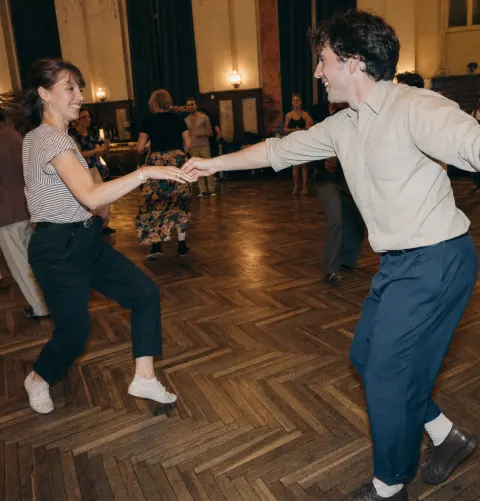
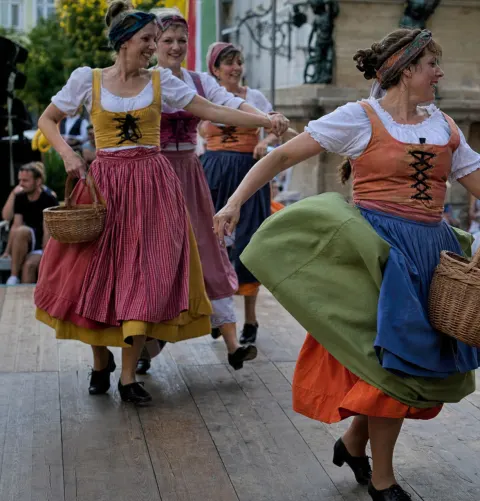
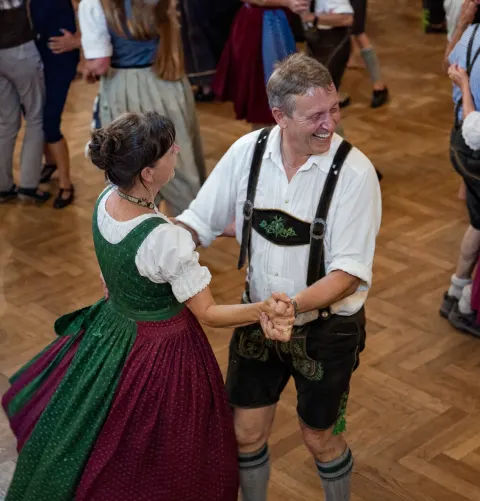
On traditional dance floors, different styles often meet. A classic ballroom offers excellent conditions for lively ballroom dances like Waltz or Quickstep, but is just as often used for Bavarian round dances. The floor quality plays the decisive role here: real wood parquet does not forgive street shoes, but rewards dancers with ideal glide for controlled footwork.

A special spatial marvel appears annually in the Deutsches Theater, whose auditorium is transformed into an expansive ballroom for festive occasions. For togetherness to succeed on such traditional surfaces, mutual consideration is needed. Fast couples use the outer lane of the dance circle, while figures with many turns on the spot remain in the center of the hall. This way, the flow of the room is maintained for everyone, regardless of individual skill.

Etiquette on traditional dance floors

Proper etiquette on the historic dance floor

  • Bring dance shoes with soft suede soles
  • Dance sweeping steps consistently on the outer lane
  • Watch out for columns and architectural room dividers
  • Maintain the flow of the room counter-clockwise

Mistakes in the dance hall

  • Stepping onto the parquet with wet street shoes
  • Stopping for longer figures in the flow of the outer lane
  • Cutting across the dance floor through the dancing couples
  • Dancing with hard plastic or metal heels

A room with history changes your posture: you automatically lift your gaze and dance with more calm and space.

Dance instructor for Ballroom and Latin

Preparing for the dance evening in the ballroom

Before you visit a traditional ballroom in Munich, it is worth taking a look at the respective conditions. Historic rooms have strict requirements for protecting the floor. Metal heels or non-marking rubber soles are taboo on well-maintained parquet. Dance shoes with chrome leather soles offer the best compromise between a secure footing and clean turnability.

The room acoustics of historic buildings also differ noticeably from modern studios. High vaults carry the sound of a live band effortlessly, but require a trained ear for the timing. Whether you engage in traditional step sequences like the Munich folk dance or prefer standard dances: on historic ground, movement connects directly with the history of the room.

Room layout in the ballroom

Outer lane

The dance flow in the hall

Momentum and gaining space

On the outer lane, couples move continuously in the dance flow counter-clockwise. Large steps and expansive turns have their fixed place here.

Center

Quiet zone on the dance floor

Stationary figures and turns

The center of the dance floor belongs to couples dancing complex poses, solo turns, or stationary figures. Here, the flow around the room does not come to a halt.

Frequently Asked Questions

  1. On historic parquet floors, wear dance shoes with a sole made of roughened chrome leather. Street shoes, metal heels, or non-marking rubber soles are not permitted, as they damage or block the sensitive wooden floor.

Dance courses for standard and partner dance in Munich

Prepare yourself for your next dance evening in the ballroom with the right course.

Find your rhythm on the historic dance floor

Compare dance styles and find the right dance course or your next dance partner nearby.

Find your rhythm on the historic dance floor