Going out5 minutes

Going dancing in Munich: Your guide to parties and socials

By Mary De LucaUpdated

In short
  • If you want to go dancing in Munich in the evening, you will find open dance floors without the need for a course at social dances, milongas, folk dances, and balls.
  • At a social dance, you ask someone to dance directly at the edge of the dance floor, while at milongas, the non-verbal invitation via eye contact usually applies.
  • Shoes with soles that allow for easy turning, respectful floor distribution in the direction of dance, and mutual consideration ensure a relaxed evening.

A successful dance evening thrives on good music, the right dance floor, and people who share the moment. Anyone who knows the nuances of milongas, socials, and balls will move confidently on any dance floor.

DefinitionSocial Dance

Social dance refers to casual partner dancing at parties or dance evenings outside of classes and competitions. The focus is on spontaneous interaction with changing dance partners and the shared joy of the music.

Free dancing as a relaxed alternative to dance classes

If you want to go dancing in Munich in the evening, you don't have to commit to fixed dance school courses. Free dance evenings offer the space to repeat figures at your own rhythm, enjoy music, and dance with changing partners without any fixed obligation. Whether you are looking for a classic dance party in Munich, a traditional milonga in Munich, or a lively Latin social: the format differs fundamentally from training sessions.

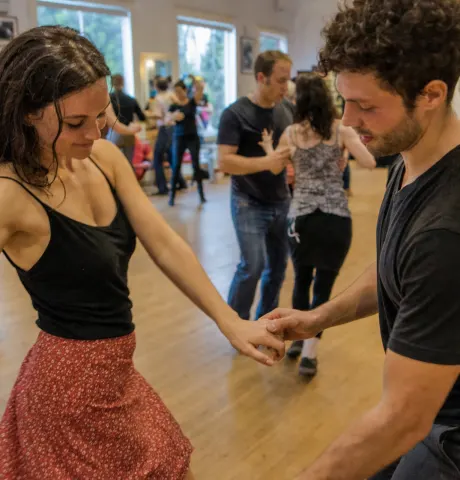
The focus is on togetherness. At a typical social dance, partners change after every round or after a few songs. No one expects perfection, it is much more about mutual consideration on crowded floors. In Munich, such evenings take place in very different settings: from venerable halls and cultural centers like the Muffatwerk in Haidhausen to special summer locations like the Dianatempel in the Hofgarten, where people dance on stone floors under the open sky when the weather is good.

The dance floor thrives on togetherness: those who follow the flow of the dance and leave space, dance more relaxed.

Etiquette from Tango to Latin: How the evening works

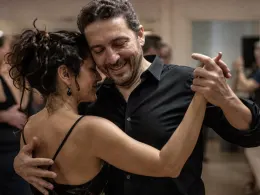
The rules of the game on the dance floor depend heavily on the respective dance culture. At a milonga, the traditional Argentine Tango evening, the proceedings follow strict codes. Dancers move counter-clockwise in concentric lanes. Invitations happen discreetly via eye contact and a nod (cabeceo), and dancing usually takes place in blocks of three to four tracks (tandas), which are separated by short musical interludes (cortinas). Such evenings have a tradition in Munich, for example at the Staatstheater am Gärtnerplatz or at the Kulturzentrum Giesinger Bahnhof in Obergiesing.

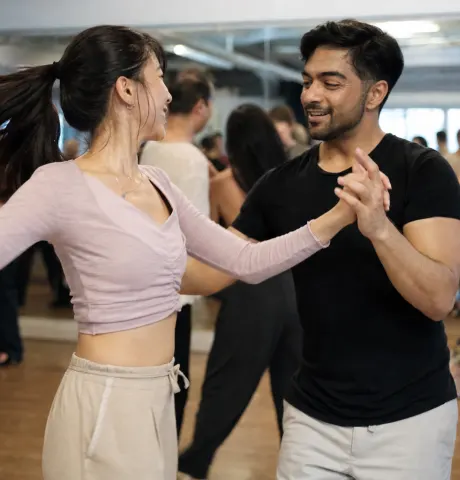
Dancing in the evening in Munich works quite differently for Salsa, Bachata, or West Coast Swing. Here, dancers invite each other directly at the edge of the floor, often regardless of experience level. Basically, a no is always accepted in a friendly manner, and whoever declines does not invite the same person for the same dance immediately afterwards. If you are new to a scene, observe for one or two rounds first to grasp the dynamics of the dance floor before joining in.

Dance floor etiquette

Like this

  • Pay attention to the counter-clockwise direction of the dance
  • Wash your hands and use mints before dancing
  • Accept a friendly no without the pressure to justify yourself
  • Adjust turns to the available space on the dance floor

Don't do this

  • Stop in the middle of a crowded dance floor
  • Dance in tight spaces while sweaty without a change of shirt
  • React offended or keep asking after a rejection
  • Force expansive figures on a crowded dance floor

In social dance, you dance for the moment. It is not about showing the most difficult step, but about giving the other person on the floor a good time.

Dance instructor for partner dance

Balls, folk dance, and preparation for the dance night

The traditional side is also an integral part of the Munich dance calendar. At folk dances, such as the Kathreintanz at the Hofbräuhaus am Platzl or the early morning Kocherlball at the Chinese Tower, the focus is on figures like the Zwiefacher, Polka, or the Munich Française. Because these dances are often briefly explained or demonstrated on the spot, even beginners can join in without any problems. During carnival season, the Deutsches Theater transforms into a magnificent ballroom, where standard and Latin dances take center stage in festive evening attire.

For a successful dance experience, practical details are key: layered clothing, comfortable shoes with soles that allow for easy turning, and fresh breath thanks to mints. If you are still looking for like-minded people to go out with, it is worth checking out a suitable dance partner ad or connecting via online platforms like udansa to find others for your next dance evening.

Comparing two dance cultures

Social

Open Social Dance

Casual dancing to Salsa, Bachata, or Swing

Characterized by casual invitations directly on the dance floor, quick partner changes after one or two songs, and a relaxed club or bar atmosphere.

Milonga

Classic Milonga

Traditional Argentine Tango evening

Characterized by clear customs such as cabeceo, dancing in tandas, and a fixed direction of dance. The focus is entirely on musical interpretation and a closed dance embrace.

Frequently Asked Questions

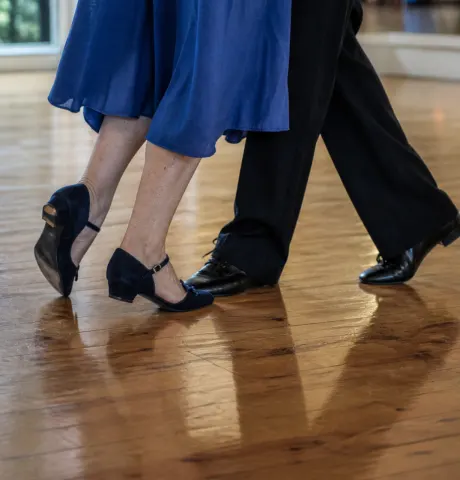
  1. Comfortable, clean change of shoes with a smooth leather sole or dance shoes with a chrome leather sole are optimal. Street shoes bring dirt onto the dance floor and brake too hard during turns.

Munich rarely dances alone

On udansa, dancers connect for evenings out and find current dance events, balls, and socials directly in Munich.

Munich rarely dances alone

Everything about going dancing in Munich: your guide to parties and socials