Dance Sport5 minutes

Understand the Competition as a Spectator at a Dance Tournament in Nuremberg

By Bernhard De LucaUpdated

In brief
  • At a dance competition in Nuremberg, you watch rounds called onto the floor as a spectator, not a continuous stage show.
  • In preliminary rounds, judges select couples to advance; in the final, they usually award placements.
  • Scores are given while the dancing is underway and then combined, they are not decided by applause.
  • You stay in the audience area and use breaks and the designated spectator routes when changing seats.

Your favorite couple can dance expressively and still be eliminated. That tension is what makes attending interesting: you watch a performance while a sporting competition takes place at the same time on the sidelines.

DefinitionCompetition Class

A competition class is a category that groups couples by their skill level. Age groups and dance disciplines can further divide the field of competitors.

A tournament day consists of separate competitions

When you attend an advertised dance tournament in Nuremberg, the same venue may host very different competitions one after another. Standard and Latin are separate disciplines; different age groups and levels may also compete. So a couple that just leaves the floor has not necessarily been eliminated. Their dance may simply be over, or it may be time for another competition.

Within a competition, the structure of the rounds depends on the field of competitors and the applicable rules. With many couples, there are preliminary rounds and, if needed, further intermediate rounds before the final. With a small field, a competition may begin directly with a final round. You can recognize a new round by the announcement, not by how formal the clothing looks.

If the floor cannot accommodate everyone at once, a round is divided into groups. These groups are often called heats. You will then see the same dance several times, but with different couples. This is not a repeat of an unsuccessful performance. Only once the groups and scheduled dances are complete can the result of that round be determined.
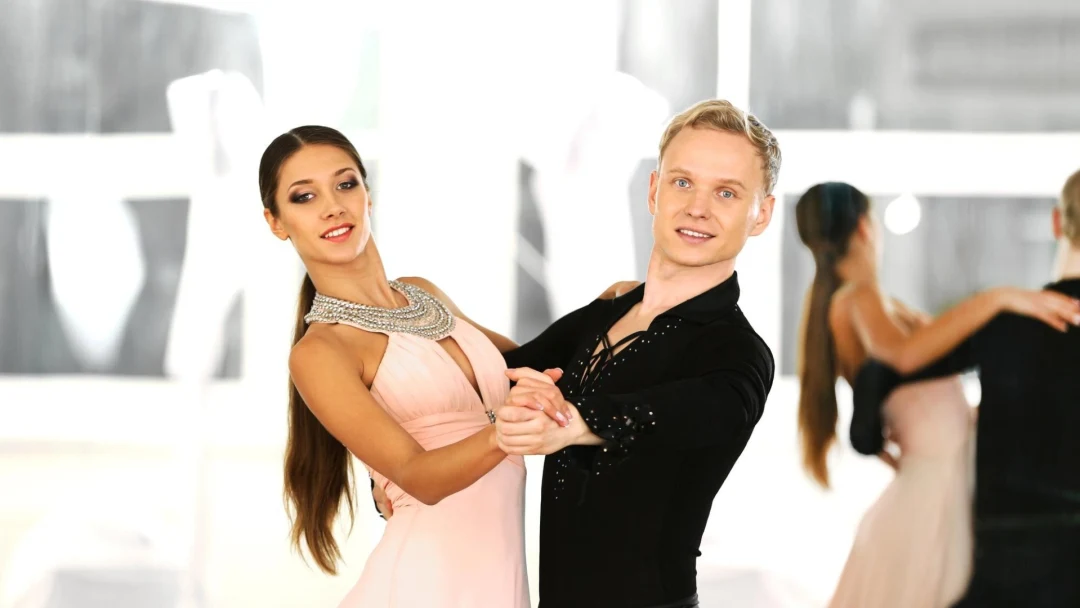
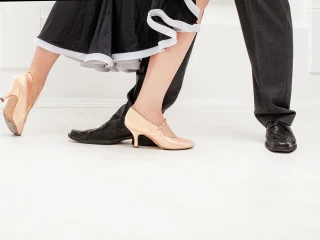
A couple dances a ballroom dance in motion.
The position at the edge of the dance floor gives the judges changing viewing angles, but not every spectator the same view.

Judges See Different Things Than the Audience

At standard and Latin tournaments, the sporting assessment takes place while the couples are dancing. Judges observe, among other things, the connection to the music, balance, movement quality, and how the couple dances together. A big pose is easy to see; a clean weight change may be less noticeable from your seat. Costumes and the volume of the applause are no substitute for dancing ability.

In preliminary rounds, judges usually mark the couples they want to see in the next round. These decisions about who advances are combined. In the final, they usually award placements for each dance, which are then used to determine the overall result according to the relevant scoring system. Other tournament formats may differ. The result is a comparison within this field, not an overall grade for a couple.

You can still sharpen your eye without judging yourself. In the Waltz, look for a smooth, even flow of movement; a sequence of figures with turns in both directions helps you recognize changes in direction. In fast Latin dances, recognizing Jive music helps you perceive movement and rhythm together.

What helps you find your way around the audience area

Do this

  • When your event is called, pay attention to the discipline, class and round
  • Move between dances via the spectator aisle
  • Keep your bags fully stowed at your seat
  • Applaud after a dance and listen to announcements

Don't do this

  • Mistake every new announcement for the start of a final
  • Use the empty competition floor as a shortcut
  • Leave bags next to the floor entrance
  • Keep talking loudly during announcements

Your favorite couple can stay your favorite couple, even if another couple comes out on top in the final standings.

udansa editorial team

An empty floor remains part of the competition

Between two dances, the floor may seem empty even though the competition is still underway. Couples wait for the next call, judges change their positions, or the organizers prepare the next round. These transitions are part of the work of running the event. They don't mean you can walk across the hall or try out a few steps yourself.

The audience area is separated from the competition floor by rows of seats, barriers, or designated walkways. Stay behind this boundary while taking photos, too. A foot, a bag, or a chair pulled out can reduce a couple's space to move. In Standard dances in particular, couples travel over longer distances, and they need room at the edge to pass and avoid one another.

If you want to leave your seat, the best time is after a dance has ended. Still, use only the audience walkways and keep access points to the floor clear. Applause after a dance is welcome, while announcements deserve your attention: they let you hear which competition is up next. Another competition may begin even after a final. So an award ceremony doesn't automatically mark the end of the entire tournament day.

Two perspectives on the same dance

Audience

You follow a performance

Closeness, expression and personal preferences

From your seat, one couple may draw you in more than the others. A smile or a well-timed musical flourish stays with you, even when you can’t see the other couples for a while. This personal perception is part of watching.

Scoring

The judges compare the competitors

Shared criteria, not a favorite moment

Judges have to assess several couples within the same round. They consider each performance across the entire dance and compare it with the performances of the other couples. That is why one particularly striking moment alone does not determine the result.

Frequently Asked Questions

  1. You can follow a dance competition even without knowing any steps. The rhythm, flow of movement, and interaction between a couple already give you clues. Being able to name individual figures can help you recognize them, but it is not a requirement for an enjoyable visit.

Watching makes you curious

On udansa, you’ll find people in Nuremberg to share a visit to an upcoming tournament and your favorite moments with.

Watching makes you curious