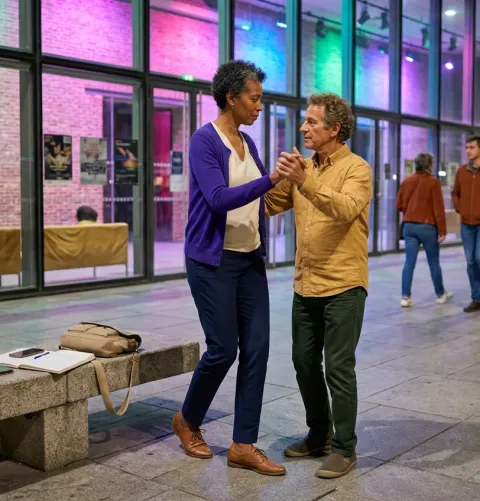
Stay on track with Practice Partners
On udansa connect, you can turn your practice plans into action with your dance partner in Paris. Describe which familiar move you want to practice again and how much time you plan to set aside for it.

By Bernhard De LucaUpdated
On udansa connect, you can turn your practice plans into action with your dance partner in Paris. Describe which familiar move you want to practice again and how much time you plan to set aside for it.
A free evening can quickly fill up with all the figures that were difficult in class. A reliable practice agreement keeps you from trying to tackle too much at once and ending up unable to identify any progress.
If you practice regularly with your dance partner in Paris, you don't need a long list of figures. You need a task whose result you can both recognize. “Lead better” is too broad. “After the change of direction, we are both standing on the intended foot” is something you can observe. Choose a movement you have already learned and decide which part of it you will focus on today.
Distinguish between a planned attempt and dancing freely. During the attempt, you can stop, count and repeat the same transition. When dancing freely, you put familiar moves together with the music without discussing every imperfection right away. If you keep mixing the two, you will end up with neither a useful repetition nor a fluid run-through.
A mirror shows you the outward form, but it cannot reliably show the pressure in a hand connection or how it feels to arrive. So use observation and your own sensations together. The tips on mistakes when observing dance movements can help you distinguish between the feet, direction and upper body. If you choose to use a short review clip, the guide to a practice video that is easy to see explains why your whole body should stay in the frame. One feature you both understand is enough to start with.
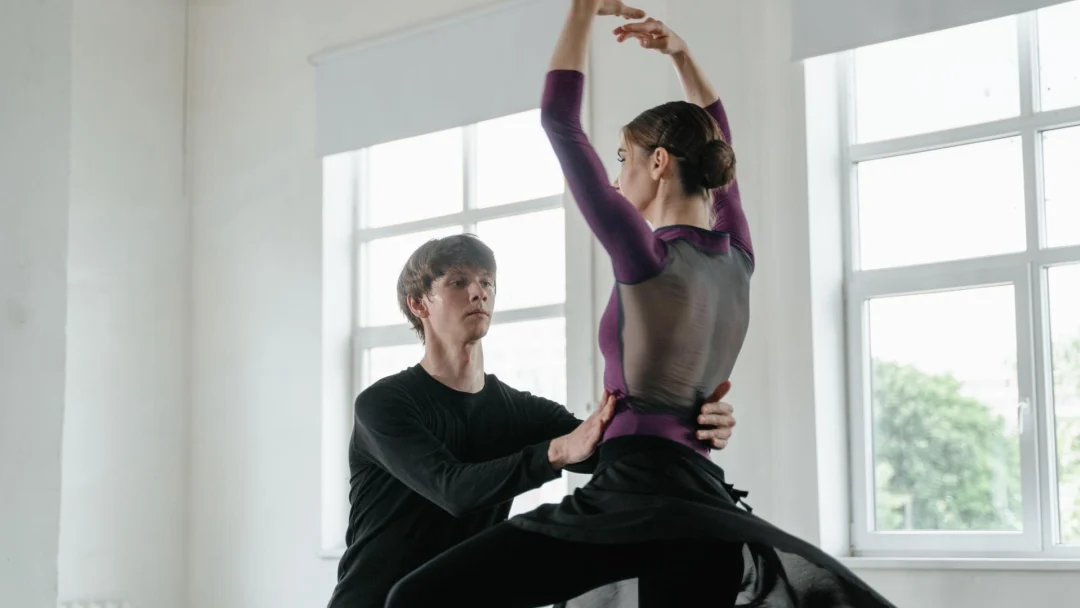
Choose a familiar transition with your partner and complete the sentence: “Today we’ll achieve …”. Name a recognizable feature, such as a stable ending position without an adjustment step. You should both have the same idea of when the attempt has succeeded.
Set a recurring time and a limited duration. A 30-minute format works as a model: five minutes to settle in, 15 for the task, five for music, and five to wrap up. This is a suggestion, not a required training duration.
Start with relaxed walking, small weight shifts, and the familiar basic step. Gradually make the movements bigger without pushing cold joints into end positions. Once you can both shift your weight without rushing, start the selected transition.
Dance slowly from the last secure step to the agreed finishing position. Repeat the same section instead of adding new figures. Keep the chosen element the same on every attempt so you can tell whether your execution is actually becoming more reliable.
Ask both of you to briefly describe what you noticed: “I had to adjust” is more useful than “You’re leading incorrectly.” Agree on one change, such as taking a smaller step, and repeat the section. Only then discuss what effect the change had.
Practice the transition between familiar basic steps and dance a short passage without interruption. Use music whose beat you can hear clearly. Then observe whether you maintained this quality while keeping time with the music, without immediately increasing the tempo or the difficulty of the figures.
Keep track of what has become more stable, which change helped, and which section still needs attention. Decide where to start at your next meeting. Stick to the agreed scope for now, rather than turning a successful evening straight into a longer practice session.
On udansa, you'll find current classes and dates in Paris, which you can complement with your practice together.
Yes, like this
Not like this
Start
Progress check
Wrap-up
Start by choosing a rhythm that fits into your daily life, such as a short practice session once a week. That is one possible arrangement, not a general minimum. For learning, it helps if you can pick up the same task again at your next session. Additional sessions do not automatically need to cover new material.
Break the section into smaller parts and go back to the last movement you could do with confidence. Repeating it does little good if you make the same mistake every time. First, separate the footwork from the weight changes, then put them back together. You should learn unfamiliar technique in class rather than guess at it while practicing together.
Switching roles is optional and not necessary for a sustainable routine. If you already know both roles, a brief switch can help you understand how something feels. But if you are also practicing an unfamiliar task, it makes things more challenging. For your main practice goal, stick with the role distribution you know for now.
No, a video is not necessary for your practice arrangement. A short clip can help you take a closer look at a foot position or transition later. Both of you need to agree to being recorded. A video cannot replace feedback about uncomfortable pressure, balance, or how the movement feels to you.
Stop the painful movement right away and do not try to force it by repeating it. Pain is not a useful sign of training progress. Release your dance hold and move only within a comfortable range. If the discomfort persists or keeps coming back, get the cause checked by a medical professional before putting yourself under that strain again.
Add a new figure you have already learned once you can repeat the current section without additional prompts. One good attempt is not enough. Keep the practice scope small while adding the new material, and do not also change the tempo, connection, and step length at the same time. That way, you can tell what makes the new task more difficult.