Music history4 minutes

The power of sound: How ballet music tells stories

In a nutshell
  • In the 19th century, ballet music evolved from purely rhythmic accompaniment into an independent art form.
  • Famous ballet music composers throughout history made dance a dramatic experience through symphonic depth and complex leitmotifs.
  • Pyotr Ilyich Tchaikovsky revolutionized the genre by elevating music to an equal partner of the choreography.
  • In today's ballet class, the musical structure directly controls the dynamics, power, and coordination of the dance movements.

Music in ballet is far more than a rhythmic accompaniment for elegant steps. It is the invisible narrator that makes emotions audible and carries the body through the room as if by itself.

DefinitionLeitmotifs in ballet

Leitmotifs are recurring musical themes that are firmly linked to specific characters, emotions, or plotlines in ballet. They help the audience to emotionally understand the dramatic development, even without spoken words.

The emancipation of sound in classical dance

In the early days of stage dance, music was often just a rhythmic metronome that dictated the beat for the dancers. The melodies were simple, interchangeable, and adapted strictly to the wishes of the choreographers. It was not until the 19th century that this dynamic changed fundamentally. Composers realized that sounds can convey emotions and drive plots forward without a single word needing to be spoken. This development revolutionized the history of ballet in a lasting way.

Through the close integration of score and movement, a completely new theatrical experience emerged. Music became an equal partner on stage. It traced the characters, created atmospheric spaces, and gave the jumps and turns an emotional depth that touched the audience to the core.
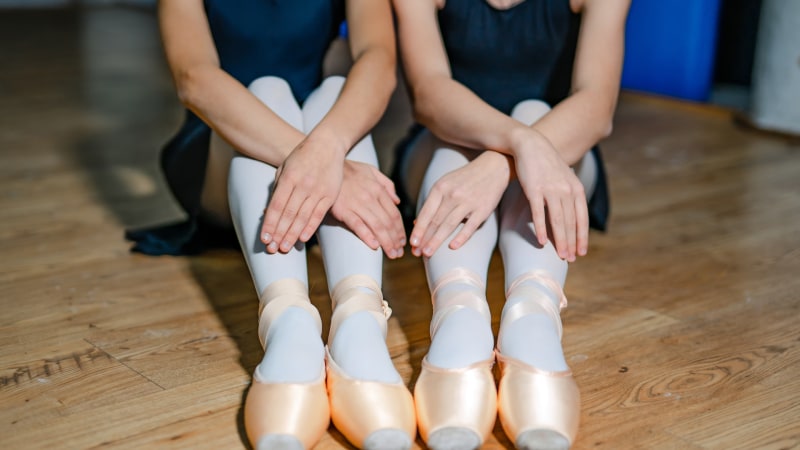
Two ballet dancers sitting on a wooden floor and putting on their pointe shoes
The right music carries the dancer effortlessly across the room and gives every movement a deeper emotional meaning.

How Tchaikovsky changed dance forever

No one shaped ballet music as lastingly as Pyotr Ilyich Tchaikovsky. Before his masterpieces, ballet music was often considered inferior functional music in professional circles. Tchaikovsky broke with this tradition by bringing the dramatic depth of the symphony into the theater. His scores for Swan Lake, Sleeping Beauty, and The Nutcracker are not mere accompanying works, but complex symphonic poems.

A large orchestra for classical ballet uses leitmotifs to make characters and emotions audible. When the oboe strikes up the famous swan theme, the viewer feels the melancholy and longing of the enchanted Odette even before the first step. Tchaikovsky proved that music can not only support choreography, but actually inspire it and charge it with emotion.

Internalizing the music in dance

Listen closely

  • Pay attention to the nuances and accents of the instruments
  • Use the music as an emotional source of power for your movement
  • Feel the rhythm in your own body and let it flow

Common mistakes

  • Using the music only as a pure metronome for the steps
  • Fighting against the dynamics and character of the music
  • Focusing rigidly on the counts without feeling

Music is the soul of dance. Only when the body merges completely with the instruments does a sporting movement become true art.

Ballet repetiteur, Dresden

The structure of sounds in today's training

Anyone who starts dancing as an adult encounters music history not just in the audience, but directly in the studio. The classic music structure of a ballet class follows a centuries-old logic that systematically builds up the body. Every exercise at the barre and in the center has a fixed musical character that guides the quality of movement.

A slow, sustained Adagio requires fluid transitions and trains your balance, while a lively Allegro in three-four time challenges your jumping power and the speed of your feet. This musical guidance also helps you to focus entirely on your body. If you want to learn how to optimally prepare your body for these demands, a structured routine for ballet warm-ups in training will help you.

The interplay of sound and movement

Music

The leading score

The driving force for movement

Music dictates the exact tempo and mood. The dancer uses the notes as a physical support to control movements precisely and to make the composer's emotional message physically visible.

Dance

The responding body

The visualization of sound

The body reacts immediately to the dynamics of the instruments. Through movement, the invisible music becomes geometrically tangible in the room, allowing the audience to hear the notes with their eyes, so to speak.

Frequently Asked Questions

  1. Tchaikovsky is considered a revolutionary because he freed ballet music from its existence as mere functional music. He composed highly complex, symphonic scores that tell their own dramatic story and allow dancers to provide deeper emotional interpretations.

Ballet classes for adults near you

Experience the fascinating connection between music and movement yourself in the studio.

View all matching courses

Find your rhythm in Ballet

At udansa, you will find inspiring ballet classes for adults that let you dive deep into the symbiosis of sound and movement. Let the music carry you and discover suitable courses right in your area.

Find your rhythm in Ballet

Read more