

Experience the world of ballet together
On udansa, you will find like-minded people and suitable courses in your area to experience the fascinating world of classical ballet for yourself. Exchange ideas and start your own dance journey of discovery.


The splendor of classical ballet has been fascinating people for centuries. Yet behind the seemingly effortless movements on stage lies a rich history that also inspires and enriches your own training in the studio.
Ballet history and repertoire encompasses the historical development of classical dance since the Renaissance, as well as the entirety of the handed-down, regularly performed choreographies and masterpieces.
The roots of classical ballet do not lie in the grand opera houses of Russia or France, but in the magnificent palaces of the Italian Renaissance. In the 15th and 16th centuries, court dance was an important instrument for demonstrating power. Catherine de' Medici eventually brought this art form to the French royal court. Under Louis XIV, who was a passionate dancer himself and went down in history as the Sun King, the movement became professionalized. In 1661, he founded the Royal Dance Academy in Paris, where the French-language technical terms still used today and the five basic foot positions were systematized.
Over the centuries, ballet underwent a profound development. The Romantic era in the 19th century shifted the focus to weightlessness, emotional depth, and supernatural beings, which brought about the invention of pointe work and the classic tulle skirt, the tutu. Later, the creative center shifted to Russia, where choreographers like Marius Petipa perfected the technique and created monumental works that still dominate the global repertoire today. Anyone starting with ballet for adults as an adult today is connecting directly to this centuries-old tradition.

To truly understand a ballet performance, it helps to take a look at the structure of the great classics. Masterpieces like Swan Lake, The Nutcracker, or Sleeping Beauty are usually based on literary sources or fairy tales. They tell their stories entirely without words, exclusively through the universal language of the body, facial expressions, and the music of composers like Pyotr Ilyich Tchaikovsky. The choreography is usually divided into narrative pantomime and purely technical dance passages that reflect the emotional world of the characters.
For understanding the classical ballet repertoire, the structure of the dances is crucial. A highlight of many performances is the so-called Grand Pas de Deux, a firmly structured couple dance of the main characters. It begins with the joint opening, followed by the solos of the man and the woman, and concludes with a dynamic coda. Once you have seen through this pattern, you will no longer view a piece as just a sequence of beautiful movements, but as a finely constructed drama. This knowledge also gives your own training in the studio a completely new depth and expressiveness.
Before your next ballet class, visit a performance or watch a recording. Pay close attention to how the dancers use their arms and hands to convey emotions, and try to incorporate that quality into your own training.
Ballet is not a sport, it is an art form that speaks through the body. If you understand the history behind the steps, you dance with your soul instead of just your muscles.
If you start ballet at a mature age, you should free yourself from unrealistic images. In the hobby sector, it is not about defying gravity, spinning triple pirouettes on pointe, or achieving the perfection of a prima ballerina. Such expectations only lead to frustration and injury. Instead, the true, achievable goals lie in personal development: improved posture, finer coordination, musical precision, and the conscious expression of emotions through movement.
The classical ballet repertoire for hobby dancers offers wonderful opportunities to try out dancing without overexerting your body. Many schools offer simplified variations of famous pieces where artistic expression is the focus. If you are looking for an alternative or a supplement, you will often find a freer approach to movement in Modern Dance for adults, while ballet remains the irreplaceable school for precision and alignment. Set yourself milestones that suit your body and enjoy the aesthetics in every single step.
Understanding the roots of the art form
The historical perspective is dedicated to the development of the art form, the eras from the Renaissance to the modern day, and the understanding of the great masterpieces on stage.
Setting your own milestones healthily
The personal perspective focuses on individual implementation in adulthood, reaching healthy goals, and the joy of your own movement.
The oldest ballet still regularly performed today is Giselle, which premiered in Paris in 1841. It is considered the prime example of romantic ballet and fascinates with its emotional story about spirits, the so-called Wilis.
Find the right studio and start your own journey into the world of classical dance.
 Ballet for adults: How to start at a mature ageBallet is the perfect full-body workout for any age. Learn how you can successfully start classical dance as an adult, even without any prior experience.
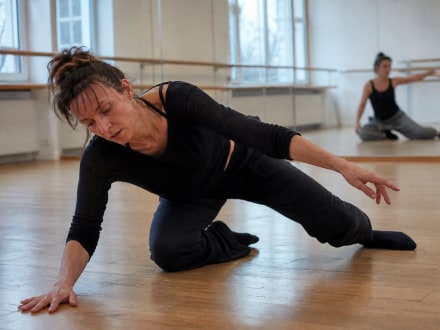 Modern and Contemporary Dance for Adults: Getting StartedThe ideal introduction to the world of contemporary dance for adults. Discover how you can express your creativity and improve your fitness in the studio, even without prior experience.
 The History of Ballet: From Court to StageEmbark on a fascinating journey through the history of ballet. Learn how the lavish celebrations of Italian princes evolved into the world-famous Russian school.
 Famous Ballet Pieces: The 10 Essential ClassicsDive into the fascinating world of classical ballet. We introduce you to the ten most important masterpieces that every dance enthusiast should know.