Ballet for adults4 minutes

Setting realistic goals for ballet for adults

In short
  • Realistic milestones in adult ballet focus on improved posture, musical precision, and the clean execution of basic positions.
  • Learning complex jumps or starting pointe work at a later age are usually not healthy or safe goals for beginners.
  • The focus in training should always be on the conscious awareness of your own movement limits and the continuous refinement of coordination.
  • Through measurable intermediate steps, such as maintaining balance in couru, motivation in the dance studio remains high.

Starting classical dance at a mature age is a wonderful adventure for body and mind. With a clear structure and the right expectations, every session at the barre becomes a sense of achievement.

What you need for your focused training

  • Suitable ballet slippers with a split leather sole
  • Basic understanding of the five foot positions
  • Patience with your own body and its daily form
  • Beginner-friendly clothing such as a leotard or leggings

Why the right perspective determines your success

Anyone who decides to start classical dance at a mature age often faces a mental hurdle. The aesthetics of ballet are characterized by perfection, extreme flexibility, and apparent weightlessness. These images in your head can seem intimidating and lead to unrealistic expectations. The key to a fulfilling dance practice lies in shifting your own perspective: It is not about copying a professional stage career when learning about ballet history, repertoire, and realistic goals. Instead, you rediscover precise control over your own body and the joy of classical music.

The anatomy of an adult body brings its own limitations, but also great advantages. While bone structures and joints have long been set, as an adult you possess a much deeper understanding of biomechanics and a more conscious body awareness than a child. When you adjust your expectations, training at the barre becomes a highly effective mental and physical workout that challenges you without overexerting you. Focusing on small, clean progress protects you from injuries and ensures long-term motivation in the studio.
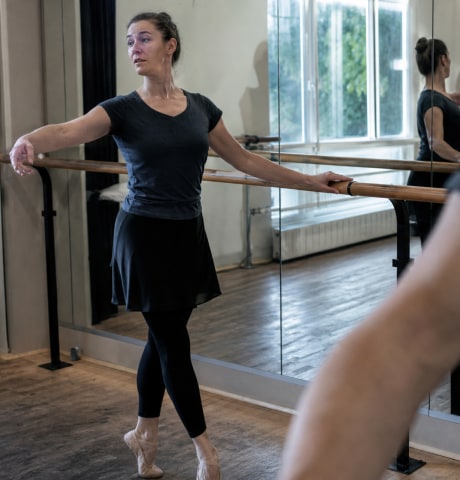
Achieving success with focus and patience: the precise execution of basic positions at the barre forms the foundation for every step of progress.

Step by step to your personal ballet milestones

  1. Stabilizing your body axis

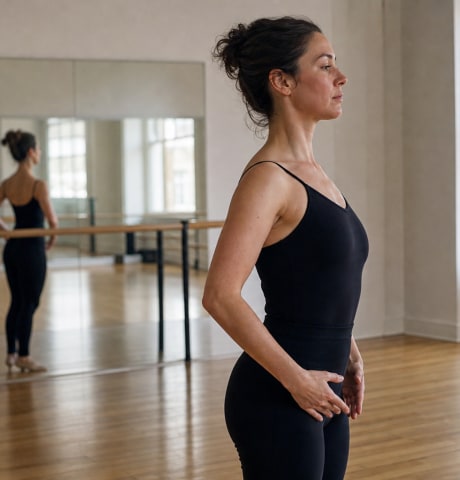
    In the first few weeks, focus entirely on the precise alignment of your body. A stable base is crucial for all further movements. Use the ballet posture for beginners: pelvis & spine as a guide.

  2. Learning to turn out healthily

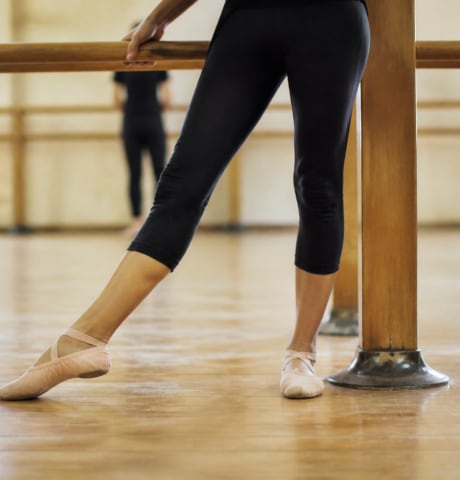
    Do not try to force your feet to turn outward to 180 degrees. Only use the turnout that your hip joint allows without pressure, in order to protect your knees and ankles in the long term.

  3. Train your musicality

    Set yourself the goal of executing simple movements, like a tendu or plié, exactly on the beat of the music. Musicality immediately gives your dance a professional effect.

  4. Strengthening your balance on one leg

    Practice balancing on one leg at the barre and then let go with your hand for a few seconds. This strengthens the deep stabilizing muscles in your ankle.

  5. Connecting combinations in space

    Connect two to three learned basic steps in space into a fluid sequence. The transition between the positions is your actual training goal here.

How to manage your own expectations in the studio

Realistic and healthy

  • Focus on the correct pelvic alignment
  • Proudly celebrate small progress in balance
  • Respect and maintain your own anatomical limits
  • Focus on musicality and expression

Overwhelming and risky

  • Comparing yourself to the flexibility of teenagers
  • Forcing the turnout of the feet from the knees
  • Misinterpreting joint pain as a training success
  • Wanting to force high jumps and pirouettes immediately

Your milestones on the way to your first fluid combination

Before your first class

Preparation

In the first classes

Arrival

After three months

During

Frequently Asked Questions

  1. Yes, absolutely. Learning ballet at an older age trains coordination, strengthens deep muscles, and noticeably improves flexibility. It is an excellent method to keep the mind fit, as step sequences and music must be synchronized.

Ballet courses for adults near you

Find the right starting point and train in a group that shares your goals.

View all matching courses

You never learn to dance ballet alone

On udansa, you will find like-minded dance enthusiasts for your next training session as well as the right courses in your area. Start now and put your plans into action together with others!

You never learn to dance ballet alone

Read more