Find your own dance community with udansa
On udansa, you will find like-minded people and the right courses to unfold your own passion for dance. Sign up and become part of a global community that has rhythm in its blood.

By Mary De LucaUpdated
On udansa, you will find like-minded people and the right courses to unfold your own passion for dance. Sign up and become part of a global community that has rhythm in its blood.
The dazzling world of classical ballet has thrived on its myths for centuries. Anyone who understands the historical background of the great stages will look at the perfection and drama of this dance with completely new eyes.
Historical verifiability
The anecdote must be based on historically verifiable events, diaries, or contemporary reports.
Artistic relevance
The events must have a demonstrable impact on the development of dance or the reputation of a company.
No modern tabloid
Modern tabloid topics and gossip stories without historical value are consistently excluded from udansa.
Independent selection
The selection was made independently and without financial contributions or sponsored placements by institutions.
Paris, June 1961, political turning point
The spectacular escape of the exceptional Soviet dancer Rudolf Nureyev in 1961 at Paris Le Bourget Airport is considered one of the most dramatic moments in ballet history. His decision to stay in the West made him a global icon overnight and permanently changed the perception of male dance in the West.
Saint Petersburg, 1907, the birth of a classic
The solo The Dying Swan, choreographed by Michel Fokine for the legendary prima ballerina Anna Pavlova, became the epitome of romantic expressive dance. Pavlova's interpretation was so intense that the line between dancer and role blurred, and the piece found imitators worldwide.
Paris, May 1913, premiere with police intervention
The premiere of Stravinsky's work at the Théâtre des Champs-Élysées in Paris went down in history as one of the greatest theater scandals. The stomping, earthy movements of the Ballets Russes, choreographed by Vaslav Nijinsky, broke so radically with classical ideals that physical altercations broke out in the audience.
Paris, 1830s, aesthetic conflict
The rivalry between the two exceptional dancers Marie Taglioni and Fanny Elssler in the 19th century split the Parisian audience into two camps. While Taglioni stood for the ethereal, floating lightness of the new pointe technique, Elssler embodied passionate, character-driven drama on stage.
New York, 1948, neoclassical revolution
The founding of the New York City Ballet by George Balanchine marks the rise of the neoclassical style. Balanchine's radical philosophy, to minimize decor and visualize pure music through extremely fast, precise movements, permanently revolutionized the American dance landscape.
Follow in the footsteps of the great legends and find the perfect start at the barre.
No courses for this dance style here yet
 festivalOnly 5 spots leftModern Dance
Behind the perfect shine of the great opera houses lie stories of unbridled discipline, artistic obsession, and moments where time seemed to stand still. These historical accounts show that ballet has always been shaped by personalities who were willing to push the boundaries of what is physically possible. Anyone starting to dance as an adult today quickly feels the intense concentration that this art form demands at the barre. A sound understanding of the historical milestones and the great legends of the stage gives your own training a deeper dimension.
Engaging with the historical roots helps to understand the apparent lightness of the movements for what it is: the result of centuries of evolution and tireless work. When you work on exercises like the plié in class, you are standing in a direct tradition that reaches from the royal courts through the great Russian companies to the present day. To execute these foundations precisely, it is worth taking a look at the correct technique, as described in the guide How to correctly execute plié and relevé. This is how historical fascination connects directly with your own dance practice.
Rudolf Nureyev is considered an absolute ballet legend due to his revolutionary jumping technique, his charismatic stage presence, and his dramatic defection from the Soviet Union in 1961. He set new standards for the role of the male dancer in classical ballet.
The famous scandal occurred on May 29, 1913, at the Théâtre des Champs-Élysées in Paris. The avant-garde choreography by Vaslav Nijinsky and the unfamiliar, rhythmic sounds of Igor Stravinsky shocked the audience so deeply that loud protests and riots broke out in the hall.
Anna Pavlova was famous for her unmatched grace and expressiveness, particularly in the solo The Dying Swan, which was created for her. On her worldwide tours, she brought classical ballet to regions where this art form was previously completely unknown.
 Ballet history, repertoire and realistic goals
 From King to Danseur Noble: Men in Ballet History
 The history of pointe work: How ballet learned to fly
 The History of Ballet: From Court to Stage
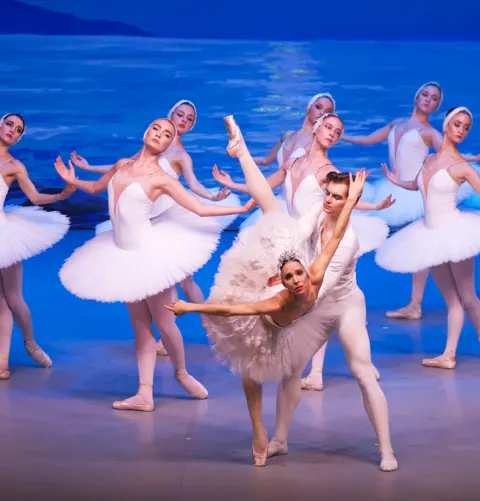 Famous Ballet Pieces: The 10 Essential Classics
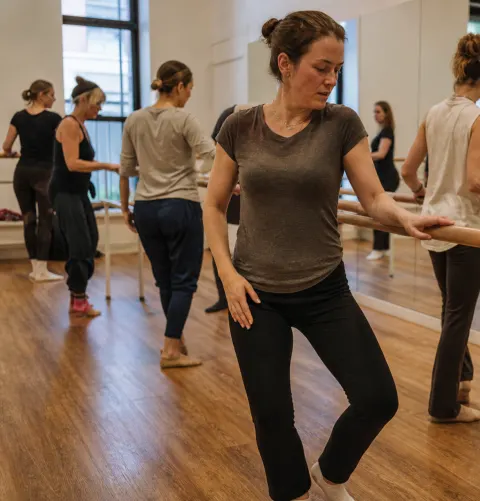 Setting realistic ballet goals for adults
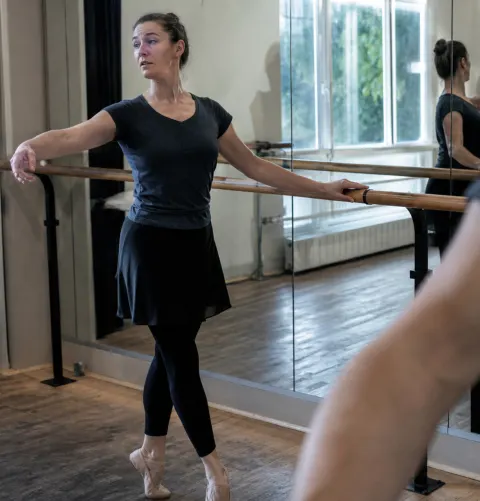 Ballet motivation test for adults: Is this dance right for you?