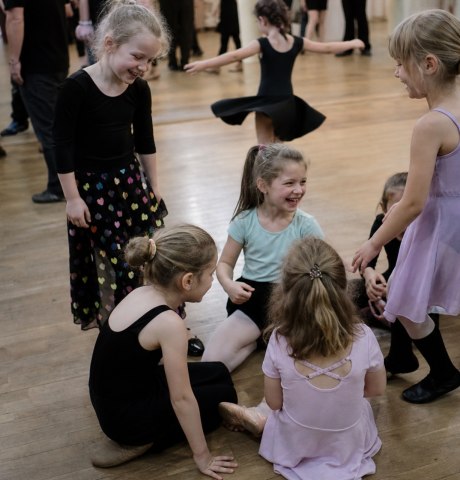
Children's dance4 minutes

5 posture mistakes in children that dance corrects

In short
  • A rounded back is corrected in dance by constantly straightening the thoracic spine and strengthening the upper back muscles.
  • To counter a swayback, target the deep abdominal and gluteal muscles to bring the pelvis into a neutral position.
  • One-sided pelvic tilts are balanced out by the even, bilateral weight distribution when learning dance steps.
  • Flat feet and knock-knees are stabilized by consciously rolling through the foot and strengthening the calf and shin muscles.

Sitting at a desk for long periods and looking at your smartphone early in the day leave their mark. Children's dance offers a playful way to actively prevent postural problems during growth, while having lots of fun.

How we selected the posture errors

  • Functional relevance

    Only functional postural defects that arise from muscle weakness and are not based on skeletal deformities are analyzed by udansa.

  • Educational dance benefits

    The selected corrections are based on the typical movement patterns of established children's dance styles such as ballet, jazz, and Hip Hop.

  • Independent review

    No financial support or sponsorship from dance schools or associations was accepted for inclusion in this list.

A dance teacher shows a little girl in a ballet school the correct hand position for a choreographic pose
Precise footwork and an upright posture: in dance classes, children learn from an early age how to align their bodies consciously and healthily.

The 5 most common posture mistakes and how dancing fixes them

  1. 01

    Rounded back (kyphosis)

    Frequency: Very high among school children

    • Spine
    • rib cage
    • upright posture

    A rounded back is usually caused by spending hours hunched over screens and desks. In dance, especially in classical ballet for children, a proud, upright thoracic spine is the foundation of every movement. This stretches the shortened chest muscles and ensures lasting back strengthening in children's dance.

  2. 02

    Hollow back (lordosis)

    Frequency: High with lack of exercise

    • Pelvis
    • abdominal muscles
    • core stability

    A flabby stomach and weak gluteal muscles cause the pelvis to tilt forward. Children's dance counteracts this by keeping the deep core muscles under constant tension. Through playful muscle building, children learn to actively straighten their pelvis and relieve the lower back.

  3. 03

    Asymmetrical shoulder and pelvic posture

    Frequency: Medium, often caused by school bags

    • Symmetry
    • shoulders
    • coordination

    Due to sitting in asymmetrical positions for long periods, children often develop a tilted shoulder or pelvic posture. The diagonal cross-movements and synchronous training of both sides of the body in dance classes specifically compensate for these muscular imbalances and promote healthy posture for children.

  4. 04

    Flat feet

    Frequency: Very high in early childhood

    • Ankles
    • arches
    • balance

    Weak ligaments and muscles in the arch of the foot cause the ankles to turn inward. The intensive footwork in dancing, such as stretching the feet, balancing on the ball of the foot, and conscious rolling, strengthens the foot muscles from the ground up and stabilizes the entire foundation of the body.

  5. 05

    Knock-knees (Genu valgum)

    Frequency: Moderate during growth spurts

    • Leg axis
    • knee joints
    • rotation

    Knock-knees often develop during growth due to weakness in the hip and thigh muscles. Dance styles that work with controlled external rotations (like the classic "turnout" in ballet or wide squats in Hip Hop) strengthen the gluteal and thigh muscles, which helps to realign the knee joints.

How dance styles specifically train different weaknesses

The evaluation of our criteria clarifies that modern dance pedagogy achieves far more than just the mere rehearsing of steps. What is particularly striking is how systematically the different dance styles interlock to counter the typical movement deficiencies of modern everyday life. While classical ballet for children corrects rounded shoulders and swayback primarily through its precise alignment of the spine, dynamic Hip Hop with its deep, springy movements (pliés and bounces) provides the necessary stability for flat feet and weak knee joints. Creative children's dance, in turn, uses playful imagery to challenge the entire body evenly, without the children even perceiving the strenuous muscle building as work.

When choosing a course, parents should ensure that the instructors possess basic anatomical knowledge and provide gentle corrections. A healthy posture in children is not created by standing rigidly still, but through dynamic stability in movement. Those who would like to additionally support physical development can also strengthen social behavior and team spirit through children's dance, as increased self-confidence is directly reflected in an upright, open body language. The combination of rhythm, community, and targeted muscle building makes dancing one of the most holistic preventive measures during the growth phase.

Figures on the physical development of children

minutes of movement per day are enough
60
of postural defects are muscular in origin
90%
Growth spurts change the statics extremely
2 to 3

Frequently Asked Questions

  1. Initial positive changes in muscle tone and gait usually appear after about three to six months of regular training. Since muscles and tendons have to adapt during growth, consistency in weekly dancing is crucial.

Discover children's dance classes near you

Find the right dance class now that playfully strengthens your child's posture.

View all matching classes

Growing up healthy together

At udansa, you can easily find the right dance school for your child to counteract poor posture early on and with lots of fun. Discover age-appropriate courses in your area and give your child a healthy sense of body.

Growing up healthy together