Why the march character defines the Paso Doble
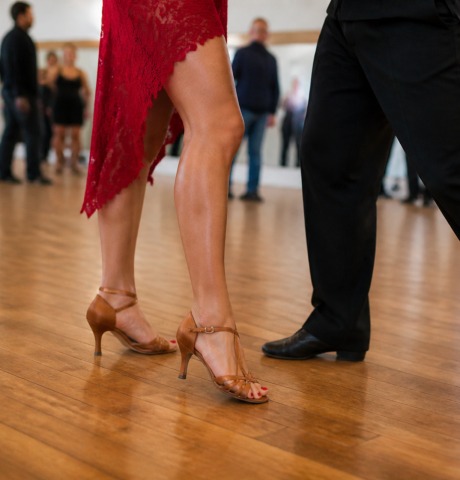
The Paso Doble plays a very special role in the world dance program. While other Latin American dances like the Rumba or the Cha-Cha-Cha thrive on soft hip movements and fluid weight shifts, the proud, upright march rules here. If you want to learn the steps of the Paso Doble basic step, you have to park your usual hip movement for a moment. The footwork is based on controlled, march-like steps that are guided flat across the floor. The knees are slightly flexible but never slack, and the entire core remains under a proud basic tension. This clear, rhythmic character also makes the dance accessible for beginners, as the step patterns fit the music very directly.
In the classic world dance program, it is primarily about moving safely and harmoniously in the room. You do not have to be a Spanish torero to enjoy this dance. It is completely sufficient to execute the basic marching footwork and the side chassé cleanly. If you want to learn more about the correct body tension and the stable frame, a look at the standard dance posture will help you, as the Paso Doble requires a similarly closed and disciplined position as the standard dances. When practicing, focus on placing every step precisely on the hard beat of the music.