Battle tactics5 minutes

The breakdance scoring system explained: How the jury decides

In a nutshell
  • The official breakdance scoring system is based on the so-called Trivium system, which compares the dancers' performances in real time.
  • The jury evaluates the performances in the three equally weighted main categories: physical, mental, and artistic value.
  • The most important criteria include technical precision, originality of movement, musicality, and direct response to the opponent.
  • Scoring is done via digital sliders, where the judges compare the competitors directly against each other in each category.

Behind the spectacular spins and jumps in Breaking lies a precise set of rules. If you understand the jury's evaluation criteria, you will see the battles with completely new eyes and recognize the tactical depth of this dance style.

DefinitionTrivium System

The Trivium system is the official judging system in breaking, which divides the dancers' performance into three equal categories: physical, mental, and artistic value. It was developed to combine athletic comparability with artistic freedom.

How the Trivium system guides jury decisions

Anyone watching a professional breaking battle for the first time often sees only spectacular acrobatics and lightning-fast movements. However, behind the scenes of major tournaments and championships lies a highly complex, standardized scoring system. To avoid arbitrariness and combine athletic fairness with artistic freedom, the so-called Trivium scoring system was developed. This system ensures that jury members no longer decide based purely on gut feeling, but analyze every performance in real-time according to clearly defined dimensions.

The system divides the dancers' performance into three equal main categories: Physical, Mental, and Artistic. Each of these pillars is further divided into specific criteria, which are evaluated by the jury on special tablets. This ensures that the B-Boy or B-Girl with the most spectacular power moves does not automatically win, but rather the person who presents the most coherent overall package. A clean 3 step in breakdance can therefore be worth just as much in the artistic evaluation as a risky somersault.

The three pillars of evaluation in detail

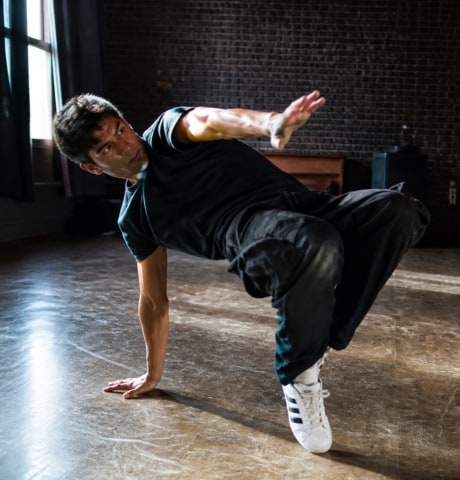
The three pillars of the Trivium system demand extreme concentration from the judges during the rounds, which usually last only a few seconds. The first pillar, physique, covers physical performance and technique. Here, the judges look for the precision of execution, body control, and the dynamics of the movements. Anyone who lands clumsily or loses their balance must expect significant deductions in this category.

The second pillar represents the mind and evaluates mental strength as well as creativity. This is primarily about originality and spontaneity. The jury penalizes the mere reeling off of memorized choreographies if they do not react to the current situation. Those who instead show original transitions and skillfully counter the opponent's movements score highly here. The third pillar evaluates artistic value, meaning musicality and expression. A dancer must carry the beat in their body and visualize the accents of the music precisely. Anyone who completely ignores the beat almost always loses the battle in this category, even if the physical moves were flawless.

How to impress the jury in a battle

Keeping time correctly

  • Coordinate your movements exactly with the accents of the music
  • Land difficult moves cleanly and with absolute control
  • React spontaneously to your opponent's moves and provocations
  • Show off your own creative transitions and signature moves

Avoid mistakes

  • Perform a memorized routine rigidly without musicality
  • Force shaky power moves with a high risk of falling
  • Completely ignore your opponent and just do your own thing
  • Copy standard combinations without adding a personal touch

A good dancer is like a musician who uses their body as an instrument. Anyone who just does gymnastics misses the core of our culture and will not score any points on an international level.

International judge and breaking coach

The slider as a tool for the jury

Unlike many traditional sports where fixed scores are awarded, the modern breakdance judging system works via a relative slider method. The jury members compare the two opponents directly with each other in every round. On their tablets, they move the sliders for the individual criteria towards the dancer who had the edge in that area. At the end of a round, the software calculates an overall result from all jury votes, which is immediately displayed on the screens in the hall.

This direct comparison makes the system extremely dynamic and transparent. A small mistake like a brief stumble, referred to in scene jargon as a crash, can immediately cause the slider to swing in favor of the opponent. To be successful in a battle, dancers must therefore find a smart balance between risk and safety. Those who act strategically save their most difficult power moves for the moments when the music reaches its peak, in order to convince the jury in all three pillars simultaneously. A tactically clever preparation, as also described in the guide on the 7 biggest mistakes in a breakdance battle, is often the key to victory.

Two sides of a performance

Technique

The physical pillar

Body control and dynamics

The physical component evaluates the pure execution of the movements. This includes athletic strength, the precision of landings, flexibility, and general body control during difficult power moves and freezes.

Expression

The creative pillar

Musicality and originality

The artistic component evaluates how well a dancer interprets the music and incorporates their own personality. This is about the sense of rhythm, the charisma, and the ability to translate the character of the beats into dance.

Frequently Asked Questions

  1. The Trivium system evaluates the three pillars of physical (body and technique), mental (creativity and originality), and artistic value (musicality and performance). Each pillar contributes equally to the overall result.

Breaking classes near you

Find the right training to improve your technique and musicality under professional guidance.

View all matching classes

Find your dance course at udansa

Here you will find experienced instructors and like-minded people with whom you can take your battle skills to the next level. Make connections and prepare optimally for your next performance.

Find your dance course at udansa

Read more