Dance practice4 minutes

Mistakes with props in belly dance: The 7 biggest pitfalls

By Bernhard De LucaUpdated

In a nutshell
  • Constant eye contact with the prop breaks the connection to the audience and makes the dance look insecure.
  • Lack of muscle tone and tense shoulders block the natural dynamics of hip movements.
  • Materials that are too heavy or unsuitable lead to uncontrolled trajectories and make clean leading difficult.
  • Uncoordinated timing without reference to the music degrades the accessory to a mere nuisance on stage.

Anyone dancing with a veil, cane, or fan wants to give the audience magical moments. But often, the prop turns into a tripping hazard unnoticed, disrupting the flow of movement.

How we selected the errors

  • Direct prop usage

    The errors must directly relate to the interaction with the prop, not general dance technique.

  • Practical relevance

    The mentioned problems must be relevant for typical accessories like veils, canes, or fans.

  • Independent expertise

    All advice is based on the experience of professional instructors without paid placements.

The 7 most common mistakes when dancing with props

  1. 01

    The fixed gaze on the accessory

    All props, focus on performance

    • Eye contact
    • presence
    • expression

    Anyone who stares continuously at the veil or the cane loses contact with the audience. You should master the accessory blindly so that your gaze can roam freely through the room.

  2. 02

    Tense shoulders and arms

    Veils, fan veils, sabers

    • Body tension
    • shoulder posture
    • relaxation

    Often, the focus of strength is only on the hands, while the shoulders are pulled up. This blocks the flow and leads to rapid signs of fatigue in the neck area.

  3. 03

    Gripping and guiding the fabric too tightly

    Silk veils, chiffon veils

    • Veil dance mistakes
    • lightness
    • fabric handling

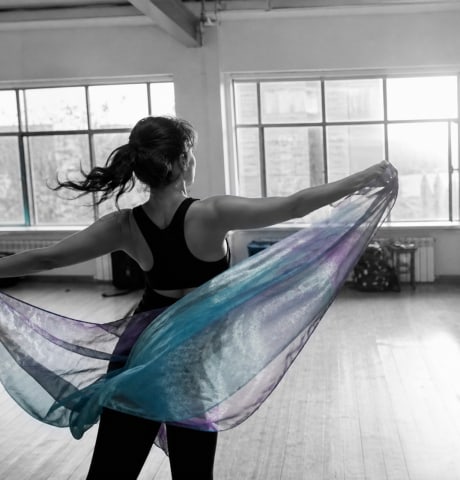
    A veil must breathe and fly. If you grip the fabric too tightly or try to force the flight paths, you take all the lightness away from the movement and risk unsightly creases in the fabric.

  4. 04

    Incorrect center of gravity in stick dance

    Saidi stick (Assaya)

    • Stick dance problems
    • balance
    • center of gravity

    In Saidi stick dance, the Assaya is often balanced at the completely wrong point. As a result, the rotation falters, and the stick easily slips out of your hand during the performance.

  5. 05

    Ignoring the musical rhythm

    All props, focus on music

    • Musicality
    • timing
    • sense of rhythm

    If the accessory is moved without care, and the movements are not synchronized with the accents of the music, it feels like a foreign object. The prop must visualize the music.

  6. 06

    Loss of the vertical body axis

    Sword dance, heavy props

    • Posture
    • balance
    • axis

    Especially with heavy props like a sword, a lack of core tension causes the dancer to collapse. The proud, upright posture is lost.

  7. 07

    Choppy transitions when putting down props

    All props, performance structure

    • Transitions
    • choreography
    • flow

    The switch between dancing with a prop and passages without aids often feels clunky. Putting down or picking up the prop must be integrated fluidly into the choreography.

How to maintain control and secure your technique

Props in oriental dance are not mere decoration, but an extension of your body. If you focus too much on the object, the basic dance technique often suffers. A common mistake is neglecting core tension, which makes hip movements look flat. Train your upper body isolations separately and specifically to remain expressive even with a veil in your hand. You can find helpful tips for strengthening your center in our guide on belly dance ribcage isolation.

Another key to a flawless performance is conscious breathing. Many dancers hold their breath out of concentration as soon as they use an accessory. This leads to tense shoulders and stiff transitions. Try to synchronize the movement of the prop with your breathing: inhale when opening the veil and exhale when lowering it. This way, your dance immediately looks more natural and effortless.

Figures on training practice in oriental dance

Typical props in Raqs Sharqi
5+
minutes of pure technique training per week
45
Focus on bodywork before accessories
100%

Frequently Asked Questions

  1. When it comes to mistakes in veil dance, it helps not to grip the veil too tightly. Relax your fingers and guide the fabric using the strength of your entire arm and back, instead of working only from your wrists.

Find your next belly dance course

Here you will find experienced instructors and like-minded people who will support you in handling veils, canes, and more. Exchange ideas and take your performance to the next level!

Find your next belly dance course