Belly dance props5 minutes

Fan veils in belly dance: dynamics and gentle waves

By Bernhard De LucaUpdated

In a nutshell
  • The fan veil in modern oriental dance is primarily used for fluid, wave-like movements, which clearly distinguishes it from the percussive Chinese fan dance.
  • The movement impulses start in the center of the body and flow through the elbow into a loose, flexible wrist.
  • A relaxed hand position prevents the forearms from cramping and ensures that the silk glides optimally through the air.
  • By playing with different levels and rotations, three-dimensional color effects are created in the space.

The fan veil turns every one of your movements into a flowing work of art made of silk and wind. With the right technique, you give your dance a breathtaking dynamic and floating elegance.

DefinitionFan veils

Fan veils are dance props consisting of a fan frame, usually made of bamboo, and a long veil made of lightweight silk attached to it. They are used in pairs in modern oriental dance to create flowing visual effects.

The fan veil as a modern prop for Raqs Sharqi

The fan veil is one of the most fascinating modern oriental props. It combines the rigid frame of a fan with the floating lightness of a gossamer silk veil. In contrast to the classical Chinese fan dance, where the rhythmic percussion of opening and closing as well as geometric formations take center stage, oriental dance uses the repertoire in a completely different way. Here, the frame serves primarily as an extension of the arm to set the long fabric into flowing, wave-like movements.

The magic is created through continuous dynamics. As you move, the silk catches the air and traces the lines of your movements in space. To unfold this aesthetic, precise handling is essential. If you want to dive deeper into the world of Raqs Sharqi, it is also worth taking a look at Oriental Dance Trends 2026, where modern fusion styles and the creative use of props play an increasingly important role.

The right technique for fluid wave movements

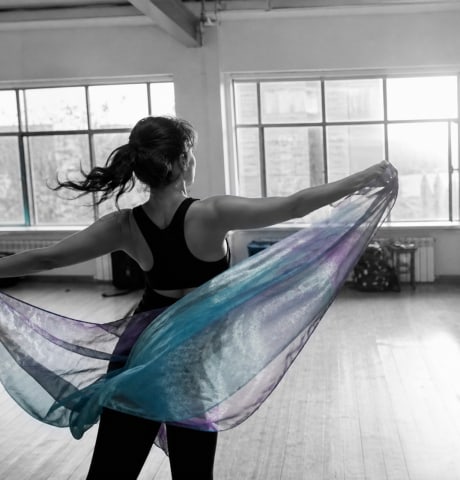
To keep the waves lively, you need to internalize the basic fan veil belly dance technique. The biggest mistake beginners make is keeping the arm rigid and drawing the power exclusively from the shoulder. This quickly leads to fatigue and makes the fabric sink down lifelessly. Instead, the movement begins in your core, flows over the shoulder into the elbow, and is completed with a gentle, springy movement from the wrist.

A simple fan veil guide to get started is the horizontal figure eight, also known as a loop. Hold the fan with a loose grip and draw a horizontal figure eight in the air with the tip of the frame. Your wrist remains flexible and rotates slightly in and out. Only in this way can the veil follow the movement with a slight delay and form the typical, wave-like air cushions that make the dance appear so weightless. Make sure not to grip the fan convulsively to avoid tension in the forearm.

The correct way to handle the fan veil

How the silk flows

  • Start the impulse loosely from the wrist
  • Let the veil fly out completely
  • Always keep the wrist flexible and soft

Common mistakes

  • Generating force rigidly from the entire shoulder
  • Making hectic and jerky movements
  • Gripping the handle of the fan too tightly

The fan veil is like an extended breath of the dancer: it makes the movement of air in the room visible and gives every step a magical dimension.

Belly dance instructor, Berlin

Dynamics in space and playing with levels

Once you have mastered the basics, you can use different levels to move the fan veil elegantly and create spectacular visual effects. Overhead circles, fast turns, and sudden changes in direction make the fabric dance around your body like flames or ribbons of water. The fan veil does not forgive haste: every movement must be consciously completed so that the silk does not twist in on itself.

Playing with contrasts is particularly appealing. While your hips set earthy accents, your arms draw wide, airy arcs. To have the necessary stability for this demanding coordination, targeted core training helps. Take a look at our tips under training belly dance pelvic flexibility. A stable pelvis gives you the necessary support to concentrate entirely on the lightness of your arms and the guidance of the veil.

Two sides of a movement: softness and dynamics

Flow

Gentle waves in the room

The art of continuous movement

The focus is on wide, continuous waves, figure eights, and circles. The silk is kept permanently in the air through gentle impulses from the wrist to achieve a floating, cloud-like effect.

Accentuating

Powerful impulses

Drama and targeted stops

Through sudden stops, accents, or the targeted folding of the fan, you create dramatic highlights. The play with wind and gravity creates powerful contrasts to the gentle silk wave.

Frequently Asked Questions

  1. For starting out in oriental dance, fan veils with a veil length of about 1.5 meters and a frame made of lightweight bamboo are suitable. This length is easy to control, even in smaller training spaces.

Find your dance community on udansa

On udansa, you will find like-minded people who share your passion for oriental dance. Discover exciting workshops, new dance courses, and the perfect dance partners in your area.

Find your dance community on udansa