Dance together, become friends
On udansa, you can find dance connections in London who are also looking for dance nights together without being tied to a fixed partner. Let people know you'd like to build a circle of friends to dance with.

By Mary De LucaUpdated
On udansa, you can find dance connections in London who are also looking for dance nights together without being tied to a fixed partner. Let people know you'd like to build a circle of friends to dance with.
You recognize familiar faces, but hardly know anyone beyond the basic steps and favorite songs. The transition to friendship often begins with a conversation that stays interesting even after the music ends.
A harmonious dance first means that you work well together musically and physically. Whether you become friends is more likely to show during the breaks: Are you interested in what the other person has to say? Can you contribute something of your own without steering the conversation back to moves and technique? In London, you don't need to be in a committed dance partnership for that. A group of friends can bring together people with different dance styles and experience. By contrast, the search for a suitable dance partner in London has a narrower focus on dancing together.
A personal conversation isn't an invitation to demand private information. Music, a great moment in class, or another hobby offer an easy, low-pressure way to start. Questions about relationships, income, or home addresses can wait. If someone gives only brief answers, change the subject rather than pressing for more. Share a small story of your own so it doesn't feel like an interview.
Dance culture also offers things to talk about beyond your own skills. The history of The Place as a former drill hall, for example, connects architecture and dance: the Contemporary Ballet Trust took over the building in 1969. If stories like these interest you, you already have something in common to talk about off the dance floor. What matters is mutual curiosity, not how much specialist knowledge someone brings.
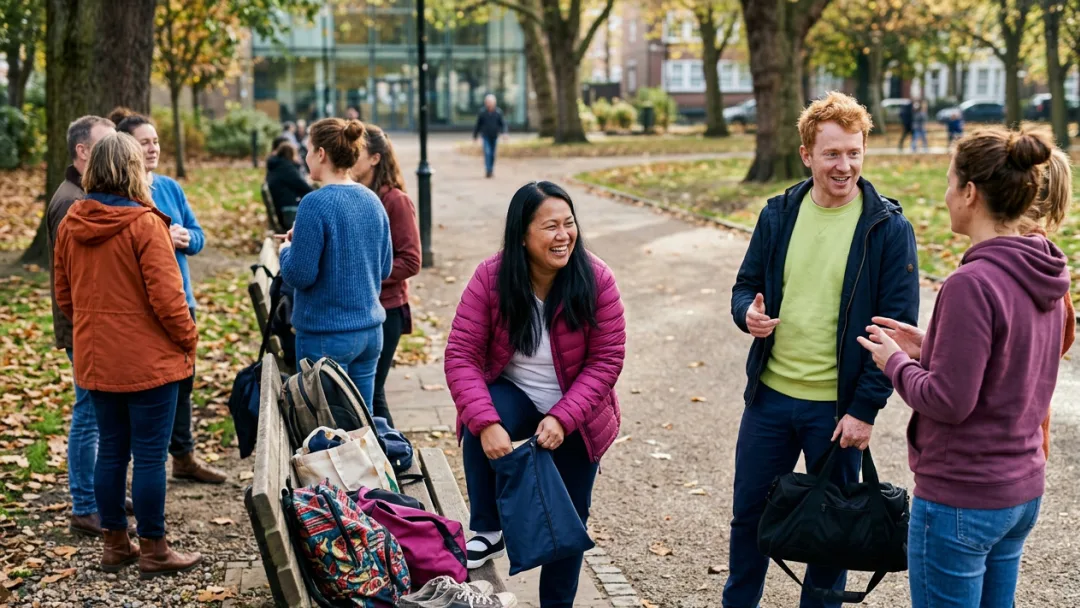
Greet someone you know by name and bring up something they told you: “You wanted to practice this piece of music, how did it go?” Stick to light topics. If they continue the conversation or ask you a question, a conversation can develop.
Briefly share what you’re into besides dancing, such as a hobby or a little everyday experience. Then ask about a similar interest of the other person. When you both share something, you get to know each other without anyone feeling interrogated.
Suggest something simple: “I’d like to have tea after our next dance, would you like to?” Mention the occasion and roughly how long it will take. A short invitation is easier to answer than the open-ended “We should do something sometime.”
If there’s mutual interest, exchange a contact method that you both want to use. Save the name with a neutral identifying detail, such as the class you attended together. Then send the agreed information without sharing any other personal data or photos of other people.
At your next get-together, connect two people by name and a shared topic: “You both told me about the same music.” Wait for a good moment in the conversation and include them both. Then give them space to start talking to each other.
Invite the people who have gotten to know one another by now to do something small together. Make it clear that there won’t be fixed dance pairings and that no one has to dance the whole time. Send the invitation to each person individually unless everyone has agreed to a group conversation.
After meeting, refer to a specific moment you shared and suggest something new when the opportunity feels right. Pay attention to whether they also start conversations or contribute ideas. If the interest remains one-sided, scale back your initiative without making accusations or repeatedly following up.
On udansa, you'll find current classes and dates in London if you'd like to keep learning with the people you've met through dancing.
Yes, like this
Not like this
Preparation
Meeting
Keeping in touch
Interest in friendship is more likely to show through mutual conversations and making plans voluntarily than through frequent dance invitations. If the person shares things outside of dancing and picks up on topics you bring up, that may be a sign. But it is not certain: let the relationship grow instead of interpreting friendly behavior as a commitment.
If you don't get a reply, treat your invitation as not accepted. If a specific plan depends on hearing back, you can follow up once, briefly, and say by when you'll make your own plans. After that, let it go. The next time you dance, a normal greeting is appropriate, not asking about it in public.
Yes, different skill levels don't rule out friendship. Shared breaks, conversations about music and activities together don't require identical knowledge of dance figures. When dancing, no one should become a teacher without being asked. If you practice together, you can make it clear that you're practicing, then go back to talking as friends afterward.
An invitation with a clear group context and a shared occasion makes your friendly intentions easier to understand. You can say: “We're planning to sit together after dancing, would you like to join us?” If there are only two of you so far, don't make up a bigger group. You can also say explicitly that you're looking for dance friends.
You can be part of the group of friends without making it to every get-together. Reply to specific invitations briefly and honestly instead of saying yes out of guilt. If you're still interested, occasionally suggest something suitable yourself. Declining while suggesting something yourself for another time shows that you care, without promising to always be available.