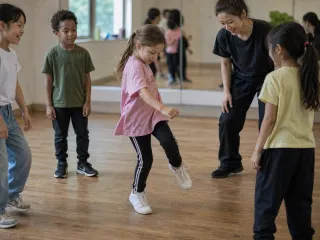
Your dance goal matters too
On udansa, you can find dance courses in Rome that match your interests. udansa connect helps you find people to share your passion for dancing and work toward shared learning goals.

By Bernhard De LucaUpdated
On udansa, you can find dance courses in Rome that match your interests. udansa connect helps you find people to share your passion for dancing and work toward shared learning goals.
If your parents already picture you on stage and you just want to dance to your favorite music for now, mismatched expectations can quickly arise. That’s why the decision to take lessons needs your input, not just an open slot in the calendar.
A training goal is a specific skill or performance that a class works toward, such as becoming more confident with rhythm or performing a group choreography.
When looking for a dance class for teens in Rome, your favorite song is a good starting point, but it does not tell you everything you need to know to choose a class. Maybe you like the quick footwork in a video, the group formation, or one person's expression. These preferences point to different things you might want to learn: rhythmic precision, shaping movement, or working together.
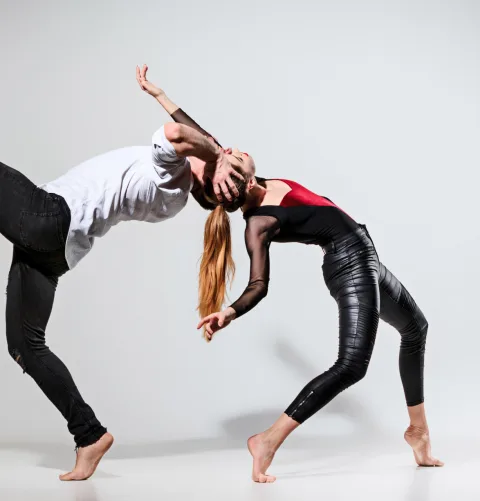
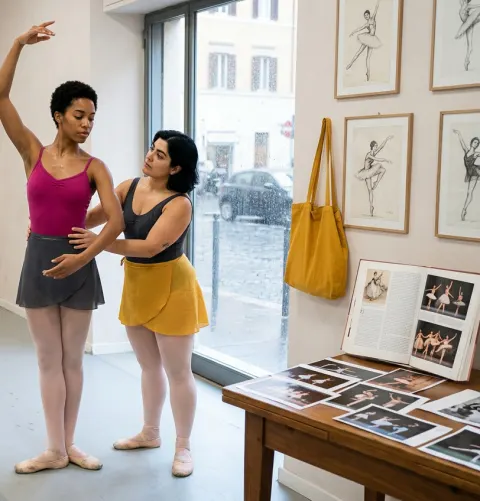
Hip Hop, for example, can build on an interest in grooves and musical accents. Partner dancing also involves coordinating with someone else. Classical technique training calls for precise body alignment and repeated movement sequences, among other things. Even a class set to your favorite music includes fundamentals that may look less exciting at first than a finished dance.
A role model can spark your curiosity without determining your path. The Ballets Russes performed at Teatro Costanzi, and Rudolf Nureyev danced there. The dance history of Teatro Costanzi tells the story of such stage role models, not of youth classes currently available.
If you're reading as a parent, let your teen describe the movements they actually want to try. Your own dance class from years ago does not have to be a role model for them. The overview of dance classes in Rome puts the search for classes in a broader context.
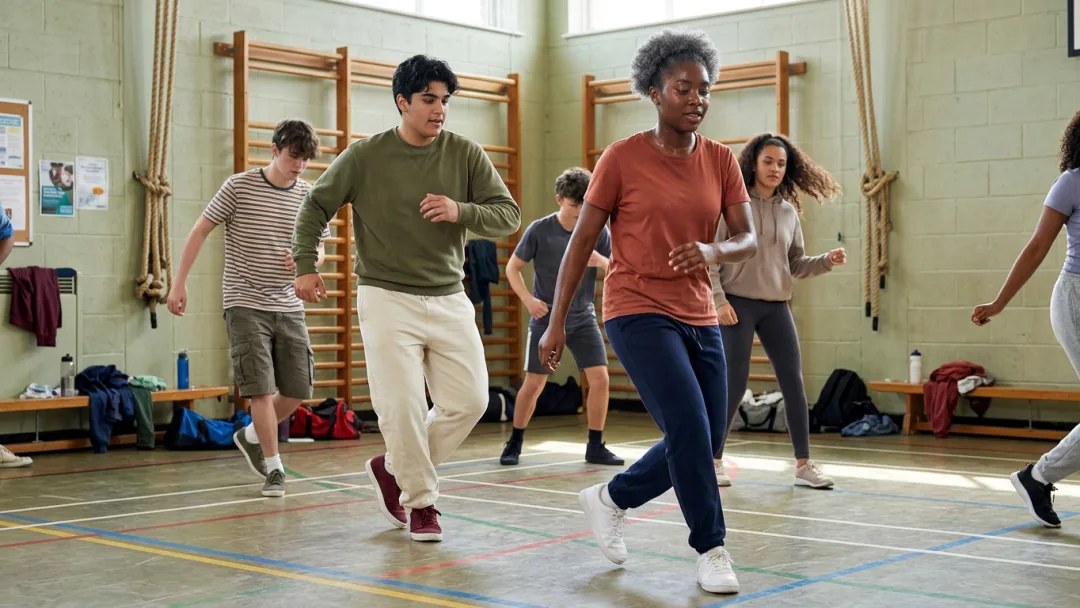
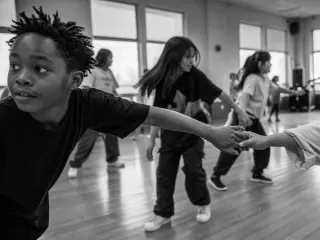
A youth group creates a setting where you learn with people at a similar stage of life. This makes it easier to find common ground and can lower the hesitation to try something in front of others. Still, physical development, movement experience and confidence performing vary. An age range therefore describes the target group, not the abilities of every participant.
Good instruction takes these differences into account: A sequence of steps can first be danced with small movements, while more experienced teens add extra accents. If you are new, you need clear explanations and time to repeat things. If you have been dancing for longer, you need tasks that go beyond simply joining in. Both can work on the same musical phrase.
Corrections should help you change a movement, not judge your body. A tip like “Shift your weight earlier” is useful. Demeaning comments about your figure or supposed talent, on the other hand, do not explain any technique. Any corrective touch should be announced and requires your consent, and you can say no without having to justify it.
Feeling unsure when copying a movement is no proof that you lack talent either. Direction of gaze and mirrored movements can be confusing. The guide to common observation mistakes when copying movements explains this learning hurdle regardless of age.
Do this
Not this way
Use the course filter to find current offerings and dates in Rome as you search for lessons.
A stage goal only becomes a shared goal when the young people themselves want to work toward it.
Recreational classes can be focused and technically challenging. They simply often leave more room for dancing without the goal of performing. You work on movements, learn combinations and build confidence without every class having to lead up to a specific moment on stage.
With performance-oriented work, the responsibility within the group changes. Positions, cues and transitions fit together. If someone is missing, it is not possible to rehearse the formation in full. Repetitions then also help others rely on you to be there for your cue. This can be motivating, but it requires commitment, even when a section is already familiar to you.
For you as a parent, support does not mean automatically choosing the most performance-oriented path. Schoolwork, rest and travel time are all part of the actual workload. A class goal can be ambitious and still fit into everyday life. Young people, in turn, can be ambitious without committing themselves to a future dance career.
Before signing up, it is enough to ask the provider a few specific questions: Which age group and learning goal is the course designed for, and are performances mandatory? This turns “I want to dance” into a shared expectation. That expectation can change as experience grows, without making the classes so far a waste.
Curiosity without a fixed performance goal
You want to try out which movements and music suit you. Different exercises give you clues about your preferences, even if you don't have a long-term goal yet. Regular practice helps you notice the differences in the first place.
A goal built through regular practice
You want to master a choreography with confidence and coordinate with others. Repetition makes details like where to look and when to come in reliable. The shared result can give you a sense of direction, even when some parts of the training take patience.
To get started, comfortable clothes and clean shoes suitable for dancing are usually enough. For Hip-Hop, flexible everyday or sportswear and sneakers are a good choice; other styles may require special dancewear later on. Your clothes should allow you to move freely and not require you to keep adjusting them.
You don't have to be filmed just because you're working on a choreography. Recording something for practice and publishing it are two different things. Especially when young people are involved, consent and privacy matter; no one should be pressured to agree to a group recording.
You can start with a friend if the class is suited to your different levels of experience. Friendship isn't a substitute for a suitable learning challenge. Different movement variations let you practice together without you constantly having to catch up or your friend having to miss out on challenges.
You can want to learn a choreography without performing it in public. However, in a class explicitly focused on a performance, performing is part of the shared goal. Recreational classes without that commitment let you work on choreography without automatically assuming you'll take the stage.