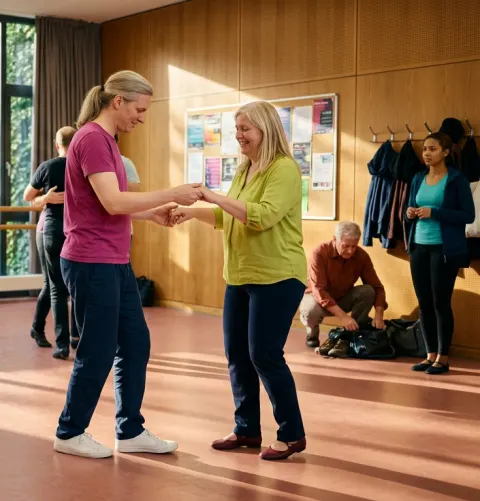
The first invitation can be wordless too
On udansa connect, you can find people in Rome to go to a dance night with. Arriving together can make it easier to get started if you’re still feeling unsure about the language.

By Mary De LucaUpdated
On udansa connect, you can find people in Rome to go to a dance night with. Arriving together can make it easier to get started if you’re still feeling unsure about the language.
An unfamiliar word at the door can be more unsettling than your first dance. A little vocabulary helps you distinguish logistical details from friendly invitations, without having to take a language course first.
For your dance night in Rome, these seven terms are especially useful. They describe different things: access, reservations, payment, or membership. A single word does not replace the full participation requirements.
Words like solo, meaning only, and non, meaning not, are especially important. They can reverse the meaning of a sentence. So translate the entire line, including footnotes, not just the highlighted term. Ballo on its own also does not reliably describe whether you can access the dance floor. For this basic distinction, check out the guide to dance events to watch or join in. For a broader overview of the different ways things work, see going dancing in Rome; here, you are focusing on language barriers to entry.
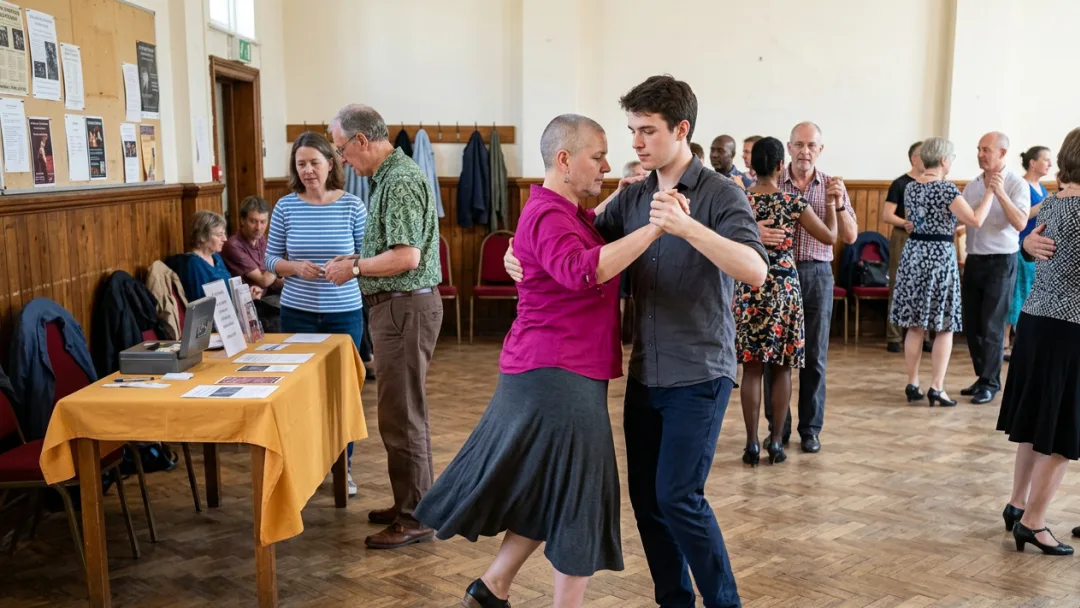
Copy the sentences about admission and participation, including any additional details, from the announcement. Keep the event name and date with them: That way, you won't accidentally apply conditions to a different evening or a preceding workshop.
Translate the related sentences and mark required information. su prenotazione means a reservation is required; fino a esaurimento posti means places are available only while capacity lasts, not indefinitely.
Match apertura porte with doors opening and inizio with the start. If it says lezione, it refers to a class; its start time may not be the start of the social dancing that follows.
If one requirement is unclear, send this short inquiry, filling in the details: Buonasera, vorrei partecipare alla serata del [data]. È necessaria la prenotazione o la tessera associativa? Non parlo italiano. Potete rispondermi in inglese? It asks about reservations, membership cards, and a reply in English.
Complete the reservation or ticket booking that is explicitly required. Save the confirmation offline; if it only shows a request or waitlist, don’t treat it as a confirmed spot. Keep any required membership card separate from the ticket and ready.
Show the confirmation and say Ho una prenotazione a nome …, I have a reservation under the name … . If you don't understand something, Può scriverlo, per favore? can help, could you write it down, please, so you can translate it.
For a simple dance invitation, Ti va di ballare?, would you like to dance? Wait for a clear yes. A smile alone isn't agreement; if you're unsure, give them space and don't pull anyone onto the dance floor.
Yes, like this
Not like this
Assignment
Documents
Arrival
Serata danzante means dance evening, but it does not specify all the conditions for taking part. The phrase alone does not tell you whether you need a reservation, a ticket or a membership card. Read the organizational details as separate information, rather than assuming from the friendly event title that it is open to everyone.
Pagamento in loco means payment on site. This is information about payment, not a statement about whether you need to make a reservation in advance. Contanti means cash, and carta can mean a payment card in a payment context. Don't confuse this word with tessera associativa, which means membership card.
Lista d’attesa means waiting list, and does not mean your participation is confirmed. Even a message confirming receipt of your registration may only document your request. A phrase such as prenotazione confermata, on the other hand, confirms your reservation. Any other entry requirements, such as paying for a ticket or having a membership, still apply separately.
Say Sono principiante to say that you're a beginner. The sentence is the same for everyone and doesn't need a long explanation. When social dancing, it helps your partner start with simple moves. But it doesn't replace any prior experience required for a particular event, or mean that you consent to every move.
No, grazie, no thanks, is enough to politely turn someone down. You don't have to give a reason or promise to dance later. If you just want a break, you can say Faccio una pausa. Stick to your no if someone keeps pressuring you. Not knowing the language doesn't mean you have to take part.
Say Una pausa, per favore to ask for a break. Stop moving calmly and clearly instead of continuing a move you don't understand. If you're in pain or feeling unwell, say Stop and make a clear stop signal. You don't need to give a detailed explanation or speak perfect Italian to take a break.
 Dancing in Rome: Dance freely or join in?
 Experience Rome by Dancing Along: What Animazione Means
 A dance practice in Rome isn't a dance party
 Go Dancing as a Couple in Rome: Stay Together
 Queer Dancing in Rome: How to Spot Welcoming Dance Nights
 Accessible Dancing in Rome: Plan Your Night Out
 Going Dancing in Rome Under 18: Entry and Supervision