Inclusion4 minutes

Inclusive dance class Dresden: How accessible dancing succeeds

By Mary De LucaUpdated

In short
  • An inclusive dance course in Dresden is characterized by step-free access, accessible sanitary facilities, and experienced instructors.
  • In wheelchair dancing, a distinction is made between combi-couples with one standing person and duo-couples in wheelchairs.
  • Modern dance schools flexibly adapt step sequences to different movement possibilities and rhythms.
  • Before registering, it is worth asking specifically about room sizes, door widths, and trial lessons.

Dancing connects people regardless of physical requirements. If you are looking for accessible courses or wheelchair dancing in Dresden, you need transparent criteria instead of empty promises.

DefinitionWheelchair dance

Wheelchair dance is a recognized form of dance and sport in which people with walking disabilities dance alone, as a duo in wheelchairs, or as a combi-pair with a standing partner. The choreographies use rotations, tilts, and inclinations of the wheelchair as rhythmic movement elements.

What truly defines inclusive dance instruction

Anyone looking for an inclusive dance class in Dresden will quickly notice: good dance instruction for mixed groups does not happen by chance. An inclusive class means that people with physical, sensory, or cognitive disabilities stand on the dance floor as equals alongside people without disabilities. It is not about watered-down movement sequences, but about the artistic and athletic translation of classical or contemporary dance principles for different bodies.

Dresden looks back on a dance history rich in tradition. From the reform approaches for free expression in places like the Villa Wigman to modern stage formats at the Festspielhaus Hellerau, the diversity of movement plays a central role in Dresden's dance culture. This openness is also reflected in the growing interest in accessible offerings. You can read more about the historical roots of the art of movement in the article on Modern dance in Dresden.
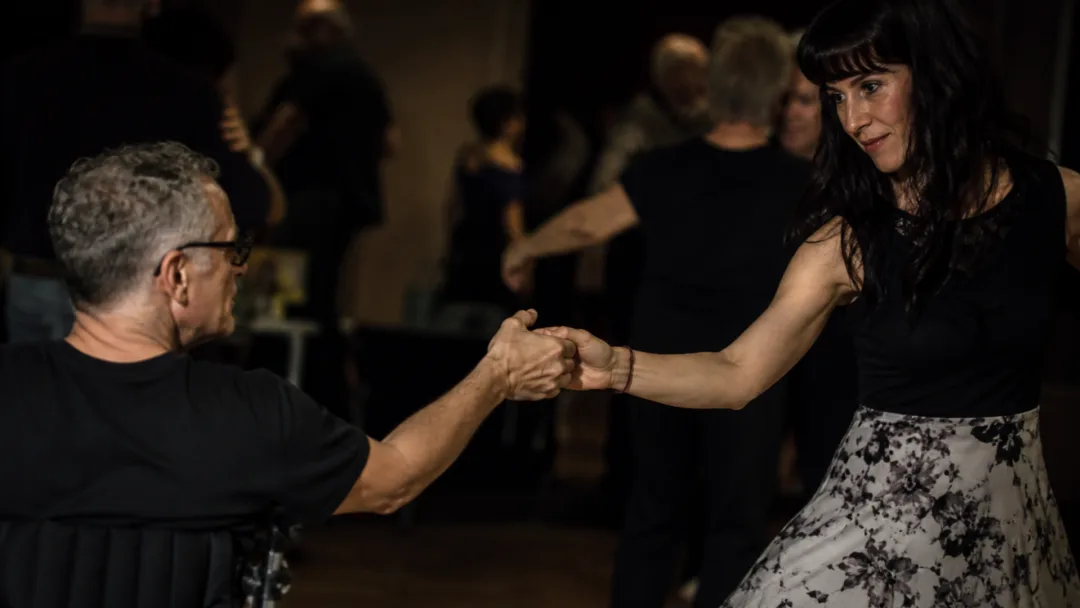
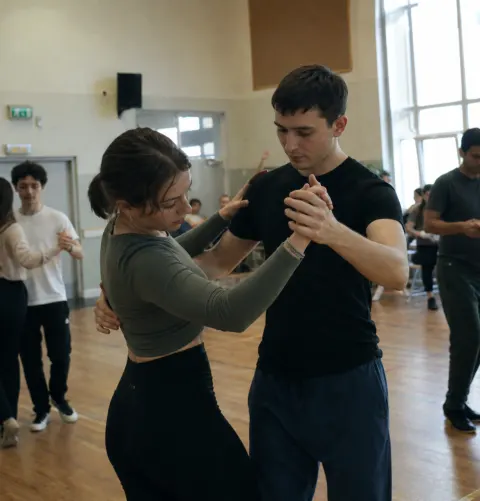
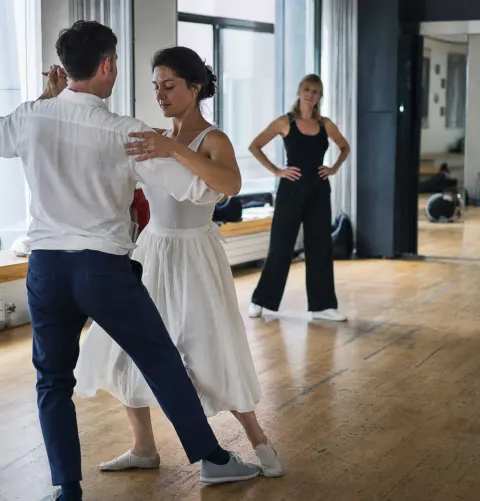
Shared turns require clear axes and clean floor contact on the dance floor.

Why wheelchair dancing is not rehabilitation sports

Wheelchair dancing and inclusive dance forms are often confused with purely therapeutic measures. While training promotes core stability, spatial awareness, and coordination, the focus is on dance as an art form and social activity. A contemporary dance performance at the Festspielhaus Dresden repeatedly shows how multifaceted choreographies with diverse ensembles can be.

Another misunderstanding concerns dance roles: in wheelchair dancing, there is both combi-dancing, where one person in a wheelchair and one standing person perform together, and duo-dancing between two wheelchair users. Leading and following are based on clearly defined impulses via hand contact, eye contact, or targeted wheel rotations, rather than rigid steps.

Preparation for your course

That's how it works

  • Ask about door widths, elevators, and wheelchair-accessible restrooms in advance
  • Clarify individual movement limitations openly with the instructor beforehand
  • Use a trial lesson to test the sprung floor and room size

Don't do this

  • Show up to a course without registering or checking accessibility
  • Hide your own limitations and risk overexertion
  • Sign fixed contracts directly without a trial session in the studio

Inclusive dance is not about copying steps, but about finding shared movement patterns that emphasize the strengths of both bodies.

Dance educator for inclusive dance

How to recognize accessible offers

When choosing the right course in Dresden, it is worth taking a look at the practical conditions. Not every ground-level entrance guarantees an accessible course experience. Important factors include step-free access to the dance hall, wheelchair-accessible sanitary facilities, and sufficient space to move on the dance floor, as sports and active wheelchairs require larger turning circles than individual dancers on two legs.

The qualifications of the instructors are equally crucial. Reputable providers for wheelchair dancing in Dresden or inclusive dance groups address individual requirements before the first lesson. If you are looking for the right course, it is best to use the course finder on this page to compare current groups directly.

The two basic forms in wheelchair dancing

Combi

Combi dance on equal terms

Interaction between wheelchair and steps

A wheelchair user and a standing partner dance as a fixed team. Leading impulses are conveyed through finely tuned points of contact and clear exchanges of glances in the shared space.

Duo

Duo dancing with full agility

Shared dynamics of two wheelchairs

Two wheelchair users dance synchronously or as a pair with each other. Speed, wheel rotations, and floor paths are precisely coordinated to create dynamic figures on the dance floor.

Frequently Asked Questions

  1. No, for starting out in Dresden, your own everyday wheelchair is perfectly sufficient. Special sports and dance wheelchairs with angled wheels and anti-tip wheels only become important for advanced turns or tournaments.

Inclusive dance courses in Dresden

Find open groups and accessible dance offers near you.

Overcoming barriers together

On udansa you can find dance partners for wheelchair dancing and inclusive duos, as well as suitable course offers in Dresden.

Overcoming barriers together