Kids dance4 minutes

Kids dance in Dresden: How children learn movement through play

By Bernhard De LucaUpdated

In a nutshell
  • Children's dance classes teach the basics of movement through playful stories and music instead of set step sequences.
  • Age-appropriate grouping in small classes prevents frustration and ensures individual attention.
  • Qualified dance instructors and joint-friendly sprung floors are the most important quality criteria when choosing a studio in Dresden.
  • Trial lessons give children time to get used to the room, the group, and the teacher without any pressure.

Children dance out of pure curiosity and the joy of trying things out. How parents can find the right course that sparks imagination and protects joints, without being overwhelming.

DefinitionEarly Dance Education

Early dance education refers to a pedagogical movement concept for preschool children that trains motor skills, a sense of rhythm, and spatial awareness through creative forms of play. It forms the motor foundation before starting formal dance techniques.

Playful movement instead of rigid performance pressure

Anyone looking for child-friendly dancing in Dresden will encounter a dance culture rich in tradition: the city combines a long history of modern dance with vibrant stages like the Semperoper Ballett. For children starting out, however, the focus is not on disciplined performance drills, but on the playful discovery of their own bodies. A successful children's dance class in Dresden meets girls and boys at their respective stage of development, strengthens their sense of rhythm, and transforms natural joy of movement into coordinated sequences.

Good dance offerings for children are characterized by the fact that they leave room for imagination. Instead of rigid step sequences, the little ones learn to interpret music through their own movements, to keep their balance, and to move considerately in the space. You can also find out more about the historical roots of the Dresden dance tradition in our article on modern dance in Dresden.
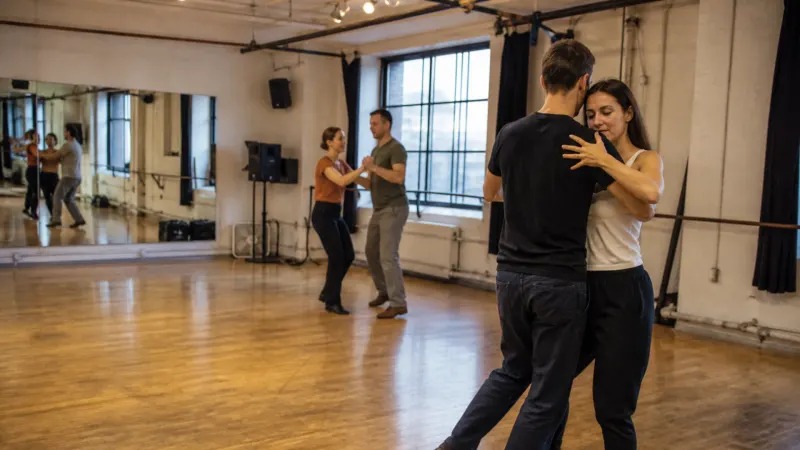
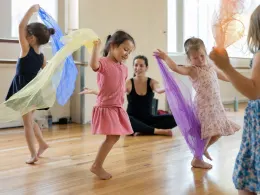
Trying things out together in a circle promotes a sense of rhythm and mutual consideration, completely without pressure to perform.

From toddler age to the first fixed choreographies

Choosing the right group depends heavily on the stage of development. Even in toddlerhood, parent-child dance enables shared movement experiences where touch, music, and a sense of security are the focus. From about three to four years of age, creative children's dance follows, in which children learn to act in a group without an accompanying person. Stories, picture cards, and playful props like scarves help to train basic motor skills in a completely natural way.

From primary school age, interests usually become clearly differentiated. While ballet for children in Dresden teaches a solid posture, fine footwork, and classical music, street dance and Hip-Hop attract children who prefer dynamic rhythms and powerful choreographies. In any case, it is important that the joy of movement is placed above perfection.

The perfect introduction to children's dance

How to get started successfully

  • Choose comfortable clothing and non-slip slippers
  • Look for sprung floors and joint-friendly studios
  • Let the child determine the course pace themselves
  • Prefer age-appropriate small groups with a fixed instructor

Typical mistakes

  • Requiring expensive dancewear right from the start
  • Accepting hard stone or tile floors
  • Demanding perfect execution of the steps
  • Choosing large groups with a wide age range

Children do not learn dance through corrections, but through images, stories, and the courageous freedom to feel their own body in space.

Dance educator for children's dance

Criteria for choosing the right dance studio

Before you sign a contract, it is worth taking a close look at the studio's general conditions. A sound dance pedagogy education for the instructor is indispensable, as teaching children requires anatomical knowledge and patience. During a trial lesson, pay attention to how the instructor interacts with shy children and whether the group is divided according to age. Large age gaps often lead to children being under- or over-challenged.

The spatial conditions are equally significant: sprung floors protect growing joints, while separate waiting areas for parents ensure that children can focus fully on the lesson. The dance landscape in Dresden offers diverse possibilities to find the right format for your child, as a look at Hellerau as a dance center and the general stage culture of the city illustrates.

Two ways to early dance education

Creative

Creative Children's Dance

Space for your own movement ideas

Creative children's dance focuses on imaginative stories and free movement. Children test their own ideas and playfully train their sense of rhythm without fixed forms.

Structured

Classic Children's Ballet

First fixed forms and posture

Classic children's dance teaches basic foot positions and upright posture. The clear structure provides orientation, but requires more concentration and patience.

Frequently Asked Questions

  1. For early dance education, children from about three to four years of age are suitable, as they begin to independently follow instructions in a group at this age. For younger children, courses with an accompanying person are a good option.

Children's dance classes in Dresden and the surrounding area

Discover offers for early childhood dance education, ballet, and Hip-Hop for children in Dresden.

Discover children's dance in Dresden

Find suitable children's dance classes and early dance education in your area and compare offers directly on the platform.

Discover children's dance in Dresden

Read more