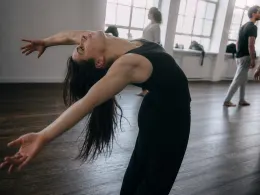
Dance Improvisation5 minutes

Understanding the Contact Improvisation Community in Frankfurt

By Mary De LucaUpdated

In brief
  • In Frankfurt, contemporary dance meets stage work, improvisation, and participatory activities.
  • Contact Improvisation is an improvised dance practice in which movement arises through mindful physical contact.
  • Open activities or classes are a good place to start, where you can explore the basics and boundaries together.
  • Tanztag Rhein-Main on October 31, 2026, is a local opportunity to discover dance activities.

Those who are new to Frankfurt do not necessarily find their way in through a regular group. In improvisational dance, curiosity, clear agreements and a willingness to let movement emerge together come first.

DefinitionContact Improvisation

Contact improvisation is a form of dance in which two or more people improvise movement through continuous physical contact and shifts of weight. There is no set sequence of steps that everyone has to memorize.

In Frankfurt, improvisation has both a stage and a participatory side

Frankfurt brings contemporary dance together with different forms of improvisation. The Dresden Frankfurt Dance Company develops the choreography of each performance live through the dancers’ improvisation. This shows how movement can take shape in the moment, but it is not the same as a Contact Improvisation class: on stage, a performance takes shape, while in an open practice, exploring together takes center stage.

The venues also offer different perspectives. The Bockenheimer Depot is the company’s resident venue; Künstler*innenhaus Mousonturm is a venue for independent performing arts and dance, as well as a partner of dance productions. If you’d like to watch first, you can use these stage offerings as a guide. Participatory formats are a better fit if you want to try it out yourself. Tanztag Rhein-Main takes place on October 31, 2026, and is a day of activities celebrating dance in Frankfurt and the region. You can find information about the options on the Tanztag Rhein-Main page. For a practical first step, what matters next is whether an offering takes your experience into account.

A small shift in weight can change a movement, but consent and attention determine how far it goes.

What distinguishes Contact Improvisation from set dance steps

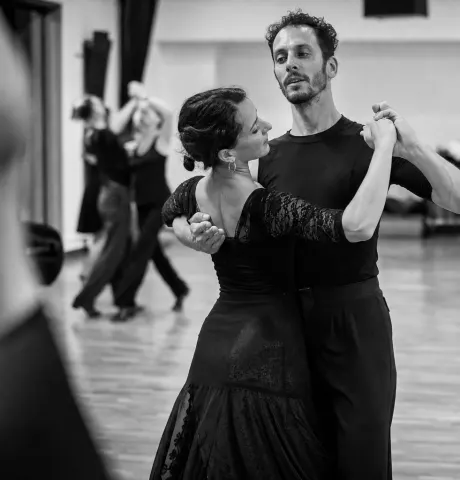
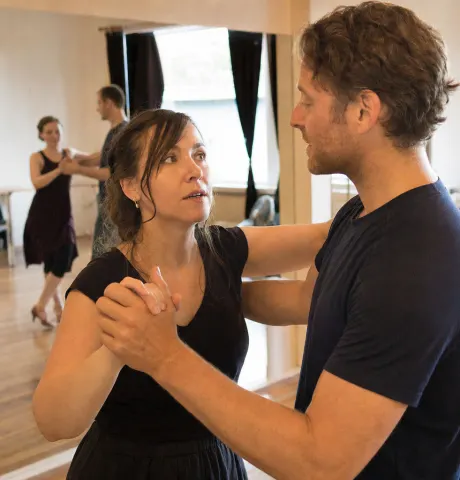
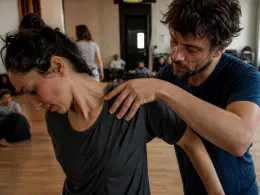
In Contact Improvisation, movement emerges from physical contact that changes: a shoulder, a back, or a hand can become a point of reference you can sense. Participants respond to pressure, direction, and shifts in weight. This can lead to shared movement without a sequence of steps being decided in advance. That does not mean anything goes or that it is automatically safe. Moving slowly, paying attention, and being able to opt out at any time are all part of the practice.

For newcomers, expectations are often a hurdle: many expect either a complicated technique or spontaneous rolling around. In practice, guided sessions usually start with simple exercises in awareness before the movements get bigger. You can ask whether you can decline touch at any time, how the group handles breaks, and whether prior experience is needed. These questions are not a sign of being closed-minded, but help you understand the framework. For an overview of other forms, visit the page about dance styles in Frankfurt. When reading course descriptions, check whether they mention Contact Improvisation or dance improvisation more generally: the terms overlap, but do not always mean the same thing.

Offer Contact, Respect Boundaries

Yes, like this

  • Offer a clearly noticeable point of contact
  • Let weight develop gradually and voluntarily
  • Talk about touch and boundaries before the exercise
  • Pause if anyone feels unsure and briefly check in

Not like this

  • Pull someone into a dance move without warning
  • Lean on someone with your full weight without asking
  • Assume that touch is okay
  • Keep dancing even when someone hesitates

We don't improvise across each other's boundaries, but listen with our whole bodies.

Dance educator in improvisation

How to find a good place to start without a regular group

You don't need to know an existing community to join in. Look for an open workshop, an introductory session, or a course with a clearly described level. Check whether the instructor explains partner work, offers alternatives, and addresses boundaries. If the description is brief, ask before signing up: How does the first session begin? Will partners switch? Can I skip an exercise or watch at first? The answers usually tell you more about whether it's a good fit than a nice course photo.

After the first session, you can check whether you felt physically and socially safe. Was there enough time for questions? Were touches announced, and was a no accepted? Was there room to make a movement smaller? If you're looking to connect with others, it helps to chat briefly with other people after class about their experience, without assuming you need to join a regular group or arrange training sessions right away. The Frankfurt guide to dance connections and community offers more ways to find your way into the local dance scene. You can then check current dates in Frankfurt using the course filter.

Two Approaches to Improvisation

Observing

First, see how connection develops

Watching can make it easier to get started.

At a performance or open practice, you can first observe how dancers negotiate weight, distance, and tempo. This helps you distinguish the form from a set choreography.

Join in

Try movement out for yourself

In class, you put awareness into practice.

In a guided session, you can experiment with simple points of contact and shifts in weight. You’ll get feedback and can ask questions about touch, safety, and breaks right away.

Frequently Asked Questions

  1. No, you don't necessarily need dance experience to get started. Comfortable clothing that allows you to move, and a willingness to start slowly, observe, and speak up about your boundaries are helpful. Check whether an offering is specifically intended for beginners.

Improvisation and Modern Dance in Frankfurt

Compare current options and check whether a course teaches Contact Improvisation or related improvisation practices.

Find your first connection

On udansa, you can compare dance options in Frankfurt and look for courses that teach improvisation through practice. That way, you can choose a starting point that suits your experience and boundaries.

Find your first connection