Practice your first dance together
On udansa, you can find wedding dance lessons in Paris for your first dance together. With a specific goal in mind, you can search for lessons that suit your song and your experience so far.

By Mary De LucaUpdated
On udansa, you can find wedding dance lessons in Paris for your first dance together. With a specific goal in mind, you can search for lessons that suit your song and your experience so far.
Between the seating plan, outfits and the flow of the celebration, the first dance can quickly get pushed to whatever time is left in the calendar. A simple routine is easier to practise with purpose than a long list of moves that keeps you busy until your wedding day.
For your wedding dance in Paris, the music is the starting point, not the name of a spectacular move. First, listen for the steady pulse beneath the vocals and accompaniment: a slow song can allow for clear steps, but long pauses or a changing tempo can make it harder to get started. A waltz is a natural fit for triple time; a song in four-four time calls for a different way of organizing the steps. Romantic vocals alone do not make a song a waltz.
Lessons must first help you reliably shift your weight to the recording you have chosen. Turns and traveling steps build on that. Instrumental introductions, choruses, and a clear ending can help you find your bearings, without requiring you to illustrate every lyric with a separate move. You can use the same short sequence for recurring musical sections: this reduces the amount you need to learn and makes the routine easier to remember.
The exact recording matters, because a live version may have different pauses or a different tempo. So decide which version will be played before you put the choreography together. A learning goal such as “start together and keep moving after a turn” is more useful than “do as many moves as possible.” You can find an overview of the lesson options in dance courses in Paris; for your wedding dance, the planned performance is the benchmark.
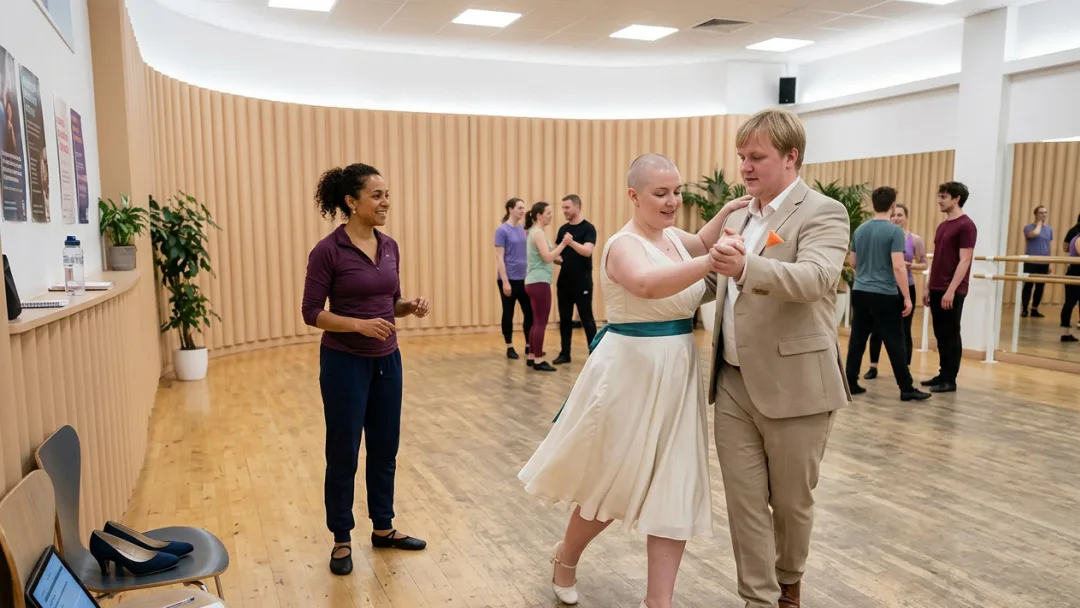
Work with your partner to come up with a sentence: “We’d like to start calmly, turn once, and finish together.” Decide whether you want to dance mostly connected or include short open sections. The goal is set when you have the same vision for the performance.
Save the exact recording and note the start point and planned end. Listen for the pulse and mark a clearly recognizable musical cue. If the whole song feels too long, choose a shorter, musically coherent excerpt instead of adding extra moves to fill the time.
First add your wedding day, then schedule a full run-through before it. Spread lessons and joint practice sessions across the remaining free dates. If you have only a few practice windows, scale down the choreography; an extra lesson doesn’t replace remembering and practicing between sessions.
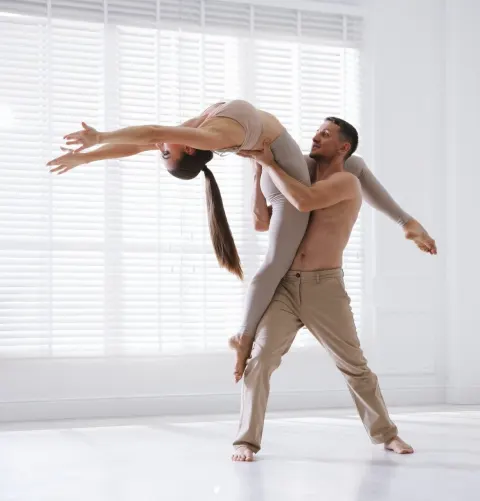
Put the opening, repeatable basic movement, and ending on the required list. Add only the figures you still have time to practice. Leave lifts and deep dips out of a tight beginner plan: they require special technique and cannot be made safe by holding on to each other.
Plan pulse, weight changes, and your roles first, then figures and transitions. Reserve the final block for run-throughs, a simple way to get back on track after mistakes, and clothing adjustments. A block may take several sessions; move on once you can do its content without constant prompting.
Use this template: “We’re getting married on [date] and are looking for wedding dance lessons in Paris. Our song: [recording/excerpt]. Previous experience: [level]. Goal: [basic steps, figures, ending]. Available lesson times: [time slots], time to practice together: [amount]. Clothing and dance floor: [restrictions]. Preferred roles: [distribution]. Is this amount of learning realistic within the timeframe?”
Send the completed inquiry to a suitable provider you found on udansa. Add the agreed schedule to your calendar and write down a specific practice assignment after each session. Only add new extras once the current sequence works with music.
With your chosen song and learning plan, you can search udansa for wedding dance lessons in Paris.
Do this
Not like this
Planning
Progression
Dress Rehearsal
The number of lessons you need depends on your starting level, the song, and the sequence you have planned. A short basic step with an opening and ending requires less to learn than several new turns. It also matters whether you practise together between lessons. So start by setting learning blocks rather than treating a specific number of lessons as a guarantee of success.
Eight weeks can be enough for a simple wedding dance if you can practise together regularly. However, the time frame alone says little about how many sessions you can actually fit in. Use the first lessons to get familiar with the music and the basic step, the middle ones for transitions, and the last ones for run-throughs. If a session gets cancelled, drop an extra figure first.
No, your wedding dance doesn't have to be a Waltz. The music and the style of movement you want determine how to shape it. A song in 4/4 time doesn't become a Waltz just because it has a romantic feel. Even a simple sequence of steps and a turn can make for a complete opening if you plan the beginning and ending carefully.
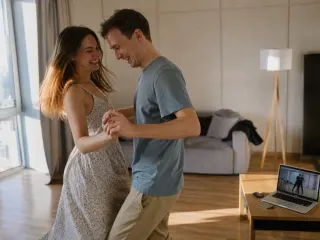
Yes, a short practice video can help you remember at home the sequence you learned in class. With everyone involved's consent, record the transitions and the musical cue in particular. Make sure your feet are fully visible. This guide to recording a useful practice video in a dance class can help you position the camera. The video is no substitute for correcting movements you're unsure about.
Switch to a basic step you know well and rejoin at the next recognizable part of the music. Practise this recovery during your preparation so it doesn't become an improvised last resort. Brief eye contact can help you restart together. Don't try to catch up on skipped figures faster: you'll lose the beat and connection with each other more easily.