Dance acrobatics3 minutes

Dancing lifts in a gender-neutral way: Dynamic role switching

In a nutshell
  • When dancing lifts in a gender-neutral way, biomechanics and leverage determine success, not gender or traditional role distribution.
  • A dynamic role change requires precise coordination of the center of gravity and the use of the partner's kinetic energy when switching positions.
  • Safety and joint protection come first, which is why continuous body tension from both dancers is essential for stability.

How modern acrobatics breaks down traditional gender roles

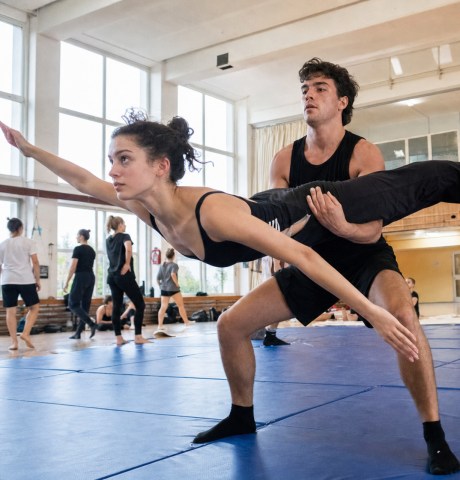
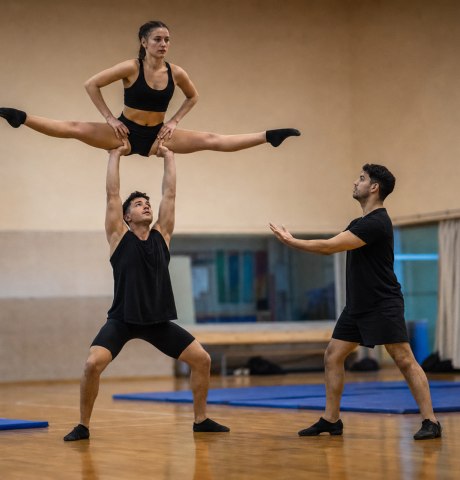
In contemporary dance and modern acrobatics, the traditional division where the man exclusively lifts and the woman flies is increasingly dissolving. When we dance lifts in a gender-neutral way, biomechanics move to the forefront: it is not about gender, but about leverage, centers of gravity, and precise interaction. A fluid change of roles in lifts brings enormous dynamics to any choreography, as both dancers alternately take on the supporting and flying roles. This requires a deep understanding of joint protection in dance acrobatics as well as a keen sense for timing.

The technique behind the fluid change

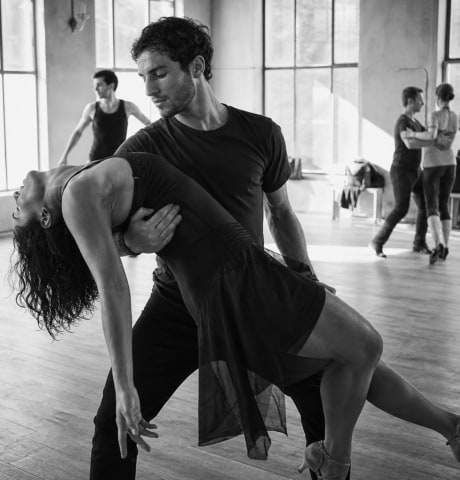
For same-sex lifts and gender-independent lifting elements to succeed safely, dancers use clever weight shifts. Instead of pure muscle power, the shared center of gravity is what counts. During the transition from a supporting to a flying position, the partner's kinetic energy is used to redirect the momentum directly into the next lift. This form of queer dance acrobatics not only breaks up visual viewing habits, but also demands extremely precise communication. Partners must feel in fractions of a second when the other's body tension locks in, in order to optimally distribute the load onto the supporting bone structures instead of the muscles.

The balance of power in gender-neutral dance

Dancers share the lift role
2
Maximum body tension required
100%
Focus on physics instead of muscle power
3+1

Mastering the switch of roles in four steps

  1. Clearly define the roles

    Agree exactly on who forms the supporting base at which moment and who lifts off. Clarify the signals for the power impulse and the termination of the figure.

  2. Stabilizing the shared axis

    Build up maximum core tension. Only when both bodies act as a stable unit can weight be transferred safely and in a way that is gentle on the back.

  3. Using the biomechanical lever

    Use the timing and momentum of your partner instead of working against gravity. The jump must be perfectly synchronized with the lifting impulse.

  4. Initiating the fluid transition

    Initiate the change fluidly by having the flying person land in a controlled manner and use their momentum directly to lead the other person into the air.

Frequently Asked Questions

  1. In gender-neutral dancing, it is not gender that determines the role, but physical constitution, leverage, and technique. Both partners learn both lifting and being lifted, which makes a flexible role change possible in the middle of the choreography.

Acrobatics courses near you

Find the right studio for contemporary dance acrobatics and learn to rethink lifts.

View all matching courses

Reach new heights together

On udansa connect you will meet like-minded people who are keen on creative movement beyond rigid gender roles. Find your perfect partner for your next dance project now!

Reach new heights together