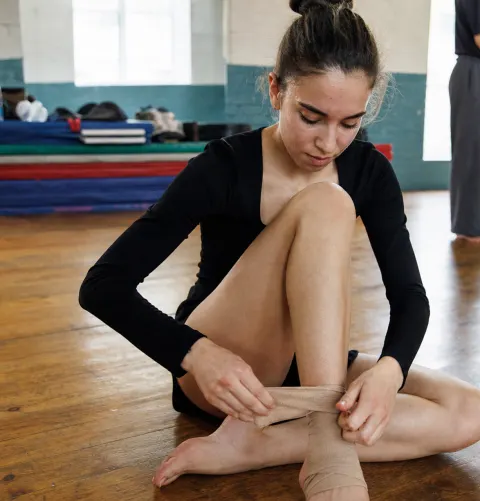
Reach new heights together
Find like-minded people on udansa who share your passion for movement. Discover courses for modern dance acrobatics and connect with partners who want to work on their flexibility with you.

By Mary De LucaUpdated
Find like-minded people on udansa who share your passion for movement. Discover courses for modern dance acrobatics and connect with partners who want to work on their flexibility with you.
Forget rigid stretching exercises from the past. Modern sports medicine is revolutionizing the way we prepare our bodies for extreme movements and acrobatic figures on the dance floor.
Unlike fleeting social media hypes in the fitness world, forms of movement in dance acrobatics develop much more slowly and sustainably. While a new workout trend goes viral online overnight, establishing new stretching methods in the dance studio often takes years. This is primarily due to the complex biomechanical requirements in Acro Dance in Contemporary and other acrobatic styles. A new stretching approach must first prove itself in the training practice of dance instructors before it finds its way into regular classes. Furthermore, implementation in the studio requires direct, physical guidance, as incorrect execution with extreme ranges of motion can quickly lead to injuries. Scientific findings from sports medicine therefore trickle in gradually through advanced training and workshops, which contributes to the high quality and safety of the new routines at udansa.
This method combines stretching with simultaneous muscle contraction in the maximum stretch position. As a result, the nervous system learns to actively control and stabilize the new range of motion, which drastically reduces the risk of injury during overhead elements.
Using special foam rollers and balls, the deep connective tissue is systematically massaged. In Acro Dance, this ensures improved gliding of the tissue layers, which helps complex turns and fluid transitions on the floor succeed more smoothly.
Instead of static positions, springy, three-dimensional movement paths are used that are oriented towards natural muscle chains. This method optimally prepares the body for the unpredictable dynamics and rapid changes of direction in modern show dance.
Find the right course to take your flexibility to the next level under professional guidance.
Modern Dance for kidsBerlin · Germany
Modern Dance & Akrobatik ab 10 J.Wednesday · 17:00 · Nov 11
Flow Motion Studio Wedding
Flexibility without strength is worthless in acrobatics. Only those who can stabilize their joints at maximum stretch will dance expressively and injury-free in the long term.
Correct
Wrong
Dynamic stretching optimally prepares muscles and joints for the upcoming strain through controlled, fluid movements. In contrast to static stretching, muscle tension is maintained, which is essential for jumps and lifts in dance.
Fascia training improves the elasticity of the connective tissue and promotes blood circulation. For dancers, this means faster recovery, smoother dynamics during transitions, and a significantly reduced risk of painful muscle tears during fast movements.
No, static stretching before training temporarily reduces the explosive power of the muscles. Modern routines therefore use static stretches almost exclusively after training for relaxation or in separate, dedicated flexibility sessions.
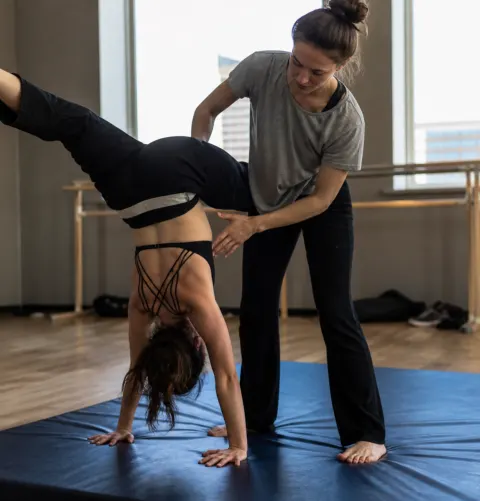 Minimizing acrobatics injury risk in dance
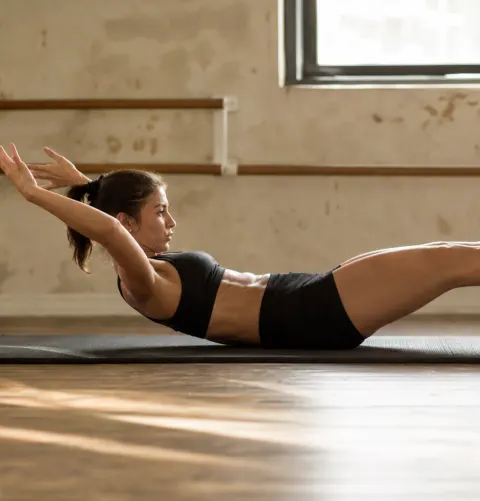 Core training for acrobatics: Step by step
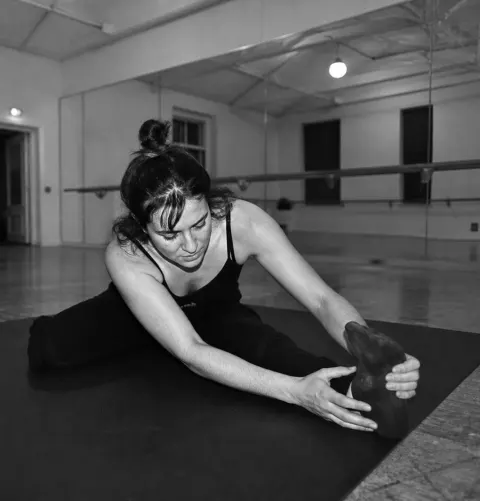 7 critical mistakes in Acro Dance training
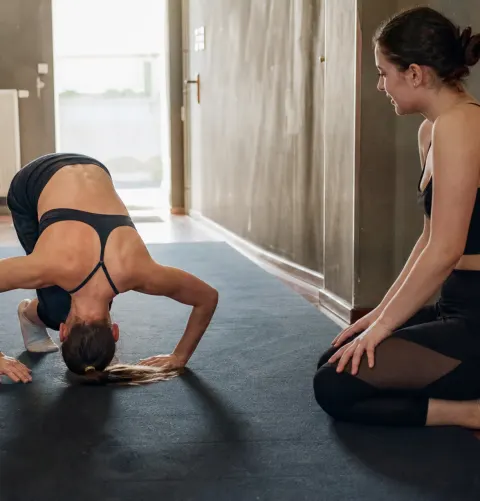 Learn to fall safely in dance acrobatics: A guide
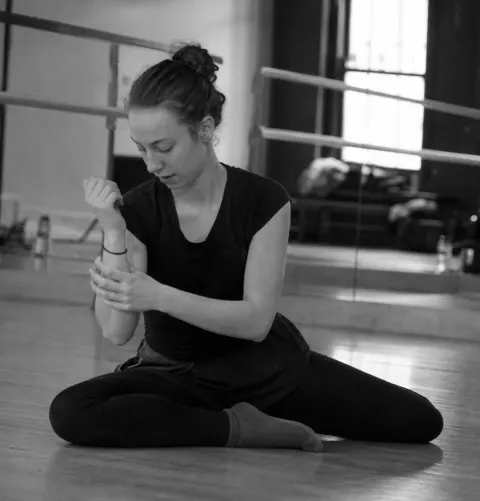 Injury-free Acro Dance: Your routine
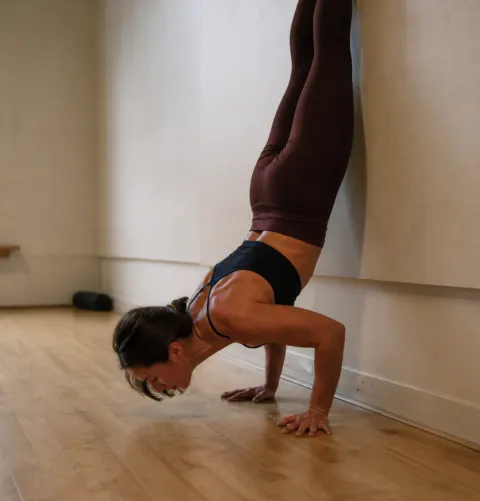 Building Strength for Dance Acrobatics: Targeted Training
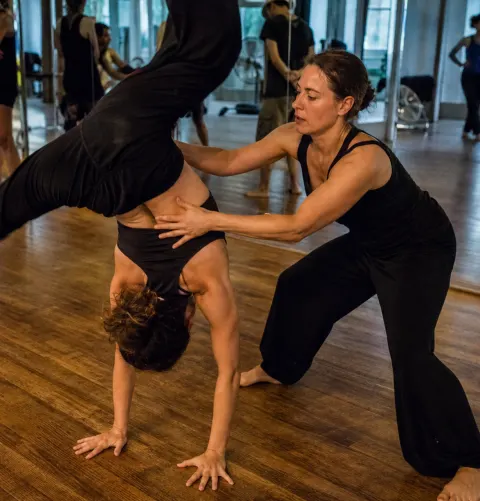 Spotting in dance acrobatics: Learn to secure safely