Dance acrobatics5 minutes

Protective gear for dance acrobatics: mats and bandages

In short
  • Special dance mats cushion the impact during landings while providing enough firmness for a safe and stable take-off.
  • Elastic joint braces support ankles and wrists during high strain, without restricting your freedom of movement while dancing.
  • Kinesiology tape stabilizes tendons and muscles in a targeted way and supports your body's proprioception during the flight phase.
  • The protective equipment serves as a temporary learning aid during the training phase and is gradually reduced as your movement confidence increases.

If you want to test the limits of gravity in dance, you need more than just courage. The right protective gear determines whether a new jump leads to success or ends on the injury bench.

DefinitionProtective equipment in dance acrobatics

Protective equipment in dance acrobatics includes all aids such as mats, bandages, and tapes that protect the body from impact stress. It serves to minimize the risk of injury when learning new, dynamic movement elements.

Why protection is essential when learning new jumps

Anyone who sees a spectacular jump in Contemporary or a dynamic back handspring in Modern Dance for the first time immediately feels the fascination of dance acrobatics. But behind the apparent weightlessness lies an enormous physical strain. When landing after a jump, several times your own body weight acts on the joints. This is exactly where specialized protective gear for dance acrobatics comes in. It is not a sign of weakness, but the most important tool to protect the body from overexertion and acute injuries during the learning phase.

Unlike pure gymnastics, dancers must remain flexible and must not have their freedom of movement restricted. Bulky pads from inline skating or volleyball are unsuitable for the dance studio. Instead, it is all about a fine balance between cushioning and flexibility. Anyone systematically learning new elements should rely on the right equipment from the start to clear their head for complex movement coordination. A stable foundation is crucial to minimize the risk of falling during training and to jump without fear.

The right mat as a foundation for safe landings

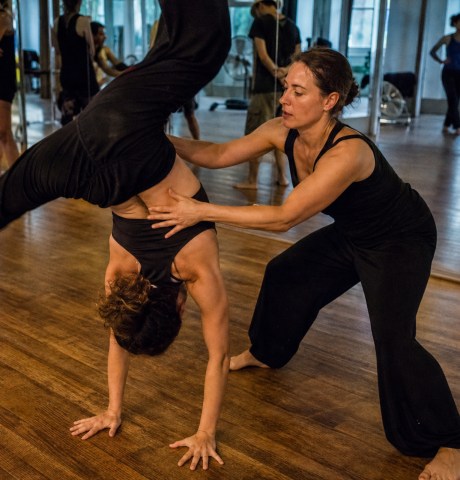
The heart of every safe acrobatics training session is the surface. Anyone practicing new jumps and rotations in the air needs a cushioning base that forgives mistakes. Special dance mats for acrobatics offer the optimal compromise here. They must be soft enough to cushion the impact of an imperfect landing, but at the same time firm enough to give your feet the necessary grip when taking off. Gymnastics mats that are too soft carry the risk of you twisting your ankle during takeoff, while a hard sprung floor without an additional mat puts too much strain on your joints in the long run.

For beginners, foldable lightweight gymnastics mats or interlocking EVA foam mats that can be flexibly laid out in the studio are suitable. They cushion the initial impact and take away the fear of failure. As soon as the flight phase and landing become more precise, you can transition to the regular dance floor. If you want to know in advance whether your physical condition is sufficient for these intense loads, you can check your athleticism with a quick Power Moves Fitness Test.

The proper use of protective equipment during training

Properly prepared

  • Use mats with a non-slip underside
  • Choose bandages with elastic stretch
  • Apply tape from the inside out without wrinkles
  • Ventilate equipment well after training

Common mistakes

  • Using mats that are too soft for jumping
  • Wearing rigid medical splints
  • Leaving wet tape on the skin
  • Continuing to use worn-out protectors

The best protective gear is useless if you leave it in the closet out of false pride. Safety during training is the foundation for all ease on stage later on.

Acro-Dance instructor, Cologne

Braces and tapes for maximum joint stability

In addition to the extensive cushioning provided by mats, the direct protection of the joints plays a decisive role. Wrists and ankles are exposed to extreme forces when absorbing jumps. Elastic joint braces for Acro Dance support the ligaments without completely restricting the mobility necessary for dancing. They keep the joint warm, improve blood circulation, and give the dancer a better sense of joint positioning in space.

In addition, kinesiology tape for dancing has established itself as a real all-rounder. When applied correctly, the elastic tape stabilizes the tendons and muscles while maintaining full freedom of movement. It is often applied to the ankles or along the Achilles tendon to support micro-movements during landing. Unlike rigid bandages, tape does not restrict the flow of movement and remains almost invisible under training clothes. After particularly intensive training sessions with high strain, targeted regeneration for the stressed muscles also helps to keep the joints fit in the long term.

Comprehensive protection versus targeted joint support

Mats

Cushioning for the whole body

Large-scale protection for beginners

Mats offer large-scale cushioning for the entire body. They are ideal for cushioning new aerial phases and uncontrolled landings softly and without fear.

Braces

Direct support for the joints

Targeted stabilization in the flow of movement

Braces and tapes act directly on the joint. They stabilize ankles and wrists at specific points, maintain maximum flexibility, and do not disrupt the flow of your dance.

Frequently Asked Questions

  1. For getting started, foldable lightweight gymnastics mats or elastic soft floor mats are suitable. They effectively cushion falls and help beginners overcome the fear of falling during their first attempts at jumping.

Acrobatics courses near you

Find the right dance school to learn new jumps safely under professional guidance.

View all matching courses

Find your partner for Acrobatics

On udansa connect you will find like-minded people who share your passion for dynamic movements. Search specifically for training partners in your area to polish new jumps together and support each other.

Find your partner for Acrobatics