Tango technique5 minutes

Argentine Tango chest lead: Leading nonverbally

In a nutshell
  • Leading in Argentine Tango originates exclusively from your own core and chest.
  • The arms and hands serve only as a stable bridge and do not exert any active pulling or pushing.
  • The follower reacts directly to the weight shifts and rotations of the partner's chest.
  • A stable body frame ensures that signals are transmitted precisely and without delay.

Argentine Tango is not a dance of muscular strength, but a sensitive conversation between two bodies. Learn how to lead and follow through your chest, without ever pulling on your partner's arms.

DefinitionChest connection

Chest connection refers to the non-verbal communication in partner dance, where movement data is transmitted exclusively through the upper body. It enables leading and following without the use of pulling or pushing forces in the arms.

The center as the transmitter of movement

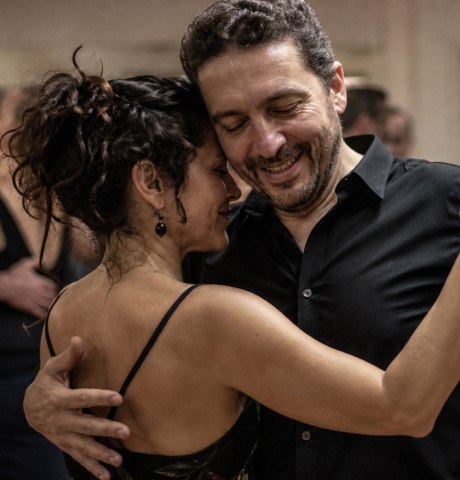
Anyone visiting a milonga for the first time is often amazed by the almost magical synchronicity of the couples. The answer to this puzzle does not lie in pre-arranged step sequences, but in clear physical communication. Leading in Argentine Tango via the chest is the heart of this silent conversation. Instead of pushing or pulling the partner with the hands, the leader initiates every movement from their own center. The chest acts as a transmitter that immediately conveys the smallest weight shifts and changes in direction.

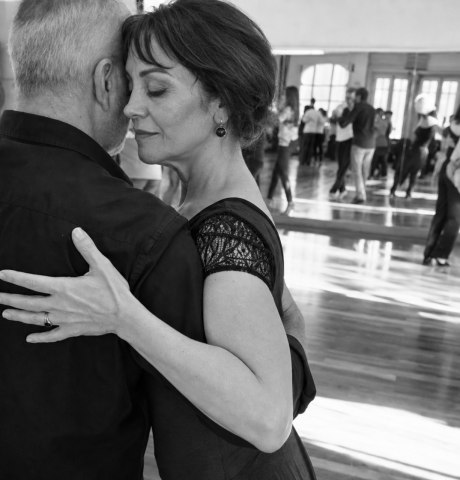
This type of movement differs fundamentally from other partner dances. In Tango, leading from the center means that the arms and hands merely serve as a relaxed bridge that passes on the impulse from the upper body. When you learn to keep this bridge stable yet elastic, a completely new lightness emerges. The movement flows through the couple without any effort because both centers are directly coupled with each other. Anyone who masters this fine art no longer experiences the dance as a sequence of steps, but as a shared, flowing conversation.

How a stable frame transmits signals

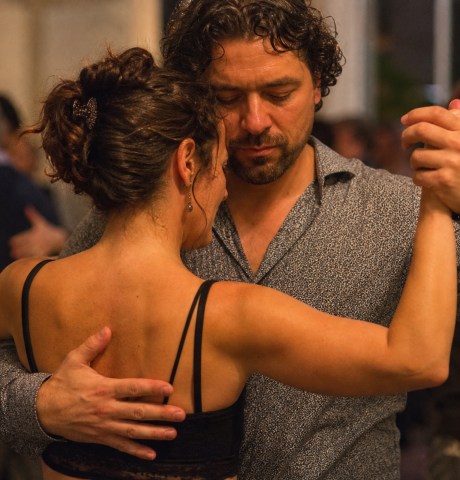
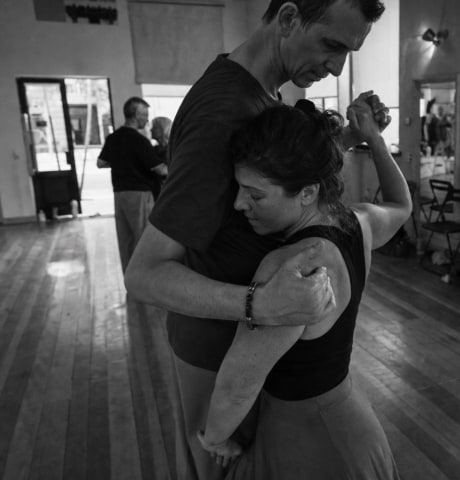
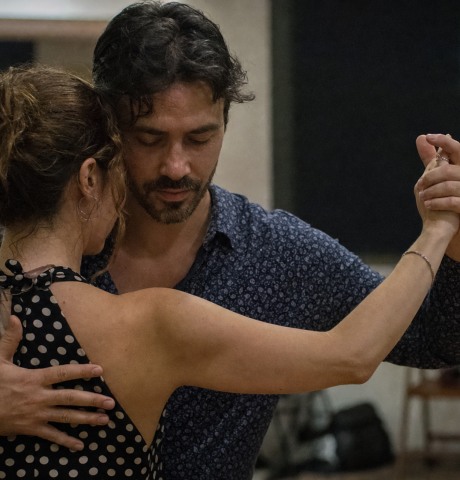
A common misconception when learning Tango is the belief that you have to lead your partner using muscle strength in your arms. This quickly leads to tension and blocks the natural flow of movement. For a functioning tango chest connection, a stable but flexible Argentine Tango frame is crucial. This frame, also known as the embrace, is created by connecting the shoulder blades and gently activating the core muscles. It ensures that the rib cage moves as a unit with the pelvis, without the arms changing their relative position to the body.

When the leader now tilts their rib cage forward, the follower immediately feels this impulse as an invitation to step back. If the leader's upper body turns, the follower's pelvis naturally follows this rotation. These tango non-verbal signals are extremely precise as long as the arms remain passive. As soon as pulling or pushing occurs in the hands, the signal in the chest area is drowned out and the subtle connection breaks. Those who relax their arms give their partner the chance to hear the real signals from the depth of the body.

The fine connection in comparison

Correct

  • Start the movement from your own core
  • Use your arms as an elastic connection
  • Keep your upper body stable and upright
  • Pay attention to your partner's weight transfer

Wrong

  • Pulling or pushing your partner with your hands
  • Letting your arms go limp or locking them
  • Hunching your upper body or dodging
  • Anticipating steps blindly and without a lead

In Tango, it is not two people dancing with each other, but two axes that communicate through the heart and move in the same rhythm.

Tango teacher, Berlin

The delicate interplay of action and reaction

The secret to a successful connection lies in the constant play of action and reaction, which works perfectly without words. The tango chest connection is not a one-way street: while the leader offers space and indicates the direction, the follower continuously provides feedback about their axis and balance. This dynamic feedback makes the dance come alive. To develop this fine sense, it is worth taking a look at the basics of the Tango Argentino embrace, which forms the foundation for all non-verbal communication.

For beginners who want to learn Tango Argentino, switching to leading from the chest is often the biggest mental hurdle. It requires trust to give up control of the hands and rely entirely on one's own body center. But as soon as this breakthrough happens, the door to a deeper dimension of dancing opens. Every turn, every step, and every pause suddenly feels organic and effortless because the couple moves across the dance floor like a single organism.

Two roles in perfect resonance

Leading

Initiating movement

Sending impulses from the center

The leader initiates every movement from their own core. By subtly leaning the chest forward and backward, they signal changes in direction and step length without using force in the arms.

Following

Responding to the impulse

Picking up physical signals sensitively

The follower maintains the connection with their own chest and picks up the partner's weight shifts. The arms remain elastic to pass the signals on to their own pelvis without distortion.

Frequently Asked Questions

  1. Because the nerve pathways in the torso and the direct alignment of the chest make weight shifts immediately noticeable. Arm movements, on the other hand, are often imprecise and lead to misunderstandings in step length.

Tango courses near you

Find the right dance course now and learn the art of fine connection in Argentine Tango.

View all matching courses

Find your connection on the dance floor

On udansa you will find like-minded people and experienced teachers who help you understand the subtle non-verbal communication in Argentine Tango from the ground up. Simply sign up and discover suitable courses and dance partners in your area.

Find your connection on the dance floor

Read more