Movement theory4 minutes

Breathing properly in Contemporary: More flow in your movements

By Mary De LucaUpdated

In a nutshell
  • Breathing initiates and extends every movement in contemporary dance.
  • Exhaling makes it easier to sink into the floor and releases unnecessary muscle tension.
  • Inhaling supports rising, jumps, and the lengthening of the body.
  • The breathing rhythm is guided by the dynamics of the movement, not by a rigid beat.

The right breathing technique transforms choppy steps into a fluid unit. Learn how to use your lungs as a tool to gain lightness and expressiveness in contemporary dance.

DefinitionBreathing technique in Modern and Contemporary Dance

The modern dance breathing technique describes the conscious use of breath to initiate, support, and dynamize movement sequences in contemporary dance. It releases blockages and connects individual phrases into a harmonious flow.

The invisible engine of your dance movements

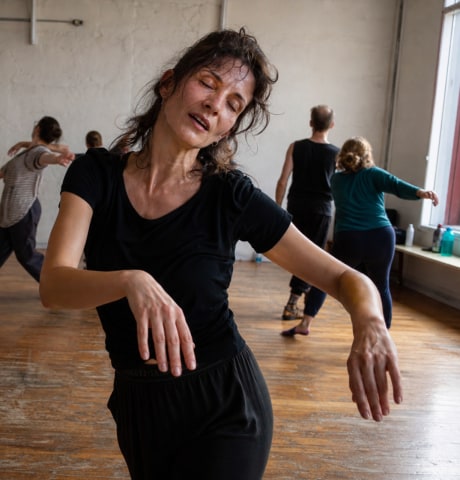
When you start with contemporary dance, you usually focus heavily on your feet, your arms, or the correct posture. In the process, your breath often goes unnoticed, you hold your breath during difficult passages, and your muscles cramp up. However, breathing in contemporary dance is not a passive process, but the actual engine of every movement. When you learn to use your breath consciously, you lose the typical stiffness of your first few lessons.

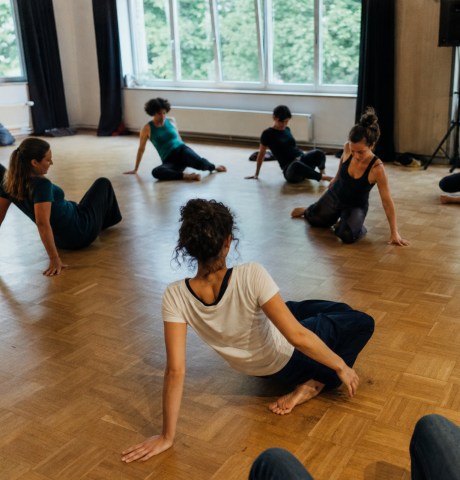
Unlike classical dance styles, there is no rigid corset here. The Horton technique in modern dance shows, for example, how anatomical lines are strengthened, but only the breath breathes life into these lines. As soon as you exhale, your center of gravity drops, which helps you when landing on the floor. A deep inhale, on the other hand, lifts your ribcage and prepares your body for jumps or wide stretches.
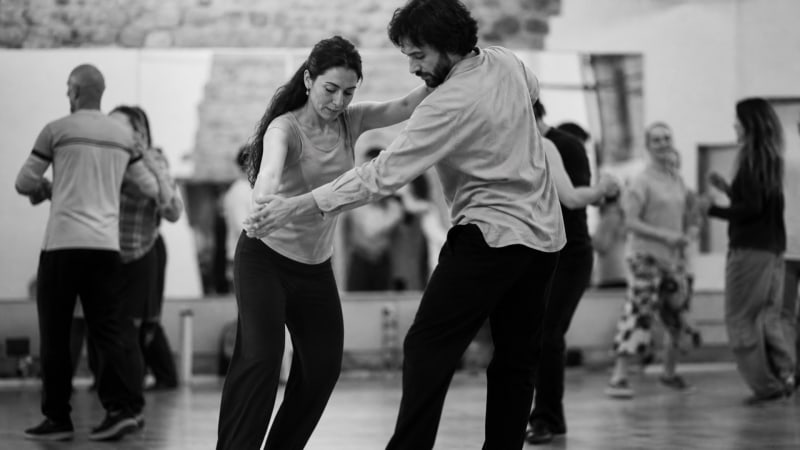
Breath gives movement the necessary dynamics: when you exhale, you sink deeper and more stably into the floor.

Why rigid counts block your breath

A common misconception among beginners is the attempt to breathe rigidly to the beat of the music in contemporary dance. However, contemporary dance thrives on freedom. It is not about inhaling on count one and exhaling on count three. Instead, you should learn to understand rhythmic breathing in contemporary as a tool that adapts to the flow of your movement, not to a rigid metronome.

The contemporary dance musicality allows you to move beyond the classical beat. Use this freedom for your lungs. When a movement goes heavy and powerful toward the floor, exhale deeply and audibly. When you rise up, let the breath flow in. This natural coupling removes mental pressure and makes you appear softer and more organic.

Breath control in contemporary dance

Breathing correctly

  • Use your breath as an impulse for new movements
  • Exhale deeply and consciously during strenuous passages
  • Feel the breathing movement throughout your entire ribcage

Holding your breath

  • Holding your breath or stopping it during difficult steps
  • Trying desperately to breathe on specific counts
  • Only breathing shallowly into the upper chest area

Only when the breath leads the movement, instead of chasing after it, does contemporary dance lose its heaviness and become art.

Contemporary dance instructor, Berlin

Practical exercises for your daily training

To put theory into practice, simple Contemporary beginner tips for your next dance class will help. Start with your warm-up by increasing your breathing movement. When you bend forward, release the air completely from your lungs to relax your spine to the maximum. As you roll up, inhale the air again.

This conscious connection creates a noticeable flow of movement through breathing, which also protects you from tiring quickly during fast choreographies. If you notice that a passage is stalling, it is rarely due to a lack of strength, but usually due to a breath hold. Let your breath flow, then the movement follows almost by itself. If you want to use the floor actively, knowing how you can use gravity in contemporary dance will also help you to make your movements even more effortless.

The two phases of movement in Contemporary

Inhale

Impulse for height

Lightness and alignment in space

Inhaling fills the body with energy, lifts the center of gravity, and prepares the dancer for jumps, turns, and extension into space.

Exhaling

Sinking into gravity

Grounding and power transmission to the floor

Exhaling allows you to release muscle tension, deepens the connection to the floor, and supports powerful movements into the knees or into the ground.

Frequently Asked Questions

  1. You can usually tell because your movements feel stiff or you are out of breath immediately after a short combination. Pay attention to whether you unconsciously hold your breath during difficult steps.

Contemporary courses near you

Find the right course on udansa to take your flow of movement to the next level.

View all matching courses

Find your flow of movement

Here you can find the right dance school and like-minded people who want to venture into contemporary dance with you.

Find your flow of movement