Practice together for your trip
On udansa connect, you'll find dance partners to share your specific practice goal and your stay in London with.

By Mary De LucaUpdated
On udansa connect, you'll find dance partners to share your specific practice goal and your stay in London with.
Between dropping off your luggage and heading home, there’s often less free time than the calendar suggests. A well-defined block of lessons gives your stay structure, without every free hour having to become the next practice session.
An intensive course in London can be organized as a single longer workshop or as a connected series of lesson blocks. What matters for your short trip is whether these blocks work independently or build on each other. In a progressive format, the first session may prepare posture, weight transfer, and movement patterns that are not explained again later. Joining only the final part then means catching up on the basics under time pressure.
Choose the scope based on the learning process, not the greatest possible number of hours. In a technique block, you repeat similar movements and refine how you perform them. In a choreography block, you also have to remember the sequence, changes of direction, and musical cues. Both can be tiring, but in different ways: muscle fatigue cannot be offset by concentration, and more strength will not make a full sequence easier to follow.
For a short stay, it therefore makes sense to aim for a clear, achievable outcome: for example, performing a transition without stopping or dancing a short combination with confident musical cues. The guide to choosing the right starting level in London covers the general assessment of your previous experience. For planning your trip, the next thing to consider is which basics the specific intensive format already assumes. You can find more ways to learn under choosing dance courses in London based on your learning goal.
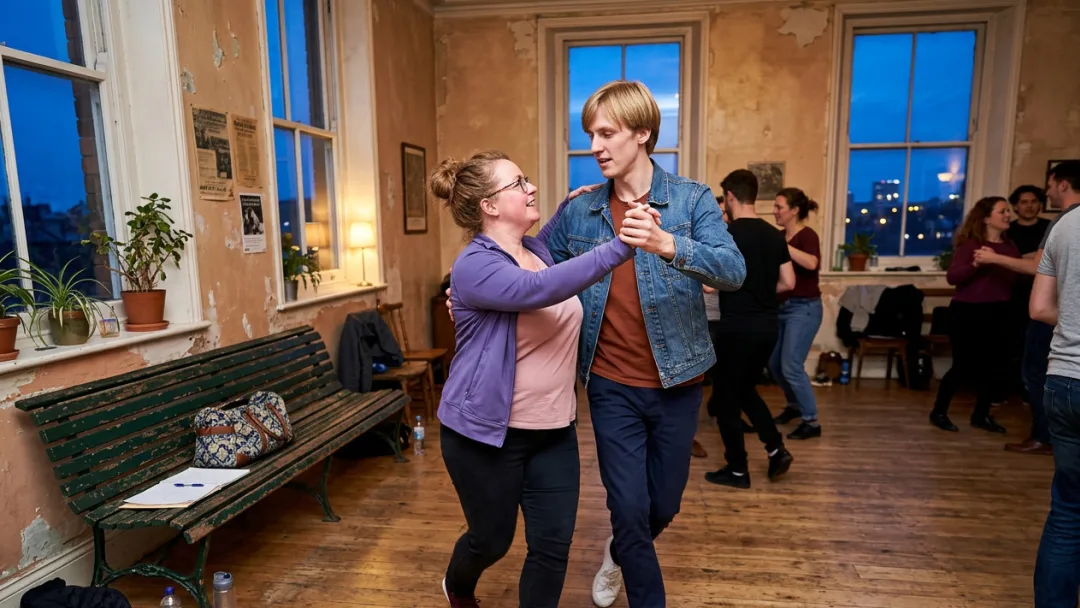
Define an outcome you can demonstrate at the end, such as a short combination performed without interruption. Avoid goals like “dance better”: they leave unclear how you’ll recognize progress and tempt you to pack too many different topics into your learning journey.
First enter your arrival, accommodation and return journey, then the times you're actually free for lessons. Keep your arrival day free of tightly scheduled commitments if delays could put your course start at risk. One uninterrupted block of free time is more useful for follow-up lessons than several short gaps.
On udansa, read the information about level, prerequisite moves, required blocks, and participation requirements together. Also consider whether you can register as a couple. Choose only a format whose entry level is within your abilities and whose related parts all fit within your available time.
Include the class venue and your accommodation as starting and ending points. Calculate door to door, including walking, transfers, and changing clothes. Schedule meals before or after the block, not during a short break that isn't long enough. The plan works if no connection requires you to rush off immediately.
Reserve the selected lessons as a fixed part of your trip and leave any additional training sessions open for now. Make a note of the booked package and the conditions for changes. A full day of classes needs room for recovery afterward, especially if you're not used to this level of exertion.
Focus your attention on the goal you set beforehand. Practice difficult transitions in smaller steps and more slowly at first, rather than adding extra variations. If you feel pain, stop the movement causing it. Your goal remains within reach when you prioritize clean execution over speed and range.
After the final block, write down the sequence of movements, helpful counts, and one specific correction. At home, start by repeating only this excerpt. You’ve made good use of your time if you can recall what you worked on, even without the group in front of you.
On udansa, you can find suitable lessons in London and compare your travel dates with the available dates.
Do it this way
Not like this
Planning
Preparation
Learning consolidation
Open Level does not refer to a universal entry threshold and does not automatically mean classes require no prior experience. A shared movement task can have different variations, while musical orientation or basic technique may still be expected. For your short trip, choose a class where you can work on the basic task without constantly having to catch up on foundational steps.
You can attend the last day on its own if it is offered as an independent part of the class. Otherwise, if it is a choreographed sequence built up over time, you will miss the order and corrections already covered. Even if you know similar steps, the specific combination may be new. So, being able to book a place separately does not necessarily mean it is a suitable entry point for you.
Choose as much class time as you can manage with focus and balance with rest. Base your decision on your usual training load rather than a fixed number of hours. Travel, unfamiliar beds, and long walks can add to your fatigue. Leave room in your schedule to process what you have learned instead of moving straight on to the next thing.
You need to understand the stated language of instruction well enough, but you do not necessarily need to be fluent in English. Demonstrations help with movements, but they do not fully replace instructions about exertion, direction, and corrections. Knowing recurring terms for weight changes, repetition, and switching sides makes it easier to follow along. Choose a format in a language that suits you if quick explanations would otherwise slow down your learning.
Recording a practice video only makes sense with the consent of the people involved and in line with the class rules. Do not film the group or a full demonstration without permission. A short recording of your own execution after class is often enough to help you remember what you learned. Written notes on direction, counts, and corrections are a useful alternative when recording is not possible.
You do not need a dance partner to review solo exercises, but a second person is helpful for practicing partner connection and response. Once you are back, stick with the same short practice exercise instead of immediately adding new figures. The guide to dance partners for a limited time in London covers meeting people during your stay, separately from planning your classes.
 Dance classes in London for your learning goals
 Adult Ballet in London: Start with No Experience
 What You Learn in Contemporary Dance Classes in London
 What You’ll Learn in Hip Hop Classes in London
 Which Salsa Class in London Fits Your Goals?
 Beginner Dance Classes in London: Which Level Is Right for You?
 Dance Classes Without a Partner: Join Solo in London