Injury prevention4 minutes

Back to Acro Dance: Returning after an injury

In short
  • A safe return to dancing after a ligament injury requires complete healing and official medical clearance from your attending physician.
  • The foundation for your first training session is the targeted development of proprioception and deep muscles in the ankle through balance exercises.
  • The intensity is increased in phases, starting with simple weight shifts and progressing to initial controlled jumps on a soft surface.
  • Mental trust in your own body is just as important as physical strength and must be relearned through fear-free, small-step movement sequences.

How Jonas mastered the way back to the mat

A careless landing after a jump, a loud crack, and suddenly everything is different. For ambitious dancers, a severe ankle ligament injury often feels like the premature end of all athletic dreams. After the diagnosis, a long, frustrating acro dance injury break inevitably follows. But the story of dancer Jonas shows that the path back to the spotlight is possible if you don't lose your head and proceed strategically. Instead of immediately putting maximum strain on the joint again after the acute pain has subsided, a safe return after acrobatics injury requires patience, structure, and a completely new body awareness.

Jonas only began his way back to the mat once he had medical clearance. The biggest hurdle was not the loss of strength, but the lost trust in his own body. In his attempt to gently reactivate the joint and tendons after a dance break, isolated stabilization exercises on unstable surfaces helped him. Before even thinking about dynamic jumps or complex floor elements, the focus was on daily training of proprioceptive skills. Anyone who wants too much too soon risks chronic instability. Only when the foundation in a single-leg stance was rock solid could the beloved regeneration after acrobatics training play a role again to optimally care for the strained muscles.

From the first step to the first flight phase

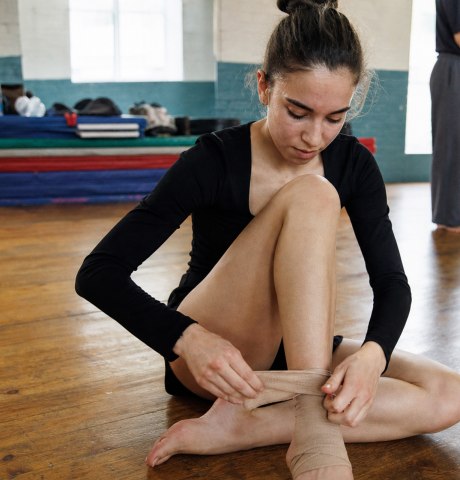
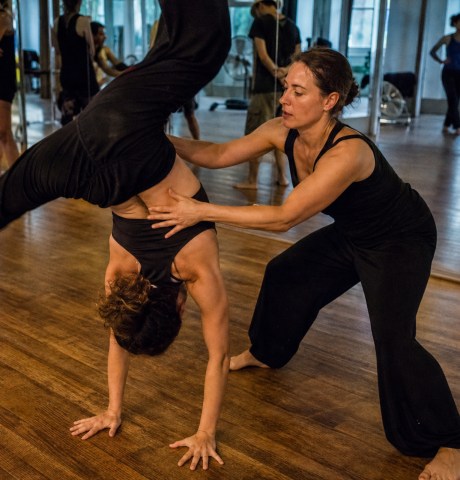
The transition from physiotherapy back to acrobatics training happens in tiny, controlled phases. Jonas started with simple weight shifts and gentle stretching exercises to regain the full mobility of the foot in point and flex. Only in the next step did basic movement patterns like controlled rolling and gentle squats follow. Complex elements like a cartwheel were systematically prepared. If you are unsure here, you can review the precise, joint-friendly execution in the guide learning to do a cartwheel in dance. Jonas also used soft gymnastics mats and supportive bandages to give the ankle the necessary mechanical security during the transition phase, while the brain learned that the foot is fully resilient again.

Figures for a safe return to dance

weeks minimum break for a torn ligament
6
phases in a structured training plan
5
percent focus on proprioception at the beginning
100

Your training plan back on the mat

  1. Get medical clearance

    Get the green light from your doctor or physiotherapist. You may only resume training once the medical diagnosis confirms full physical resilience.

  2. Strengthen your core muscles and balance

    Train your balance on one leg, ideally on a soft mat or a balance board. This will help you reactivate the receptors in your joints and improve your stability.

  3. Test basic movements without jumps

    Perform slow weight shifts, squats, and controlled rolling of the foot. Feel carefully into the joint to see if all axes of movement can be used without pain.

  4. Cushioned jumps on soft ground

    Use thick gym mats and start with low, two-footed jumps. Only when your landing is absolutely secure and stable, you can slowly progress to single-leg elements.

  5. Increase the load gradually

    Set yourself small, weekly goals and increase the intensity only very slowly. Stop training immediately as soon as you feel a pulling sensation or pain in your ankle.

Frequently Asked Questions

  1. You should only resume training once your doctor or physiotherapist has given you unrestricted clearance. In addition, you must be completely pain-free in everyday life and during light exertion, and you must have regained full mobility in the joint.

Acrobatics courses near you

Find the perfect support for your training and train under professional guidance.

View all matching courses

Back into the spotlight together

On udansa, you will find experienced instructors, specialized dance schools, and like-minded people who will accompany your journey back to the dance floor. Start your search now and dance again with full confidence.

Back into the spotlight together